Episode 41
Colm Duignan – The Stronglife Gym Story
HOSTS & GUESTS
Carlo Cretaro
Colm Duignan
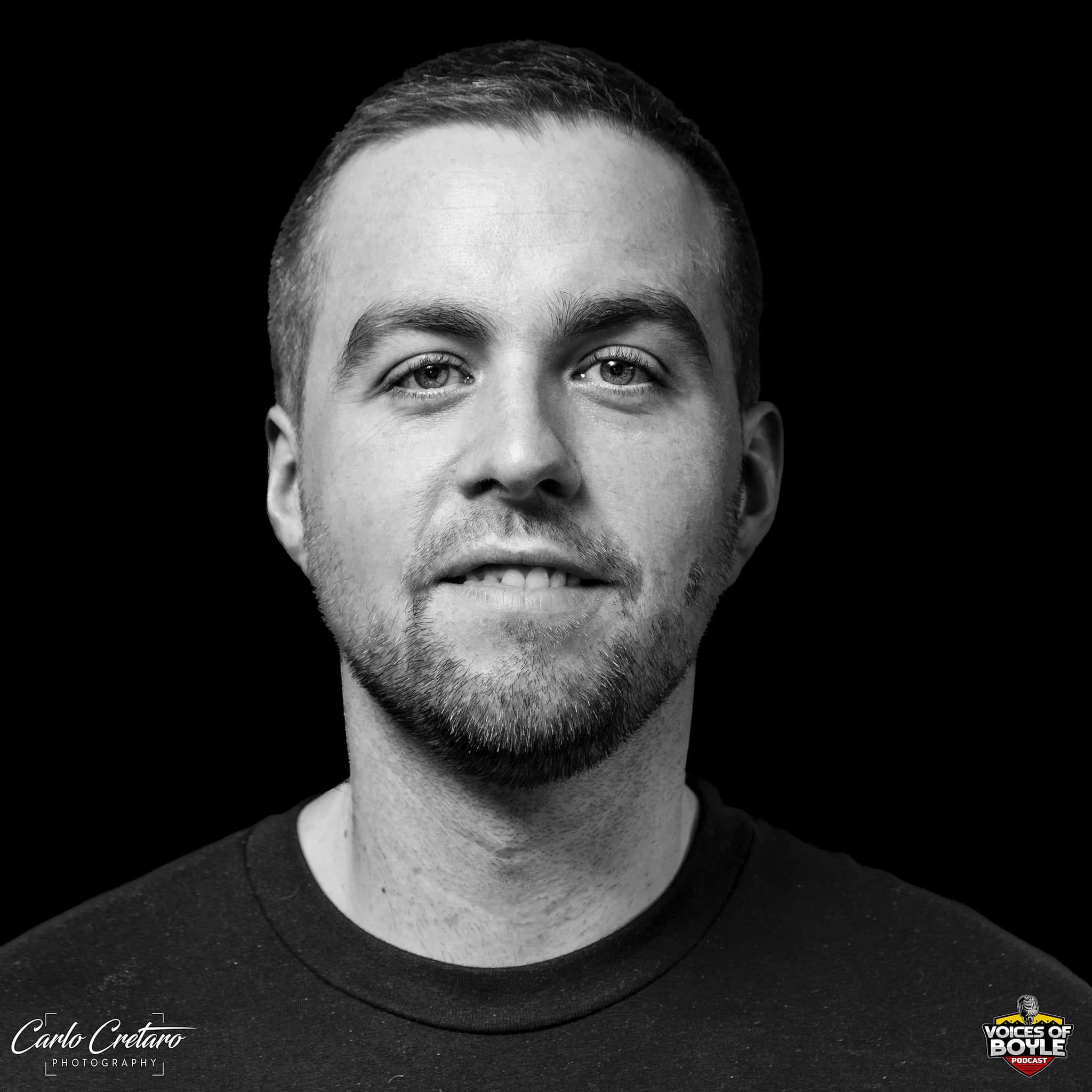
Colm Duignan was an hour into a shift at MBNA in Carrick-on-Shannon, headset on, when he knew he couldn’t keep going. So he did what he says every Irish lad does. He texted his mother.
“I said, I don’t think I can do this anymore.” She texted back and told him to do what was best for him. He’d find work. It wasn’t going to be a problem.
He finished the shift, left his badge on the manager’s desk and walked out. Plenty of people around him were hanging on for redundancy. Colm didn’t care about the money.
“You just left it all behind and I felt 3 stone lighter.”
The first class in the blue uniform
Colm was born in 1987. His granny lived in Termon, so a lot of his childhood was spent on Plunkett Avenue trying to play football with lads who were always better at it, or rallying round back roads on a mountain bike.
St Joseph’s had a good team and, he thinks, won a county title, which meant hanging out of car windows round the town and chips instead of protein shakes. His year was the first class headed for Abbey Community College, so they wore the new blue uniform while still at St Mary’s College, where everyone else was in green and grey. You can imagine lunchtime.
It was the Jackass, South Park and Father Ted era all rolled into one. Colm says he learned more life lessons at St Mary’s than anything to do with education, and the stories will do him a lifetime. He kept goal in Gaelic and soccer, idolised Peter Schmeichel, and wore the jersey with the elbow pads. Years later he met Schmeichel in an airport. Schmeichel wouldn’t talk to him.
The lads in the blue t-shirts
He picked IT Sligo mainly because it was a good excuse to buy a car, and came out in 2008 with an honours degree in business and HR, just as the economy collapsed. The only HR work going was laying people off.
There wasn’t much to do for fun apart from the pubs, which is how the Super Sunday Club started. A few friends out on bank holiday Sundays turned into a crowd of 40 or 50, and around 2007 someone decided they needed matching blue t-shirts with their names or nicknames on them. Word would go round the town that the lads in the blue t-shirts were in again. Boyle had 16 or 17 pubs then, and Colm says the barman would sometimes have to borrow Bulmers from the pub next door. Everyone looked out for each other and everyone got home.
“Is this what I’m meant to do for the rest of my life?”
After about 20 months in a Sligo call centre that closed, Colm went to MBNA and worked on the UK portfolio, inbound calls with selling on top. He puts it at 80 or 90 calls a day, 20 or 30 of them unpleasant. The company was up for sale, so there were no promotions, and he describes constant pressure from the top.
His reasoning was simple. If he took a risk now and it went wrong, he’d have time to recover by 30. He had no responsibilities. He had already been driving to Dublin two days a week for about eight months to qualify as a personal trainer, working the other five in Carrick. When he walked out, the plan was already in the pipeline.
“Four to six pages would be fine”
When he brought his business proposal to the bank, the woman there chuckled. Corporations bring in this sort of thing, she told him. Four to six pages would have been fine. He’d given her 23.
He wanted a unit with four blank walls, so there’d be no surprises behind them. He got financing in early 2014 and opened Stronglife Gym that May, in a smaller unit than the one he has now.
“Noah lied”
“Noah lied when he said build it and they’ll come.”
It wasn’t Noah, but the point stands. You pour everything into it, and then you find out you have to prove it’s worth someone handing you money for. The bills nobody warned him about arrived. He says it was good for him, because he couldn’t coast. It made him put on his adult pants and get to work.
Opening the door, he says, was the easy part. After that he had to become a salesperson, a copywriter, a marketer and an accountant. People assume a gym owner works a couple of hours a day. Colm spends about five hours every Sunday on admin and check-ins.
“You won’t see Christmas”
He was told to contact local representatives when he was starting out. He says the call was horrible and they were rude to him. He contacted some media outlets about the opening, and none of them covered it. A few months in, the whispers came back: he’d be gone in six months, he wouldn’t see Christmas, he wouldn’t keep the wolf from the door.
What he took from it was that if this was going to work, he’d have to do it himself. You need that bit of spite, he says.
“I’m losing my marbles here”
Covid closed the gym overnight. Colm lasted a few weeks at home on the €350 a week before admitting he’s a workaholic. He still had access to the building, so he went in every day, filmed workouts and ran an online programme through Facebook groups, with a private chat with every member each week. He kept it basic and positive, because people had enough to worry about.
It spread as far as Dublin, and he says it kept the business afloat and made reopening much easier.
“Rock in with whatever you’re comfortable in”
Colm has trained in a lot of gyms where everyone has earphones in and nobody knows anyone’s name. Stronglife has no mirrors, and people talk to each other.
“I’m more worried about the training that you’re doing rather than what you’re wearing.”
Instagram tells people they need a crop top or a vest. Most of his members turn up in a jumper and shorts.
“It’s pay to play”
Colm reckons his marketing has changed six or seven times in ten years: early Facebook ads, then blogging, then email, then Instagram, and now video. He compares boosted posts to throwing money into a fire, and he has no patience for the idea that a business that advertises must be short of money. Mercedes advertise, he points out. He once paid an agency for three months and found he was paying for things he already knew how to do.
A mentor told him that a business run on trends will live and die on trends. So he puts himself in the videos and keeps them plain.
Borrowing happiness from tomorrow
Colm always had a bit of puppy fat, and it didn’t go away when he became a teenager. By 15 he was self-conscious, and he describes a loop plenty of people will recognise: you’re unhappy because you’re overweight, food makes you feel better for a while, so you eat more. He pulled back from sports teams because he was embarrassed. At his 21st birthday he was 18 stone. He never went on a sun holiday with the lads, and he used clothes to cover himself.
Weekends out were an escape. He remembers a line he read, from Tim Ferriss “or someone”, that alcohol helps you borrow happiness from tomorrow. He could switch off the way he talked to himself for a couple of nights, but the cans didn’t help the weight.
He says he pulled back from social occasions, and would go to bed at night thinking “what am I doing? I don’t want to live like this.” By 2009 he had ended up in a bad place. One Friday night out, he had what he calls “a bit of an emotional wobble”, and two friends were very good to him. He can still see the striped Bench hoodie and bootcut Jack & Jones jeans he had on. He wonders now how the women weren’t crawling all over him.
Next morning he texted the lads to say sorry, it was the drink talking, don’t hate me. He calls that the greatest cop out there is. But there was a bit of space in his head, enough to decide he was going to change. That Monday he went to see a friend working in a gym in town, and started.
“Who’s this skinny fella?”
Between March 2009 and September 2010, Colm lost six and a half stone. He trained two hours at a time, five days a week, ate very little, cut out food groups and fixated on the scales. It was chicken and broccoli the whole way.
He remembers getting out of the shower and not recognising the skinny fella in the mirror. Eileen Higgins, who he says is a mammy to everyone, pulled him aside in town: “Colm, come on now. You’re gone.”
He is clear about it now. He wouldn’t let anybody do what he did.
“I know what it’s like to be deep in there, being unhappy but also getting fixated on the scales.”
From 2010 he taught himself weight training and nutrition, mostly off internet forums. As he got stronger he had more energy, and the anger that got the weight off turned into something better.
The room with the door closed
Colm didn’t talk to anyone about any of this until about four years before this conversation. He explains it with a picture most Irish people will know. Visitors are coming, your mother has cleaned the house, and everything that didn’t fit is shoved into one room with the door shut. Open that door, she says, and I’ll put you on DoneDeal tomorrow. That’s what we do in our own heads, he says.
He sees it in the gym. Women will tell him exactly what they want to change. Lads say they’d like to lose a few pounds and tone up, and leave it there, even though they feel exactly the same. He worries about what Instagram would have done to him at 19, and he explains to clients what really goes into a fitness photoshoot: dieting down, water, tan, angles and editing, for a look that lasts a couple of days.
A better, fitter and stronger life
When it came to naming the gym, he didn’t want “Colm Duignan Fitness”. Strength training had rebuilt his confidence along with his body, and he started saying yes to things he used to avoid.
Mothers now want their strength back and a life alongside it. His 50 plus members want to keep up with the grandchildren, go hiking and travel. Lads in their thirties want the shirt to fit.
His advice is to treat change like a staircase, not a light switch. Start with the basics this week and add one thing next week. You’re allowed slip up.
“Lifestyle change, it’s not a light switch.”
Every member gets a programme built around how they move, their old injuries and where they are in life. From day one, Colm says, he didn’t want anyone to be just a number.
“The only thing they have to do is walk in the door.”
His advice to anyone starting a business is to just try it, and not be afraid to fail forward. His advice to his younger self is to go easy on yourself.
Asked at the end if there was anything he’d like to add, he said he was afraid he’d been talking too long. “Talking isn’t the problem, shutting up is.”
Thanks to Brendan O’ Dowd for creating and recording the musical piece for the podcast.
BE A GUEST ON THE SHOW!
If you’ve a story about Boyle, we’d love to hear it. You don’t need to have done anything remarkable, and you don’t need to prepare a thing. We sit down, have a chat, and you talk about whatever you want to. It usually takes about an hour.
Thinking of someone else? A parent, a grandparent, a neighbour who remembers how it used to be? Tell us about them. Some of our best episodes started because a son or daughter got in touch. You can find us at info@voicesofboyle.com.