Episode 45
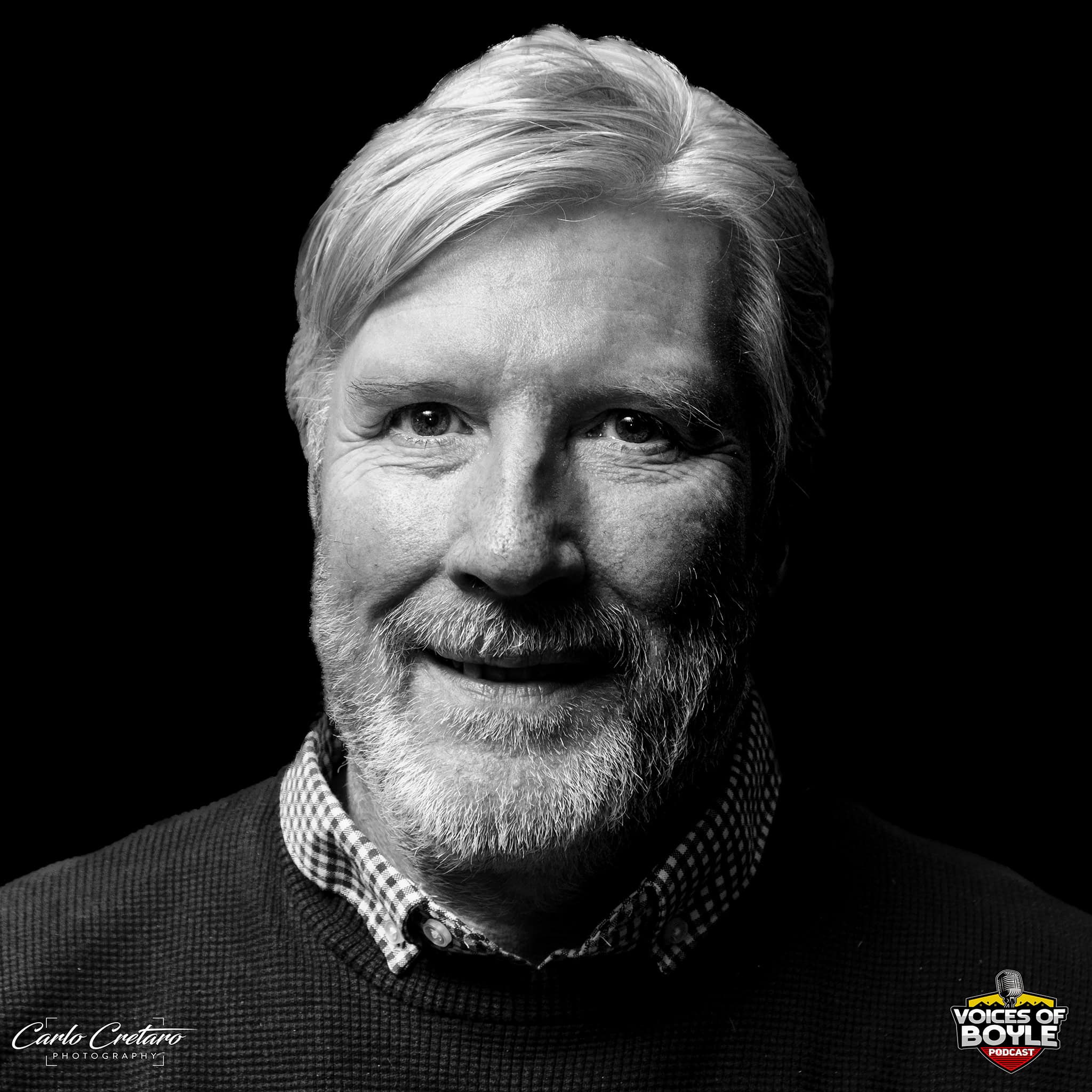
Dermot Leyden – “Thanks for not listening”
HOSTS & GUESTS
Florence Cretaro
Dermot Leyden
There was an old valve radio in a house in Arigna, and a boy of five or six who was not supposed to be near it. His grandfather would listen to RTE until he had enough of it, and then he would twist the dial. The set had one of those illuminated glass panels with the names of the stations printed across it. Normandy. Luxembourg. Oslo. Helsinki.
In the evening the signals came in off the medium wave from all over Europe, and the boy sat there working out that the names on the glass were real places, with people in them, talking.
Dermot Leyden has been chasing that feeling ever since.
“Sometimes you get a freak thing where signals will travel well out of their locality.”
Requests from fishermen
Right at the top of the medium wave band, above the stations, were the trawlers. If you were near the sea you could listen in to them. Years later, when Dermot was working on a pirate radio station, that was the bit of the band they used, just on the edge of it. Requests started coming in from fishermen.
He still listens to the shipping forecast on BBC longwave. It is the sound of AM he is after as much as the information, the idea of a voice crossing that much water and land to reach a kitchen in Roscommon. He calls it a gra for it, the Irish word, a love of the thing that never really went anywhere.
The first spot he ever did was at An Tostal in Drumshanbo. He was still in his teens, and the festival wanted everybody involved.
A studio on a table
By 2010 the radio stations were pulling out the analogue gear. A friend in the trade told Dermot the old desks and decks were going out the door, replaced by a keyboard and a mouse. He got his hands on some of it and laid it out on the table at home, and looked at it, and thought: I have the vinyl, I have the studio, could I make a radio station?
An FM licence was never going to happen. Internet radio was just emerging, and he researched it and found he could do it without breaking the bank. It sounds enormous. It was a laptop, his own PC to record onto, and Audacity to edit the shows.
He wanted to call it Memory Radio. The name was gone, taken by a German language station. So it became Memory Radio Boyle, and MRB rolled nicely, and that was that.
Thanks for not listening
The plan was to bring back the stations themselves rather than just play old records. Radio Caroline for the sixties, Luxembourg through the seventies and into the eighties, Atlantic 252 from 1989 for the nineties. He tracked down jingle packages and recordings of the programmes, but most of them were off-air tapes and the music sounded rough, so he stitched an MP3 in underneath wherever a song came up and kept the voice.
It sounded brilliant. Nobody listened.
There was a software clash at the time where an iPhone would not play his host, and he was Android, and that was the end of that argument. The people who would have loved the music were not listening to internet radio and never really took to it. He had a working title for the whole enterprise, and he still uses it: Thanks for Not Listening.
The photo that took off like wildfire
What saved it was an accident. A friend asked him to email on a photograph he had. Having sent it, he thought he might as well put an old photo up on the page and see how it did.
It went like wildfire. That is where it all started.
The radio links got no interest at all. The photographs got everything. Eventually he looked at what an internet station would cost to do properly, in the middle of austerity Ireland with every business in the country cutting back on advertising, and he could see it turning into something he had not set out to make. It would have had to become a community station, and the work would have swallowed it.
Christy Wynne’s postcard rack
The photographs were never a swerve. He was the youngest of the family, and when the letters came in from Dublin and New York with pictures folded into them, the good ones went into albums and he was handed an old indestructible album to mess with so he would leave the others alone. Sometimes he got a landscape that did not belong anywhere. When he got older he started asking about them, and found there was a story behind every one.
He saw Turner’s paintings on a school tour and never got over the colour in them. And in town there was a rack in Christy Wynne’s shop full of postcards, most of them by John Hinde, who understood exactly what he was doing. Blue sky photographed in midsummer, strong green, and then a red jumper or a red car dropped into the frame to pull your eye.
A friend once commented on one of Dermot’s own photographs that it was very John Hinde. He took it well.
The day he saw the sea
He is out on the Miners’ Way with the camera whenever he can be, and he set up the first Facebook page for the walk himself. He has driven the roads around Arigna all his life. It was only recently, up at the highest ground in the area, that he looked out and realised he was looking at the sea.
The same on the way across the top road, with the Bay of Sligo opening up, and Ben Bulben and Knocknarea beyond it.
“It’s somewhere where you can both lose yourself and find yourself nearly in the same instance.”
Coal dust for mascara
All of this was happening alongside a full-time job in the mines. Maintenance mostly, in a small family business supplying coal to the power station, which meant that when the station was taking coal everything had to be ready and moving. The working week ran Tuesday to Saturday with Monday off.
So he would finish a disco in Boyle at three in the morning and be at work at eight.
The new romantic thing was in at the time, and he points out that his eyeshadow was fairly authentic, given the hours and the coal dust. Underground you did not go alone. A man on the hill kept an account of every person below, where they were and what they were at, and you signed in and you signed out. More than once the call came over the CB on his way home from a gig to go and check the water pumps, and he would collect the man in charge and the two of them would head in, still smelling of the club.
“A miner kept a farm, but a farm would never keep a miner.”
Boy George in the Royal
The discos brought him into the Royal Hotel in Boyle, and the Royal in the early eighties was its own world. New wave and new romantic were in, the floor was full of eyeshadow and Duran Duran and Spandau Ballet and Human League, and a young lad from London standing in the middle of it did not stand out in the slightest.
That was Boy George, a year or so before Do You Really Want to Hurt Me went off in 1982. He had been minding the cloakroom in the Hacienda. Dermot notes, without much surprise, how many people were knocking around that scene who turned into somebody: Steve Strange, Trevor Horn with the Buggles and then Frankie Goes to Hollywood and Heaven 17.
Boyle has a bit of that about it too. You could be walking down the street and meet Chris O’Dowd. Dermot has watched him on a shoot in the town, in the middle of the technical end of it, lining up a shot, and then step in and get into character and say the lines. He met his own wife Margaret in the Royal, where she was working.
Is it Glenn Miller?
Parker’s was as much cloakroom work as anything else. Everyone he knew would land over with a coat, and the pile got to a height he puts at twenty foot, and admits he is exaggerating.
The best of it was a 21st that ran too late. The guards came in to clear the house, so the lads on the disco started handing out microphone stands and cables to anybody still standing, telling them to say they were with the disco and carry the gear out to the van. An older man came out past a guard with a stand in his hand and announced he was with the band.
“Who’s playing here tonight? Is it Glenn Miller?”
The guard wanted to know whether it was Glenn Miller and his orchestra, or had they the Royal Philharmonic, because he had never seen so many people working for one band in his life.
A lighter to the corner of the page
On Shannonside, the initiation was straightforward. You would be live on air reading something serious off a page, and somebody would quietly hold a cigarette lighter to the corner of it, and you had to finish before it reached your fingers. The lesson, he reckons, was to stay calm while the world falls apart around you.
He names Anne Norris as the most professional person he ever worked with, which is partly why he spent so much energy trying to make her laugh in the newsroom booth, death notices and all. He is happy to be called the messer. When the old pirate crowd got together in Jurys in 2018 for the anniversary of the stations closing, everybody who came up to him laughed before they said hello.
You can drown in nostalgia
For a man who runs two archives of other people’s memories, he is careful about the pull of it. Nostalgia, he says, is like swimming in the sea.
“You can easily drown in nostalgia. Whereas if you just swim in it and enjoy it and maybe keep an eye on the shore.”
So he keeps an eye on the future as well. He taught himself video editing on graphics cards he bought off a man who had given up on Bitcoin mining, and spent 2015 learning complicated software online, which meant the whole world moving onto screens a few years later was nothing new to him. He is quick to say he never once saw the money in any of it. Potential, he says, never entered his head.
He thinks linear radio is going the same way, and not with a bang. More like continental drift, where you do not notice the distance opening up. A podcast, to him, is what community radio was always trying to be.
Find some way to express yourself
Asked at the end for any advice, he went back to his father’s, which was to find some way to express yourself and you will always be happy. He does not think much of crossroads as a way of describing a life. He prefers Vs. You veer a little, and veer again, and eventually you are at right angles to where you started and you never had to make one drastic decision about it.
“Life can be very long if it’s boring. And very short when it’s fun.”
And then he recommended Ferris Bueller’s Day Off, which is about as good a note to end on as you will get.
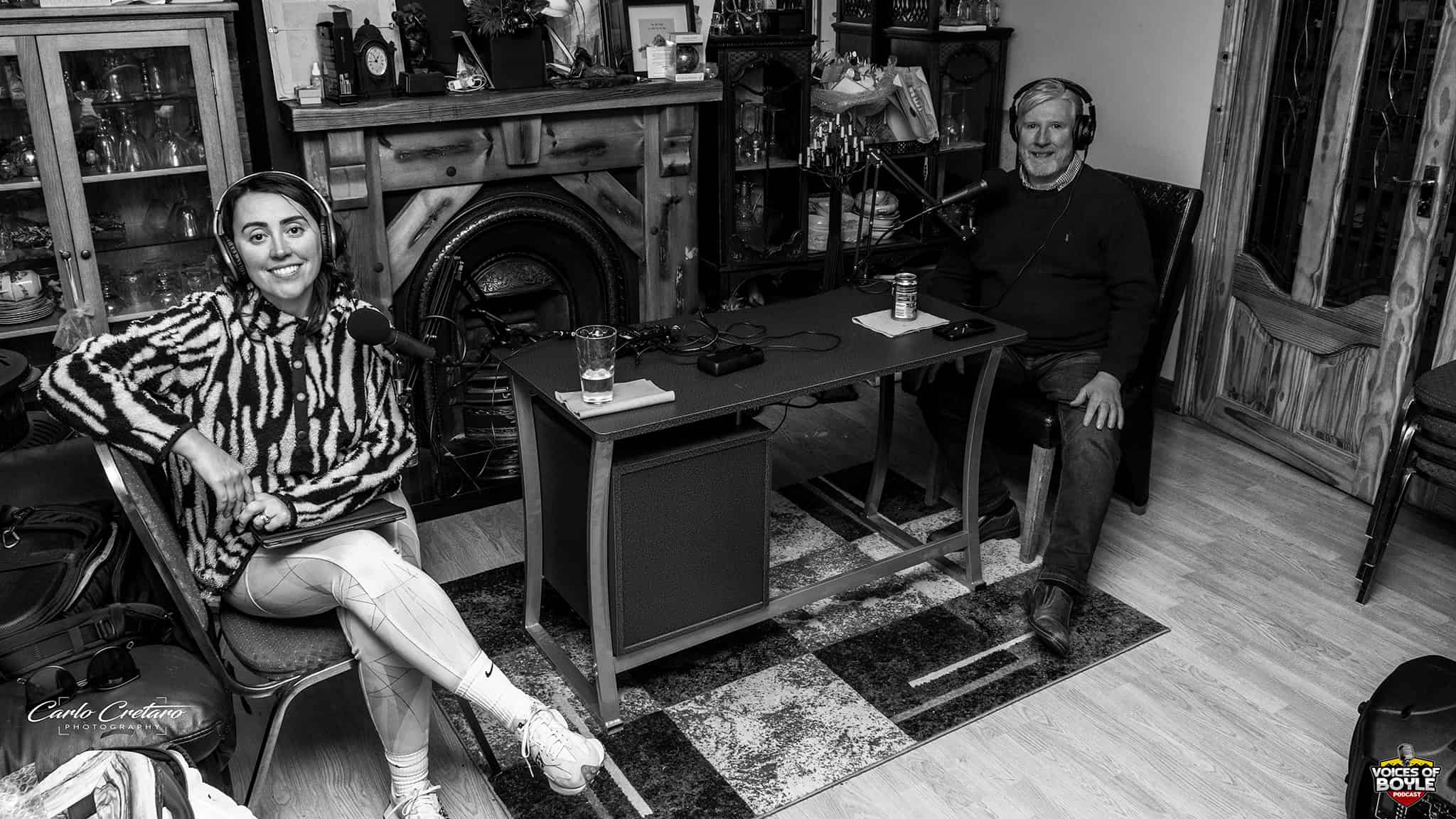

Dermot, Margaret, Nisha & Tara
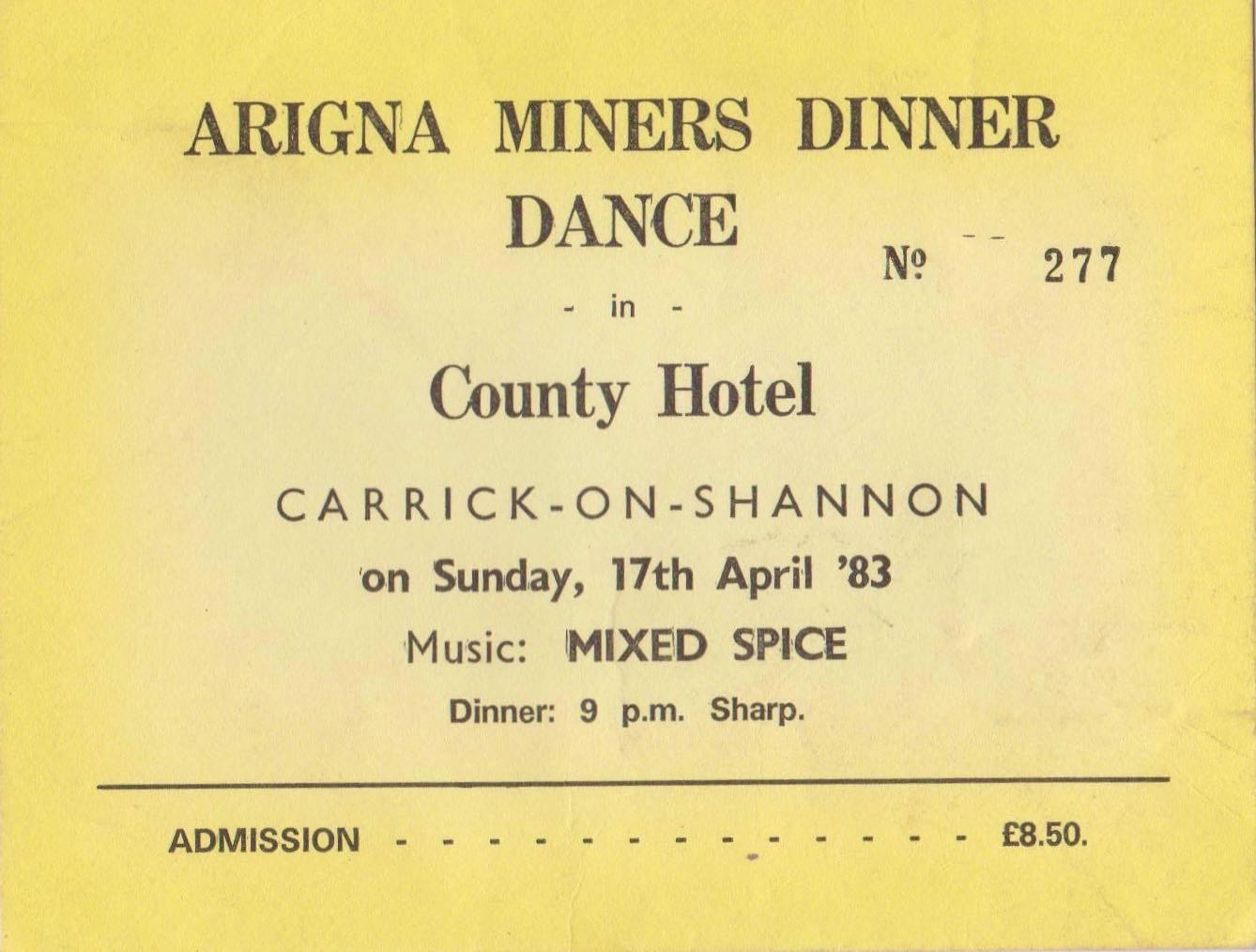
An Old Ticket to a Dance in Carrick On Shannon in 1983
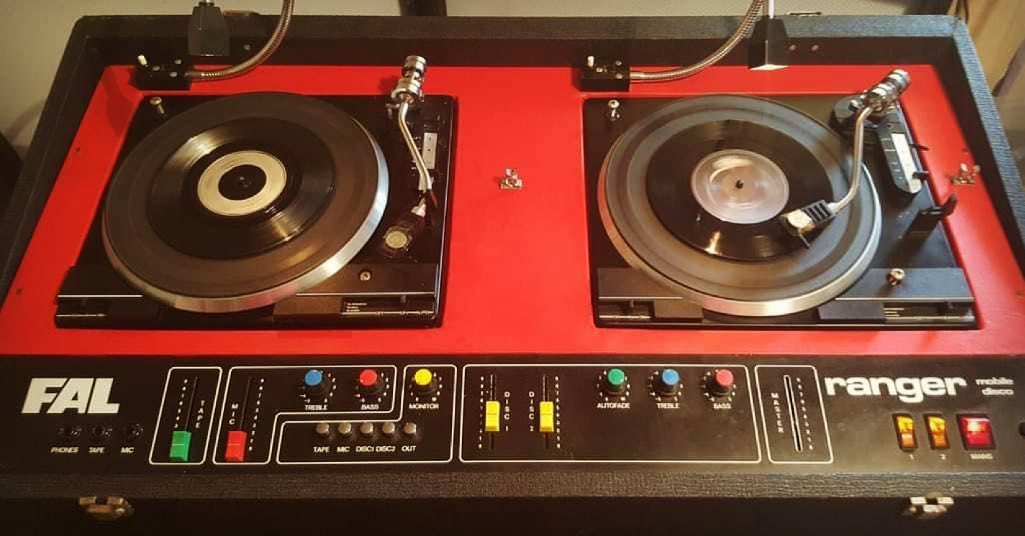
“These are the decks Dermot used in the Royal Hotel .The futuristic part on the mixer was the auto-fade which lowered the music volume automatically when you talked on the Mic. AI of its time!”
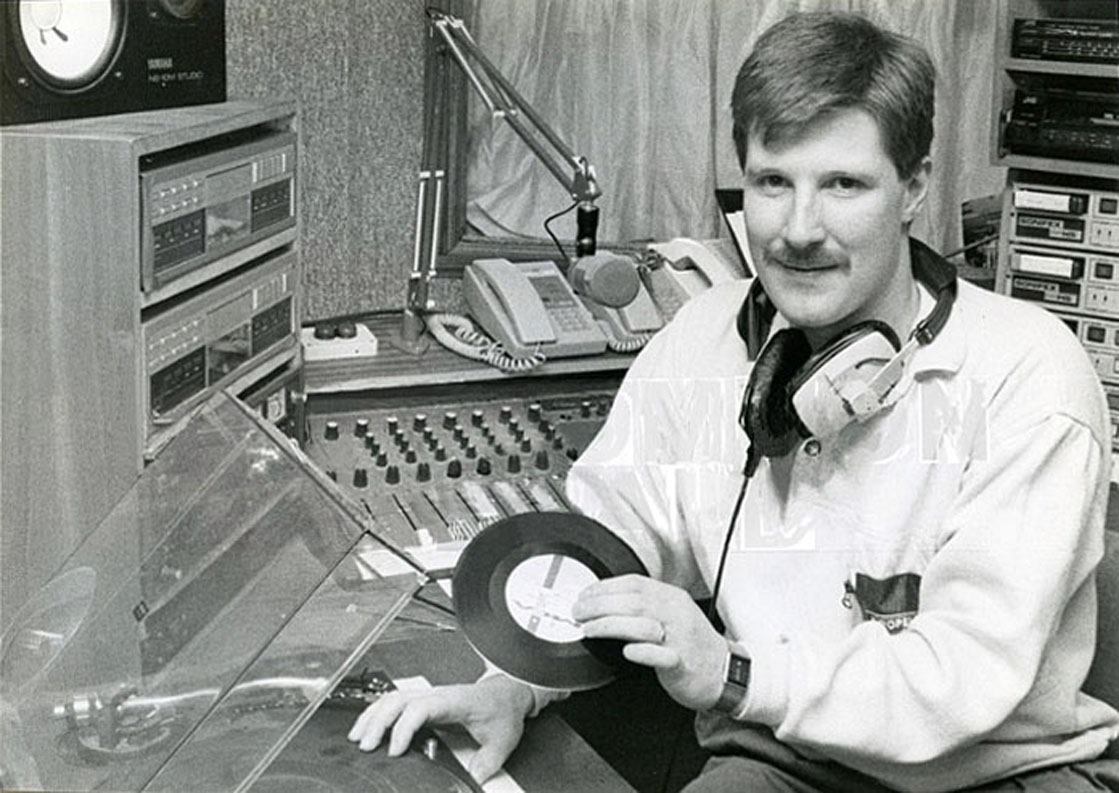
From the Early Days on Shannonside Radio
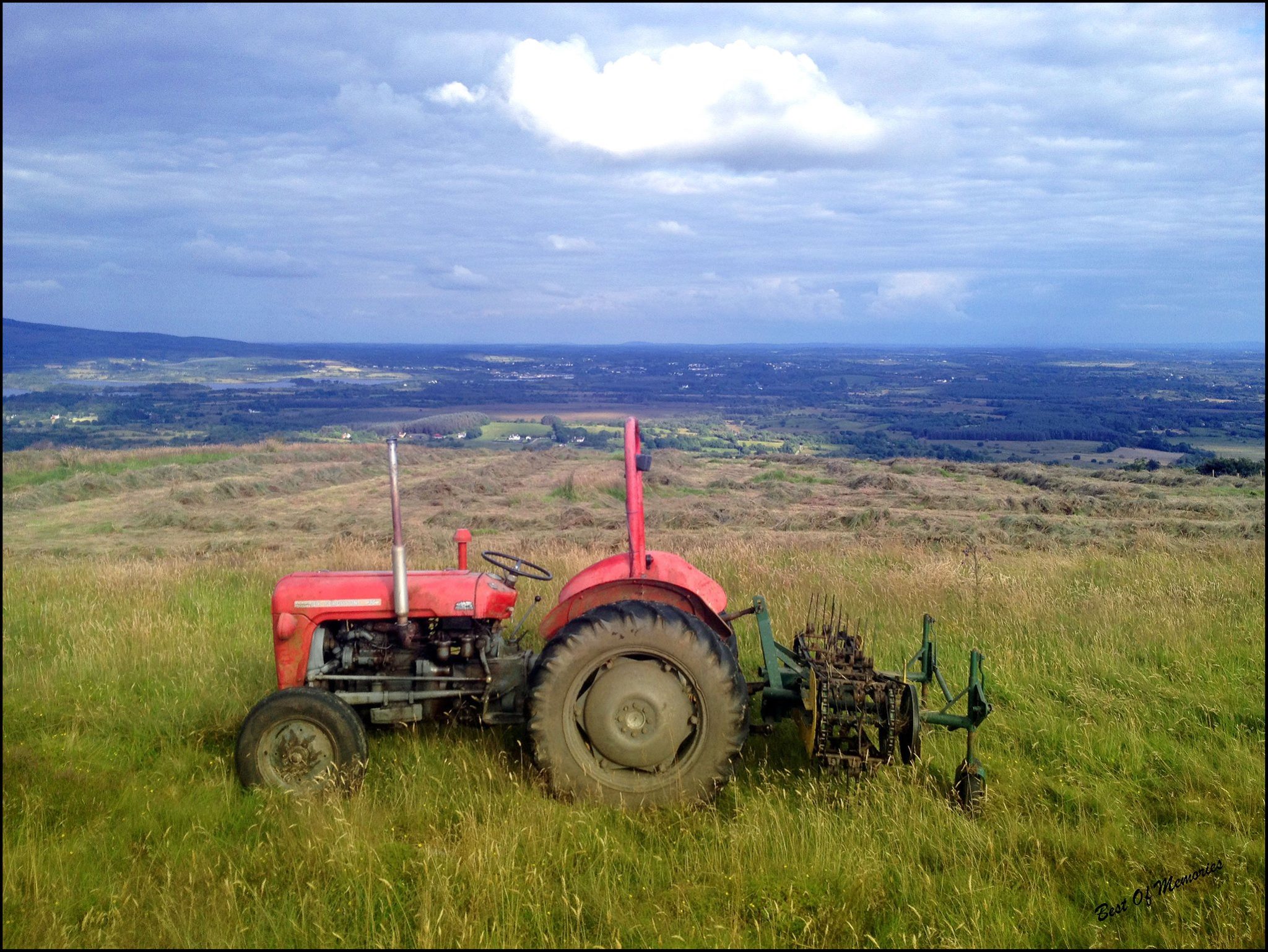
Hay rolled in Arigna Co.Roscommon with a Massey Ferguson 35 and Farendlose Hay raker.
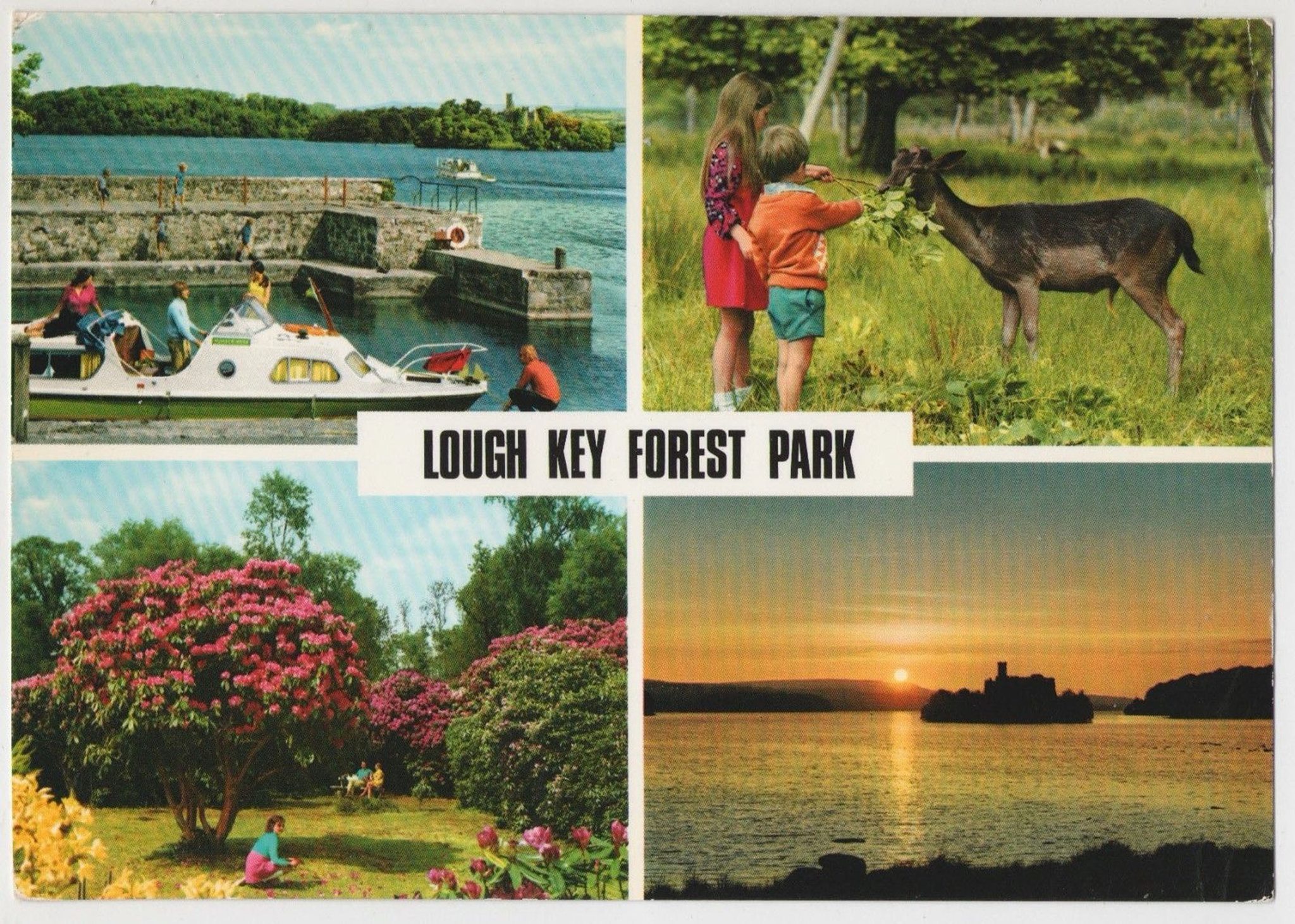
Dermot drew inspiration from John Hinde postcards he saw in Christy Wynne’s shop.
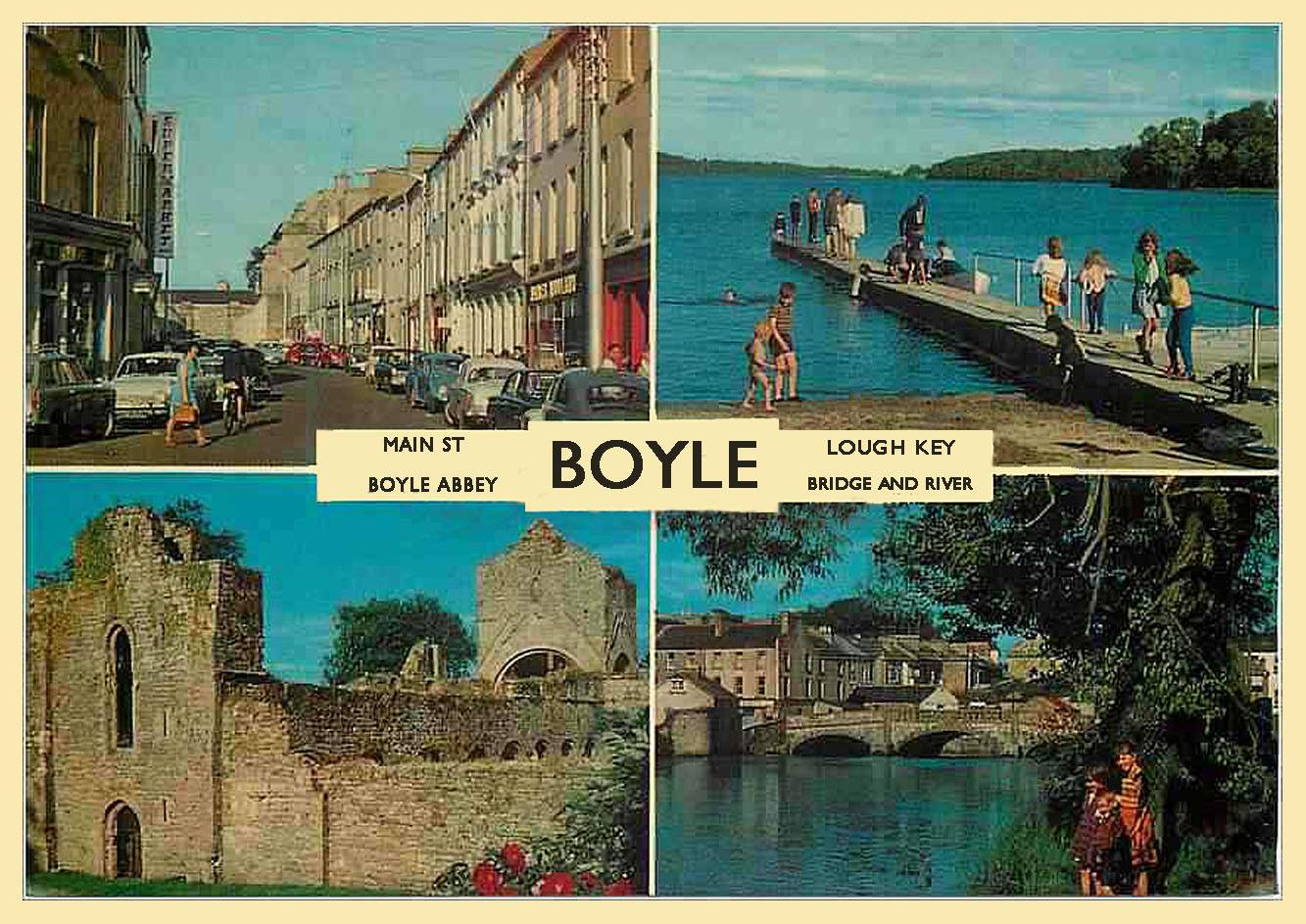
Another one of John Hinde’s postcards. He was well-known for his use of the primary colours in his work.
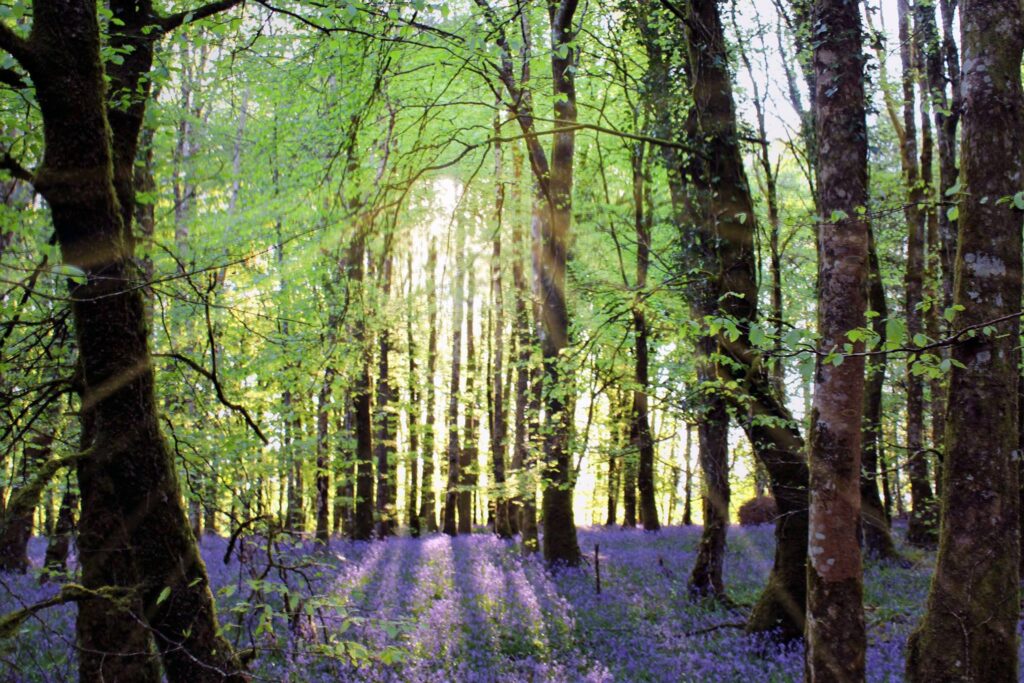
Dermot has a great love for landscape photography. Pictured is the Blue Bell Woods just outside of Boyle.
Thanks to Brendan O’ Dowd for creating and recording the musical piece for the podcast.
BE A GUEST ON THE SHOW!
If you’ve a story about Boyle, we’d love to hear it. You don’t need to have done anything remarkable, and you don’t need to prepare a thing. We sit down, have a chat, and you talk about whatever you want to. It usually takes about an hour.
Thinking of someone else? A parent, a grandparent, a neighbour who remembers how it used to be? Tell us about them. Some of our best episodes started because a son or daughter got in touch. You can find us at info@voicesofboyle.com.