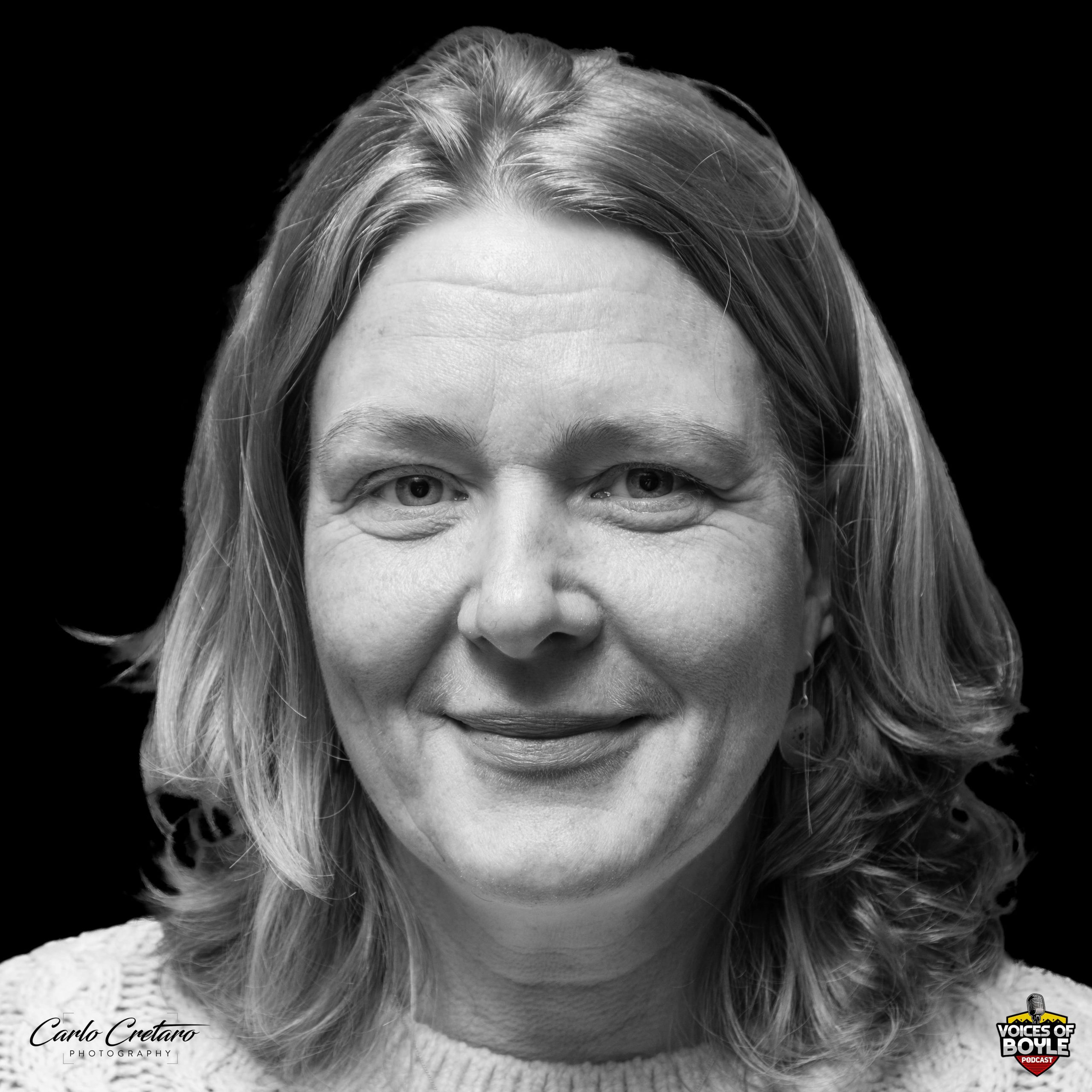
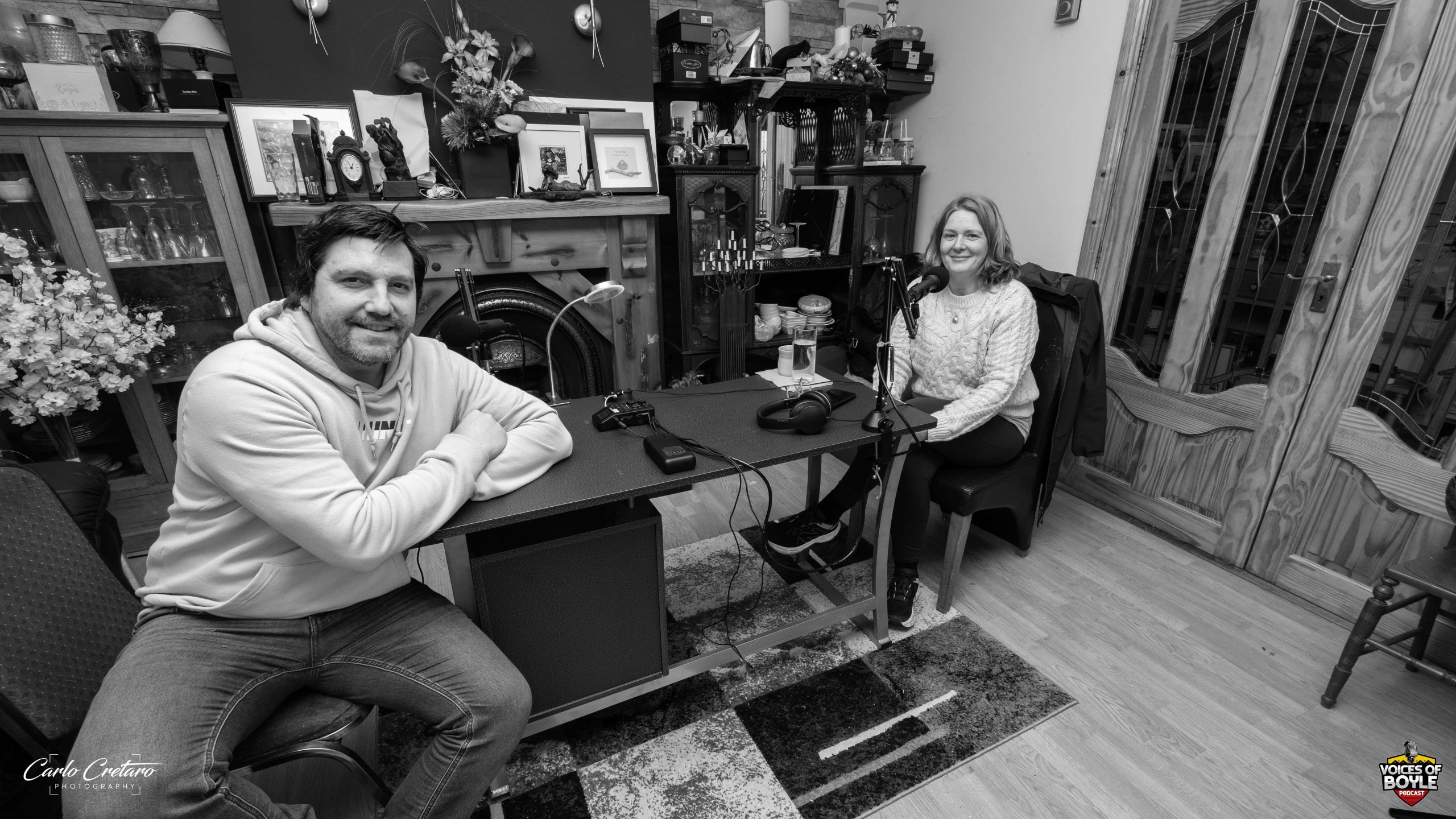
Angela Chilton was born in Billinge Hospital in the north of England, somewhere between Liverpool and Manchester, and raised in Ashton-in-Makerfield. Her parents were from Liverpool, the accents around her were broad Wigan, and she was the youngest of four with three older brothers.
She is honest about school. She did not enjoy it and does not remember much of her teenage years. But two geography teachers changed the shape of things. They took groups off to the Lake District at weekends, and in fifth year they proposed something bolder. Thirteen students walked Wainwright’s Coast to Coast, right across England, carrying their own supplies from hostel to hostel while one teacher met them at points along the way with extras.
It was on those long days of walking, passing through villages where you might not meet another soul, that the conversation kept coming back to the same question. Could you ever live somewhere like this? She decided she could.
Australia, Paris and an ad in the Irish Times
At twenty one Angela went to Australia for two years, then moved to Paris for another two. In both places she had an Irish boyfriend, and by the end of it she decided the sensible thing was to come to Ireland and either find the best of them or get it out of her system entirely.
She met a South African. Andrew had placed an ad in the Irish Times looking for a flatmate on Angel Street in Dublin, and she drove in to see it on Saint Patrick’s Day in her red Fiat Punto. She went home unconvinced. He was far too healthy, all running and cycling and baking his own bread. A phone call about her exams a few weeks later, a passing mention of Van Morrison, and a spare ticket for the Saturday sorted the rest.
“People were like, where have you been? Come on in. What do you want to do? Where do you want to live?”
Putting a pin in the map
Life in Sallynoggin was suburban on the surface and something else entirely out the back. Andrew went to work in a suit while assembling beehives at weekends, growing carrots, keeping chickens and training espalier fruit trees in the front garden. There was also a rooster, which went into a box, then into another box, then into the shed every night, and which the neighbours could still hear every morning.
The push came from an unexpected place. They were both seeing a homeopath at the time, and she had just learned that her son had been killed in an explosion abroad, where he had gone to earn money for a course he wanted to do. Sitting across from Andrew the following day as he explained that they wanted this life but did not have the money, she told him plainly to go and follow it.
They looked at a derelict place in Highwood first, phoned the estate agent, and got Sandra McCrann on the other end, who told them they could not live in that and she would sort them out. They stayed at Glencarne House, met David, and eventually bought Harry Golden’s farm in Clara. That was 2006.
How the alpacas arrived
Knockvicar Alpacas is a separate farm about ten minutes from the house. It began with a chance meeting eleven years ago, when a man living in Switzerland who had bought the place at Knockvicar asked Andrew whether he knew anything about alpacas. He did not, but he was willing to learn. Eight animals came over from Switzerland. The herd is now around fifty, out of roughly five thousand alpacas in the whole country.
Visitors can choose between a farm visit, where they will hear everything there is to know about alpacas and get to hand feed them, or a trek, where a few of the boys who are good at walking are haltered up and taken down the bog road. Some of the animals will eat from your hand and some will not, and that is left up to them. They are not circus animals. Once a year the herd is sheared and the fleece is used to make pillows and duvets.
“You get hold of an alpaca and you start walking, and ten minutes in you realise you’ve forgotten everything. You’re just in the moment.”
A long interest in natural health
The other thread running through Angela’s life started with her godmother in Manchester, who drove the best part of an hour every week to collect a box of organic fruit and vegetables and then went round the health food shops in the city. The smell of a health food shop still brings it all back. Later, in Australia, she worked in one herself for two naturopaths and learned a great deal from them.
She went on to study naturopathy for three years and homeopathy for four, and practised in Boyle before stepping back while the children were small. She explains the difference simply. Naturopathy is a bag of tools, fasting, herbs, nutrition, lifestyle, iridology and more, while homeopathy sits inside that as one of them. Her own favourite is herbs. She is currently six months into an eight month bioenergy healing course in Ballina, alongside twenty other women.
She dislikes the word alternative, and makes the point with a story about a supermarket shelf labelled health foods. If that shelf is the health one, what is everything else? She is equally clear about where conventional medicine belongs. If she is in a car accident, she does not want to be brought to a homeopath.
What she keeps coming back to is the consultation itself. An hour with someone who wants to know how you sleep, what makes things better, what time of day the trouble comes. For many people it is the first time they have properly offloaded anything. In college recently the class did an exercise in threes, one minute each, talking about something that frightened them while the other two said nothing and simply listened. She describes it as one of the most powerful things she has done.
“How often do we actually have that level of somebody sitting in front of you, really heartfelt listening?”
Twenty years in Roscommon
Before they moved, friends in Dublin warned her that country people do not take to outsiders, and that once she left the city she would never be able to buy her way back in. Neither prediction held. Her first phone call with the solicitor Miko Dowd ran half an hour, with the rooster audible in the background, and she came off it wondering what it was going to cost her. It cost her nothing. People wanted to know where she had been and what she wanted to do.
Her perspective shifted fast. She had loved bringing three small children to Dublin Zoo because the glass walls that kept the animals in also kept the children from wandering. Going back a few months after the move, she found herself gripping their hands in the crowds. At home in Clara there is nothing at the end of the road but fields and cows, and the door stays open.
Ask her about favourite places and you get running routes. The Clontykilla loop by the castle. The bog walk around Knockvicar. The Bluebell Woods, though the storms have taken a lot of trees. She counts eight days without power after Storm Darragh and then sixteen more after the January storm, six of them in the house, everyone on a knife edge, and a generator that she does not like to think about being without.
Timestamps
00:00 Welcome
00:22 Growing up in Ashton-in-Makerfield
03:15 Going home to England and losing her dad
04:14 School days and Wainwright’s Coast to Coast
06:50 Australia, Paris and a flat share ad in Dublin
09:23 Sallynoggin, beehives and a rooster in a box
11:55 The conversation that changed the plan
13:22 House hunting in north Roscommon
16:28 How Knockvicar Alpacas began
18:21 Farm visits, trekking and letting the animals choose
23:38 Fleece, pillows and duvets
24:14 Where the interest in natural health started
27:30 Naturopathy, homeopathy and iridology explained
30:28 Studying bioenergy healing in Ballina
32:24 Why she dislikes the word alternative
36:16 The power of being properly listened to
38:10 Aconite, belladonna and childhood fevers
42:52 First impressions of Boyle in 2006
47:22 Favourite runs and walks around Knockvicar
48:54 Lockdown as a chance to pare things back
51:53 Sixteen days without power
53:29 Where to find Knockvicar Alpacas
Guest Bio
Angela Chilton runs Knockvicar Alpacas in north Roscommon, where she hosts farm visits and alpaca treks for families, visitors and the occasional hen party. She trained for three years in naturopathy and four in homeopathy, practised in Boyle, and is currently studying bioenergy healing. She is a runner, a mother of four, and has lived in Clara since 2006.