Episode 63
Brian Battles – Rural Roots & Urban Ambitions
HOSTS & GUESTS
Carlo Cretaro
Brian Battles
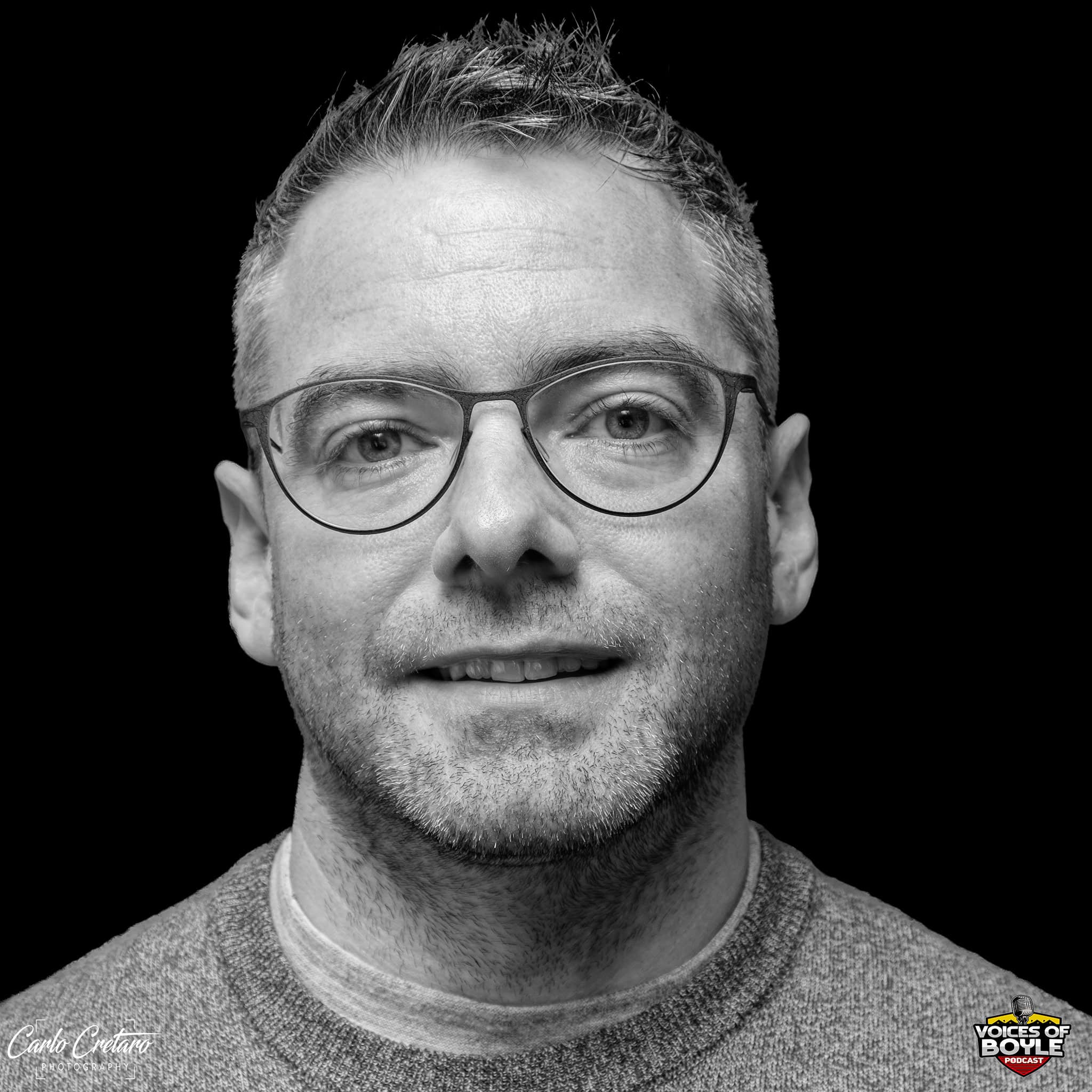
There is a particular kind of childhood that only makes sense to people who had it. Brian Battles grew up in Garrow, up in the Curlews looking down over Lough Key, and if there was a cow due to calve, or if they even thought there was, he had a system.
“I used to go to bed with my farming clothes on and then I put on my pyjamas over the farming clothes.”
That way, if there was any stir during the night, he was ready. His mother or father always called him, he says, whether there was any need for it or not, because they knew he would be disappointed to have missed a calving. Out of everything in an hour long conversation, that is the detail that stays with you.
Garrow, and a house with the door open
Garrow in those years had relations in every second house and neighbours who were in and out of each other’s kitchens. Brian starts naming them and then stops himself, in case he leaves somebody out, which tells you as much as the list would have.
His own house he describes as an open house. There was always someone coming or going, and it did not matter a whole lot whether the family were having tea or having dinner, whoever came in sat down at the table. Very chilled, very easy, very welcoming, is how he puts it. Just really happy.
The other thing he remembers is the frogs. There was a pond in the field at the back of the house, and he would gather tadpoles and watch them grow the legs on them and turn into frogs.
The bonfire on Higgins’s Hill
Anyone who grew up around Boyle in the eighties and nineties will know the bonfire was the fixture of the year. Brian’s was at the top of Higgins’s Hill for years before it moved out to where the old Deer Park school used to be, and it landed on or around the last week of school, which did nothing to hurt the occasion.
The build up was the best of it. Weeks of collecting tyres and timber and whatever else could be got, and going round the houses collecting a couple of bob from each one to buy sweets and drinks. He puts the crowd at well over a hundred by the time the night came, with a fair few driving out from town for a look and a nose.
Carlo suggests hot dogs. Brian is fairly sure they were never that fancy, and that hot dogs were a townie thing.
A Honda 50 coming up the road
His granny lived a few miles away, and whenever she came to visit it was on a Honda 50. Sometimes she arrived early enough that the children were still in bed before school, which he remembers as a treat, and he can still bring back the sound of the engine coming up towards the house.
Leaving Garrow
He was around fourteen when the family moved. His parents had bought a farm a few years earlier up between Tulsk and Roscommon town, and had a site and planning near the land, so there was a year in a rented house out on the Plains while the new house in Fourmilehouse was being built.
He and his brother David stayed in school in Boyle rather than switching. That meant his mother driving the two of them up and down most days, and a lift from Mr Keighery on the mornings he was in for nine. Brian is clear about why. It was nothing to do with results or exams. It was the friends.
“I was never really academic”
He does not dress up his school career. He was never academic, did not enjoy it, and had even less interest again after transition year, which he calls a bit of a dossier, with an apology to whoever organised it.
His was the year that went through the amalgamation of St Mary’s and the Abbey, so transition year was the first year the boys and girls were mixed. He reckons his own year was particularly boisterous, and that any teacher who was there long enough would agree with him, and he laughs about it now rather than defending it. They finished in 2004, and the thing people outside Boyle find strange is that he is still in contact with the lot of them.
The teachers get a long roll call, and it is worth listening to it in full if you were through those schools yourself. Francis Flanagan, Gus Gannon, Frank Tivnan, Paddy Nangle, Johnny Murray, Clement Burns and a good few more. Twenty years on, his verdict is that there is no money would pay him to do the job.
The letter he destroyed
In sixth class in St Joseph’s the eye testers came round and handed him a letter for home saying he needed glasses. He got rid of the letter. His reasoning was straightforward. He was not enjoying school and he was not about to give anybody extra ammunition.
It took Frank Tivnan calling him up to the front of the class a few times in secondary, telling him he was squinting and could not see the board, before he gave in. He got the glasses on 9 September 1999, a date he can produce off the top of his head while admitting he could not tell you what he did yesterday.
The best part is what happened in the car outside Brogan’s. He put them on, looked ahead, and told his mother he could read the number plate in front of them. Then he asked her whether she could see it. She could.
He walked into Gus Gannon’s class the next morning and got shouted at to take the glasses off and stop mocking people who wore them, because Gus had never seen him in them before. It took a minute or two to convince him they were his own, and then, Brian says, it was all apologies. He got to know Gus properly years later across the counter in Brogan’s, and has nothing but good to say about him.
Valencia, twice
Frank Tivnan also spent a lot of class time on slideshows of Spanish towns and cities, Valencia among them. Brian admits he was too busy being a nightmare student to take in a single slide of it.
Years later work brought him to Valencia a couple of times. He remembers standing there with a colleague, aware that there were cathedrals and the like he really ought to be going to look at, having seen them all on a screen in Boyle. They went for the sunshine instead. He says Frank was ahead of his time.
Betty Myler, two pounds an hour, and the trailer
The working life started at fourteen or fifteen, in Betty Myler’s gardens. He cycled out to it, from Garrow first and then from the Plains, for two pounds an hour.
There was no clocking machine, but there was Betty, who was sharp. Turn up at ten past nine having cycled the whole way and you got this:
“Don’t worry about being late. You can take it off your lunch break.”
He is grateful for it. You turn up on time, you take your lunch when you are told to take it, and you go home when you are meant to go home. He learned a lot about gardening too, and he learned to reverse a trailer at fourteen, because going forward was more or less the extent of Betty’s driving.
Brogan’s
From there he went into Pat Brogan’s. It started with Mrs Brogan’s garden at the back of the pharmacy, then Pat’s garden out near the girls’ school, then pricing and organising stock in a shed for the second shop that was opening in SuperValu.
His first day in Natural Options he was a sort of makeshift bouncer on the door, because the place was packed out and Charlie from Fair City was in for the opening. After that Pat took him under his wing and started handing him prescriptions to pull, back when they were all pieces of paper. He worked the veterinary counter, which suited a lad off a farm who knew what the customers were looking for and knew half of them by name, and the photo lab, which he says was always good crack.
A girl who did the odd Saturday for Pat was working as a technician in a hospital in Galway. That conversation gave him the idea of doing a pharmacy technician course, and he did it part time in Athlone while still working in the shop, with Pat facilitating the days off.
The difference between that and school is the bit worth hearing. Because he was interested in it, the study was no trouble at all. He did fail a chemistry exam one year, and Mita, Pat’s sister, who came to visit Mrs Brogan every second weekend or so, brought him into the kitchen on a few Saturday evenings after closing to give him grinds. It worked.
An interview he went to for the practice
He added a sales and marketing course in Dublin, one night a week, because he was meeting reps in the pharmacy and fancied the idea of being one. Then he saw a job in the Sunday paper for a pharmacy technician in St Vincent’s Private Hospital, and applied without any real notion of getting it.
He drove up the night before through the big snow, which took hours, and stayed in a hotel in Donnybrook. He came out of the interview thinking two things. First, so that is what a proper interview looks like. Second, nothing is coming of this one, but a couple more of them and I will get something eventually.
A few weeks later they rang and offered him the job, which left him with a problem he had not planned for, because he had no interest in living in Dublin. He talked it over with Pat one evening after the shop closed. Pat told him he did not want to lose him, told him to go anyway, and told him that if it did not work out he could come back.
He went. He also kept doing Saturdays in Brogan’s for years afterwards, which he calls a slow phasing out. He is unambiguous about what that time was worth to him, and he and Pat are still good friends.
A tour of Irish pharmacy
What followed is a career that reads like a map of the sector. Wards and dispensary in Vincent’s, which he loved for the chat with patients, nurses and doctors. Then the chemo unit, which he left, because a clean room where everything is sterile and sprayed with alcohol was not where he wanted to spend his days. Then a company doing hospital care in the home, for patients who needed IV antibiotics but did not need a bed. Short covers in St Patrick’s and in the hospice in Harold’s Cross.
Then the National Rehabilitation Hospital in Dún Laoghaire, and the job he credits most. His boss there was UK trained, which meant technicians were pushed and promoted and put on committees, and he got exposure to work he would not otherwise have got near. She is still a good friend.
After that a buying job for a pharmacy group, then the HSE, in the section that reimburses pharmacies, GPs, dentists and opticians. He describes it, without much hedging, as a really nice number. Decent money, great holidays, flexi time, tennis two or three evenings a week and plenty of running and cycling. And a nagging thought that he could not sit there until he was sixty five.
“Like, I’m getting the job”
The Wexford story is the one that explains the rest of him. He saw a role with Macauley’s, rang about it, and was told the closing date had gone. He was told they would come back to him if they found nobody. He rang again a week later and was told the final interviews were the next day and he had missed out.
He told her she did not understand. This was the perfect job for him and he was getting it. Then he found the person doing the interviews on LinkedIn and contacted them himself. He had two interviews inside three days and got the job.
He left the pension, the holidays and the comfort behind for his first commercial role, worked himself into the ground for a couple of years, managed a lot of people and learned how the money side of pharmacy actually works. A spell with a Dublin owner followed, and then McCabe’s, as commercial and operations manager across around twenty five or twenty six pharmacies, by which stage he had moved home to Roscommon and bought a house in Strokestown.
The niggle
The idea of his own business had been sitting there a while. What convinced him was the phone. People who had left the company were ringing him for advice, and the calls and messages kept getting more frequent, and he thought there had to be something in that. He sounded out a few people in the industry he trusted to steer him straight, and most of them said the same thing.
Then came the loop that stops most people. Now is not a good time. Another six months here first. Another six months after that. Eventually he decided to just do it, and gave four months’ notice so he had time to get his head around being self employed. Pharmacy Success launched on 1 February.
He had five days in the diary. By the third week of February, March was full.
Asked about the struggles, he apologises for not having five or six of them ready to roll off his tongue and says the honest answer is that it has been plain sailing enough. He clearly feels bad about that. He traces the work ethic straight back to two pounds an hour and a bicycle, and to a shop where things were done right and nobody stood around while a sick person waited for an antibiotic.
What the work actually is
A fair few people assume anyone who owns a pharmacy is a multimillionaire. Brian is blunt that it does not hold up, that reimbursement has dropped substantially over the years, and that anyone who bought or opened in the last decade or two is under real pressure unless they have other interests.
So the work is a mix. Finding where a business is losing its margin, often on an accountant’s referral. Operational efficiency, where the instinct is usually to hire another person and the answer is usually a better way of working, less double jobbing and a tighter process. Staff training, sometimes after hours, sometimes for symbol groups. Coaching and mentoring younger pharmacists. A bit of mediation when the problem is people rather than process.
He is good on why owners burn out. Run any small business and you are the marketing manager, the HR manager, the operations manager and the commercial manager all at once. Run a pharmacy and you cannot go and sit in a coffee shop for the afternoon, because a pharmacist is an expensive person to hire and most owners will not put one in just to buy themselves time. So they do the rest of it at the kitchen table at night where nobody sees it. A lot of his work is getting somebody from six days a week down to a steady four over three or six months, so they do not burn out and decide to sell.
The GP practices happened by accident. One call came in from a doctor asking him to streamline the practice, and he said he was not sure he could help. He met him anyway, and found the same thing he finds everywhere, which is people doing jobs that somebody else in the building should be doing. Better for the bottom line and better for anyone trying to get an appointment.
The shirt problem
He now runs six hour training sessions for twenty five or thirty people without thinking about it. The first one was in a hotel in Wexford and he prepped and prepped and prepped and did not sleep the night before, worrying right down to what colour shirt he could wear without sweating through it.
What he says about the gap between those two things is the most useful few minutes in the episode.
“We all have the muscles there. We all have the ability to do it.”
It is the approach, the self belief and flexing the muscle, and the more often you do it the more used to it you get. He still gets the odd flutter when he knows the room might be tricky, and he calls that positive nerves. He also makes a point now of bringing along anyone he works with who is nervous, and telling them that if they make a balls of it, everyone has, and that it is better to put yourself out there and learn and grow and enjoy it than to be the underdog on purpose.
He points out that if you had told him in school he would end up self employed and standing up in front of rooms of people, he would have told you that you were mental.
Pharmacy Connected
He is planning a podcast, and he came to Carlo and Florence for advice on it, then cheerfully admits he had badly underestimated what is involved in making one.
The idea comes straight out of the job. He is in a privileged position, invited into businesses and shown the parts that are not working, and what he keeps finding is people who are isolated. He describes sitting with an owner who had beaten themselves up so badly over a set of problems that they were convinced they were the only pharmacy in the country having them. They are not, and a podcast is a way of telling them so.
There is a practical side too. Circulars, regulations, new drugs and guidance land constantly, and reading all of it is not realistic for somebody who closes at six, gets out at half seven and still has to put the children to bed. He has been asking his target audience whether they read the latest document and getting a straight no, followed by yes, I would listen to that in the car or out for a run. The working title is Pharmacy Connected, and the idea is connecting up community, hospital and industry pharmacy along with the bodies that make the decisions.
He has had sponsorship offers from within the industry since February and has turned them all down so far, because independence is the product. If he tells a client to buy a particular piece of software, he wants it perfectly clear there is no brown envelope in it at the end of the month. It is the same principle as the line he uses in the shops. He can tell them what they want to hear and still send the invoice, or he can be honest with them. The credibility is the whole business.
Boyle, and a hero
Asked what was best about growing up and going to school in Boyle, he does not go to places or events. He goes to the people. Twenty years on he is still in touch with the lot of them, and whether he meets them in Cooney’s or in SuperValu or somewhere in Dublin, they are the same crowd. They ripped the piss out of each other the whole way through school, and when it came to it they had each other’s backs.
And then there is his granny. He remembers being asked in second class in St Joseph’s who his hero was. The other lads were naming footballers and whatever celebrities they knew of. He said his granny.
He got a dead arm for it. He says it still stands.
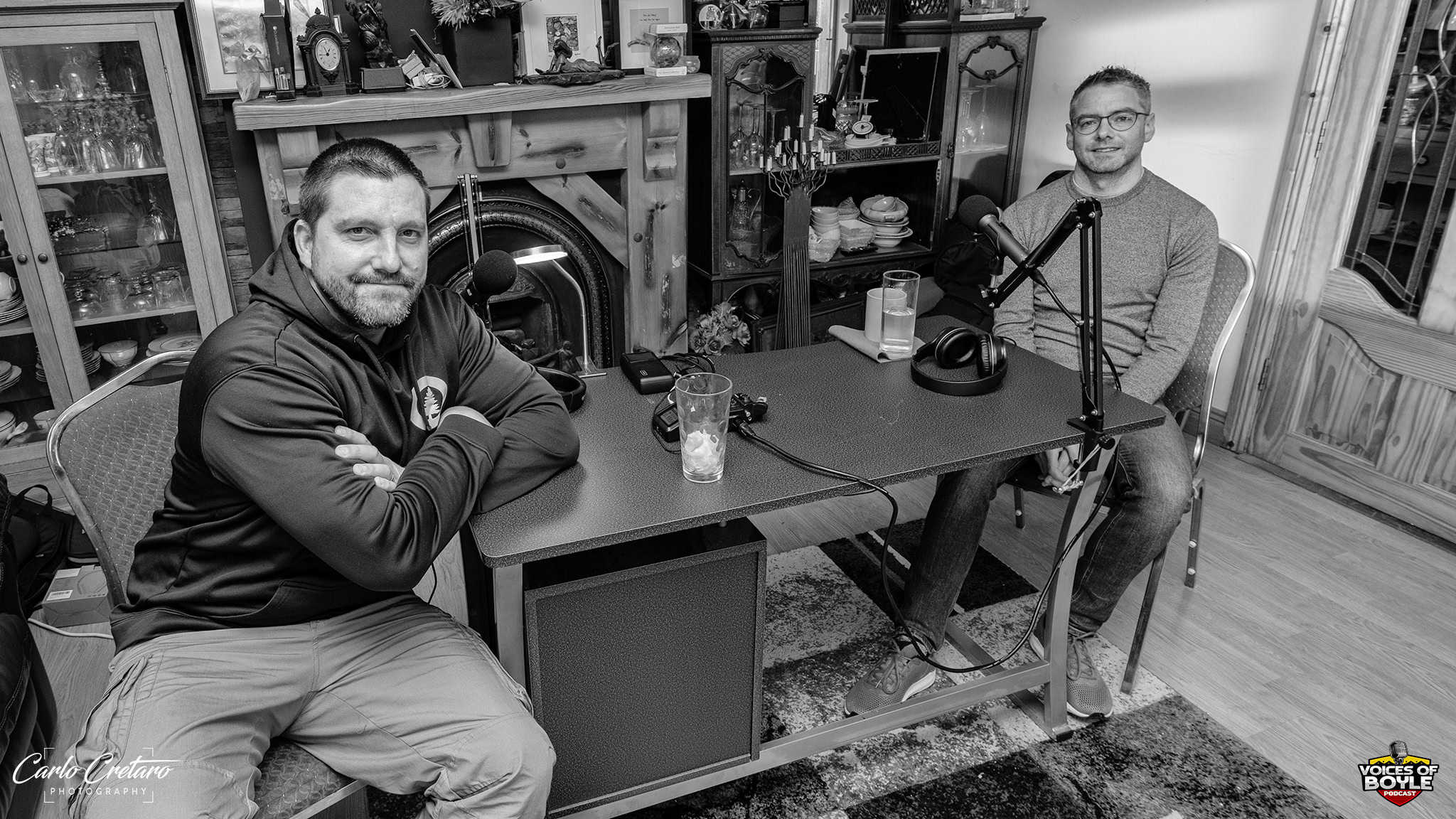
Thanks to Brendan O’ Dowd for creating and recording the musical piece for the podcast.
BE A GUEST ON THE SHOW!
If you’ve a story about Boyle, we’d love to hear it. You don’t need to have done anything remarkable, and you don’t need to prepare a thing. We sit down, have a chat, and you talk about whatever you want to. It usually takes about an hour.
Thinking of someone else? A parent, a grandparent, a neighbour who remembers how it used to be? Tell us about them. Some of our best episodes started because a son or daughter got in touch. You can find us at info@voicesofboyle.com.