Episode 16
Christy Wynne – ‘Boyle, A Stranger’s Paradise’
Hosts & Guests
Carlo Cretaro
Florence Cretaro
Christy Wynne
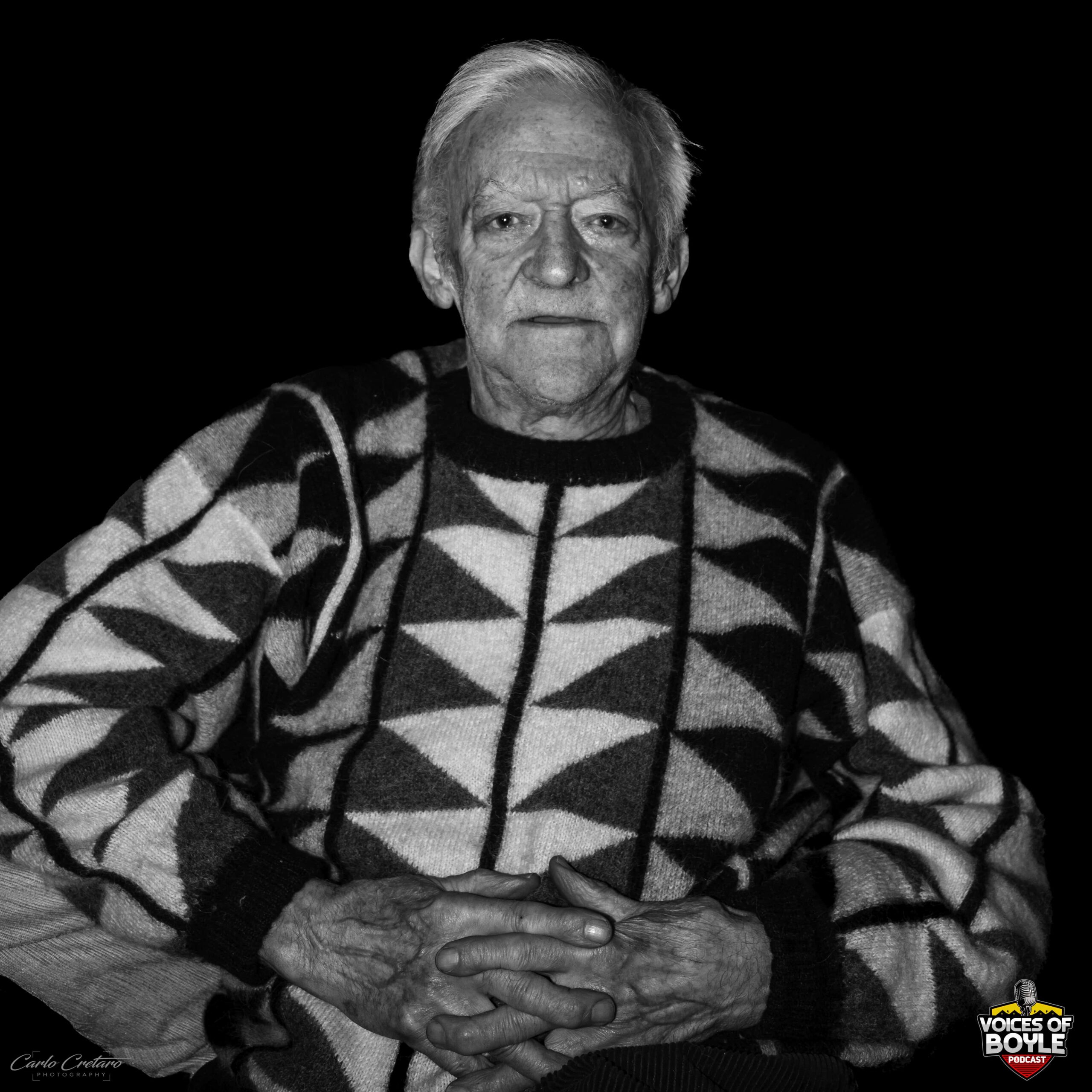
The snow started on a Monday night in 1947. On Tuesday morning Christy Wynne, aged eleven, got ready for school in the newsagent’s on Main Street where he lived. His mother blessed him with the holy water inside the hall door and told him to mind himself.
She hadn’t realised how much had fallen. Neither had he. Across the street there was a track in the snow, made by a lorry or a horse and cart coming out of Candon’s yard on St Patrick Street, and he walked in it. Then it stopped. In front of him there was nothing but a mountain of snow, and Christy turned round and went home.
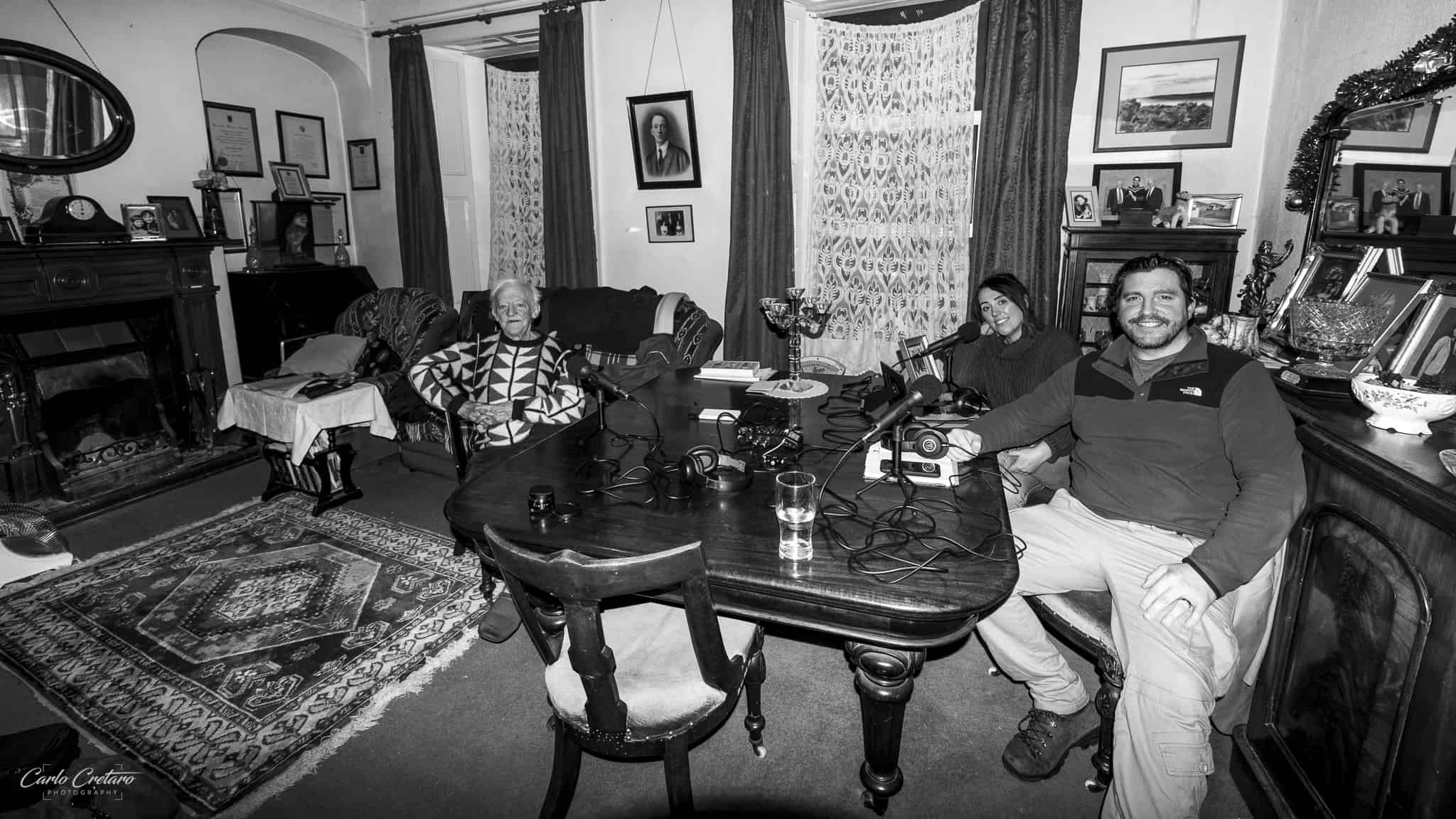
Carlo and Florence first read that story on a summer evening in May 2020. Christy had written it up, and his son Martin had put it online. Before they finished reading, they had the idea for this podcast. Nearly three years later they finally sat down with Christy himself, by the fire in the same house, with his memory going back to around 1942.
“Could you imagine people walking on water?”
Walking to the islands
The snow kept coming until Wednesday midday. Up Green Street and round the Crescent the children slid and threw snowballs, and one of them knocked the pipe out of Detective Bill Doyle’s mouth. Doyle called into Wynne’s for his paper and his pipe tobacco on his way to the barracks. The boys spent ten minutes searching the snow while he got crosser and crosser, until somebody spotted the pipe sitting on the windowsill of Brady’s.
By the end of the week Lough Key had frozen. Christy walked to Church Island with adults. If you were brought up the narrow road to the top of the Rock of Doon that Sunday, you could see people all across the lake. It was one of the first stories he ever wrote.
Christmas in Eason’s
The Wynnes were one of the main toy shops in Boyle, and every Christmas his mother went to Dublin to buy. One of the children went with her. The steam train stopped at Carrick-on-Shannon, Dromod, Longford and every station in between, and Christy spent the trip looking out to see who was on the platform.
Most of the day went on Eason’s, which had four floors. There were greeting cards, toys, and the boxed writing paper that every convent girl bought the nuns for Christmas. A good customer was given a meal in the staff dining room before the train home. Christy says that was the icing on the cake. One year they crossed to Clerys, where Santa was in the basement with a Dublin accent you could cut.
A day off for the fair
There was a fair every month, and the big ones meant a day off school. Store cattle were walked in from as far as Leitrim, starting at four in the morning, and there could be four or five hundred of them. The fair started on the Green at six, and as deals were made the cattle were driven down to the Crescent, where lorries waited, or to the railway station. Christy later worked two summers in the goods office, and he remembers 15 to 20 wagons for one fair, ten beasts to a wagon.
The best of it was around the Royal Hotel. Now and again a farmer with two cattle would ask a young lad to keep an eye on them while he went in for a quick one. He’d give you sixpence, and you stood there until he came back out of Paddy Daly’s or Charlie Mullaney’s or Grimes’s.
Leland’s Shore and Mrs Casey’s biscuits
Everybody learned to swim at the Doon Shore, which they all called Leland’s Shore. It sloped in gradually with no holes, and a Dr Leland had kept a small summer house there.
On the road down was a small shop run by Mrs Casey, whose son Paddy Joe later drove a travelling shop full of Cadbury’s and Rowntree’s. Most biscuit tins then were solid aluminium, but five or six of hers had glass lids, so you could point at the Mikados and Mariettas you wanted. When they were twelve or thirteen, the gang pooled their pennies for five Gold Flake or Afton, broke them up between them and smoked them by the shore.
Cowboys and Indians in the barracks
After the war, the soldiers’ barracks that is now King House stood mostly empty. The caretaker was Philip Murray, a carpenter. His son Junior was one of Christy’s closest friends, and Mr Murray let the gang play cowboys and Indians on all four floors, with the old prison cells in the basement, on one condition: no broken windows. There was also a wide ledge outside the upper windows where Christy had seen soldiers lie out in the sun. Some of the boys climbed out onto it. Mr Murray never knew.
When the barracks wasn’t free, the gang went to the Abbey and climbed the bigger winding stairs. You got up a wall, onto a tree, along a branch and onto another wall to reach it, and from the top you could see out to Assylin.
“You’d hardly ever have to stop once and say, hey. There’s a car coming.”
Every building was a business
Christy says that every building on Main Street, bar maybe one, was a business. There was a chemist, butchers, a dentist, a hotel, drapers, and McNamara’s guest house and cafe. On a Sunday after the half eleven Mass, the boys played full games of football on the street, with full backs, half backs and a goalkeeper, and hardly ever had to stop.
Summers in Rockingham
The King-Harmans got their papers from Wynne’s: the Irish Times, and the Telegraph or the Mail. Their chauffeur, Christy Dolan, called in every day in uniform, in what Christy thinks was a Jaguar, and bought 20 Players for himself. Paddy Moran ran the farmyard and came in for his Erinmore Flake. Every summer Paddy’s grandson David Woodward came over from London. David was Christy’s age, and Paddy would tell him he’d have to come out.
So Christy cycled out on his sister’s bicycle and waited at the gate until David came down from the stable yard. They spent hours on the walks near what are now the bog gardens. David wouldn’t go down past the Fairy Bridge, where the trees closed in, because he said there was a ghost. Christy thinks the ghost story was more likely made up to keep the poachers out. David showed him the canals, which boats still used then, and the ice house where the venison and beef were kept. Then they went up through the tunnel to the kitchen door, where Maura Tanny, who used to come into the shop, said, “Is that Christy Wynne? What are you doing here?” and brought the two of them into the kitchen.
In September 1957 Christy was in Dublin, studying at Ross’s College for the bank exam, because his school had done Greek instead of commerce. He heard at breakfast that Rockingham was on fire. O’Leary the chemist, from next door, was one of the Boyle men who went out and helped carry out what could be saved. It was a fraction of what was there. Christy remembers his grandmother saying the house had a window for every day of the year.
“I’ll be back”
Christy spent two years with CIÉ in the goods office in Boyle, doing relief in Carrick-on-Shannon and Ballymote, and he was told he’d be made permanent once the next exam came round. Then Todd Andrews became chairman, started closing stations, and the exam never came. Christy used his free rail passes and went to London in May 1962.
There were plenty of Boyle lads there, including a Colgan and the son of Pat McCarron, the station master, and they went to dances at the weekends. But Christy never had his heart in it. His mother told him the shop was there for him if he wanted it, and his brother Tom had just opened the Corner House in 1962. Christy was back behind the counter on the first of December 1963, in time for Christmas.
“It was just a question of when.”
The lunchtime rush
He stayed until 2005. When he started there were three newsagents in Boyle: Wynne’s, McDonagh’s and the Bazaar. Within a few years filling stations and supermarkets were selling them, and there were ten. Christy put his effort into sweets and lined the shelves with jars. If a child wanted only two ounces, they got two ounces.
From a quarter to one until half one, five days a week, the queue was like a bus queue. Christy says that hour counted for more than a good Saturday. Teresa and Phil served alongside him, and Angela before them, driving in every day from near Frenchpark. A local dentist used to tell Christy he had a lot to answer for, since there wasn’t a child in the town with a decent set of teeth.
The lifeblood of the street
Christy has looked out of the same window at Main Street for more than half a century. In one of his blog posts he called the closed shops he sees now graves without a headstone. McNamara’s is closed, and so is Eileen Graham’s little music shop. The old Bank of Ireland is empty. He used to sleep at the front of the house, and in the mornings he would hear people talking and laughing and dogs barking. Now there are cars, but hardly anybody walking.
“It was the lifeblood.”
There’s another loss he talks about. When Carlo asks about regrets, Christy says he has none, and then he talks about his wife, who died young after an illness. He decided not to marry again. He had seen children from a first marriage drift away once a second family came along, and his boys, Martin and a younger son, were three and a half and a year and a half. He didn’t want that for them. People in the shop used to tell him he should have married again. He’d made up his mind.
He also talks about Woody, his dog, who died at the veterinary college in Dublin about six or seven years ago. They offered to cremate him and send him home, and Christy said go ahead. Woody’s ashes are in a small wooden box with his name on it, on the sideboard. Christy says dogs are semi human.
The stranger’s paradise
Asked for his favourite thing about Boyle, Christy says it’s the friendship and the welcome. There was a small pub up the street, the one Matt Smith had later, kept by two sisters, Alice and Maud. You sat in the kitchen by the cooker. Whenever somebody new came in, whether a bank clerk, a teacher or someone from the railway or the post office, Alice would say the same thing.
“Boyle is the stranger’s paradise. Aren’t they all welcome?”
Christy says he can’t think of a newcomer who ever left saying they hated the place. For young people, his advice is short. Treat everybody as you’d like to be treated yourself. They’re a human being, he says, and they deserve the same respect you’d expect.
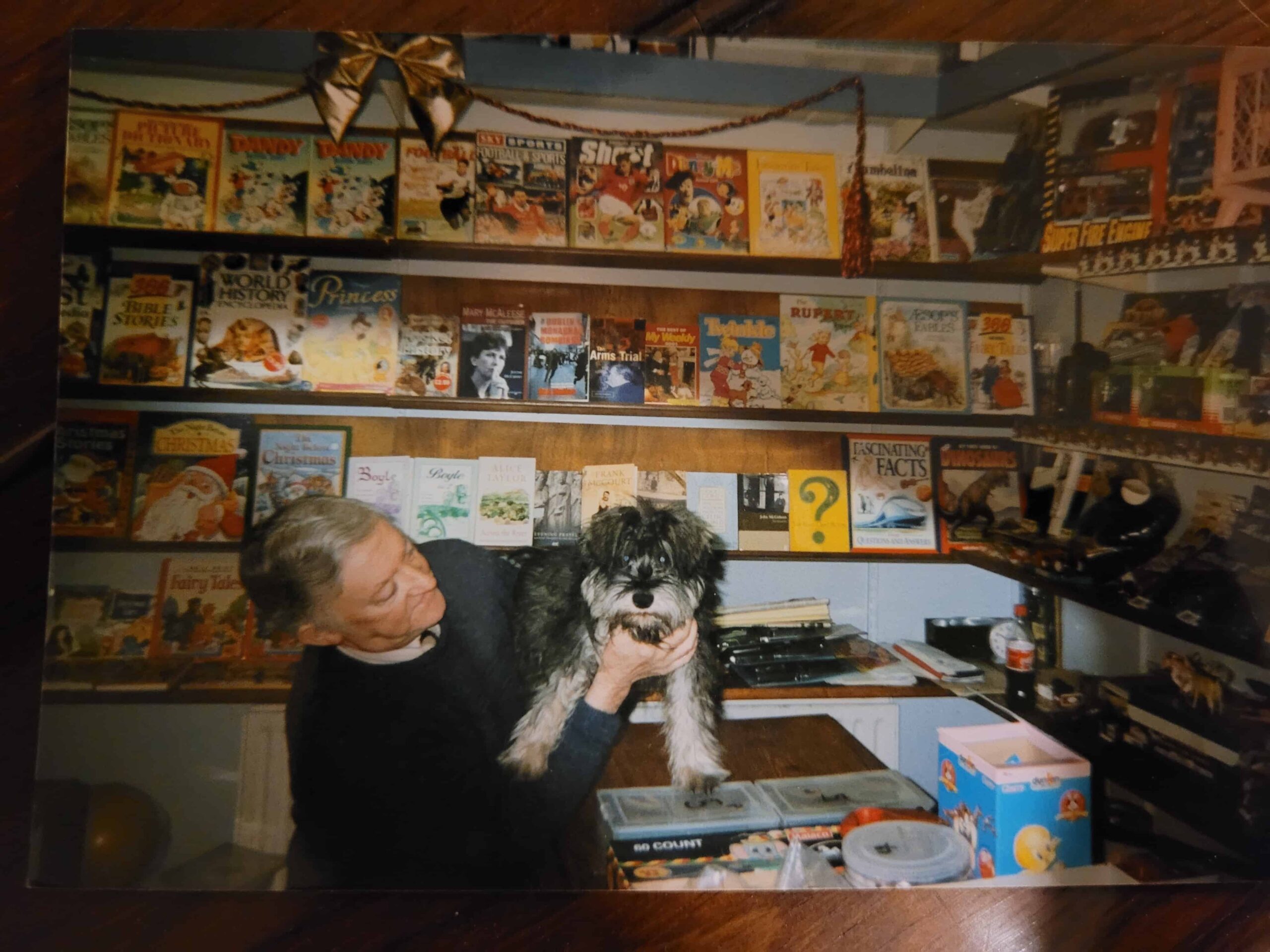
Christy and his precious friend, Woody.
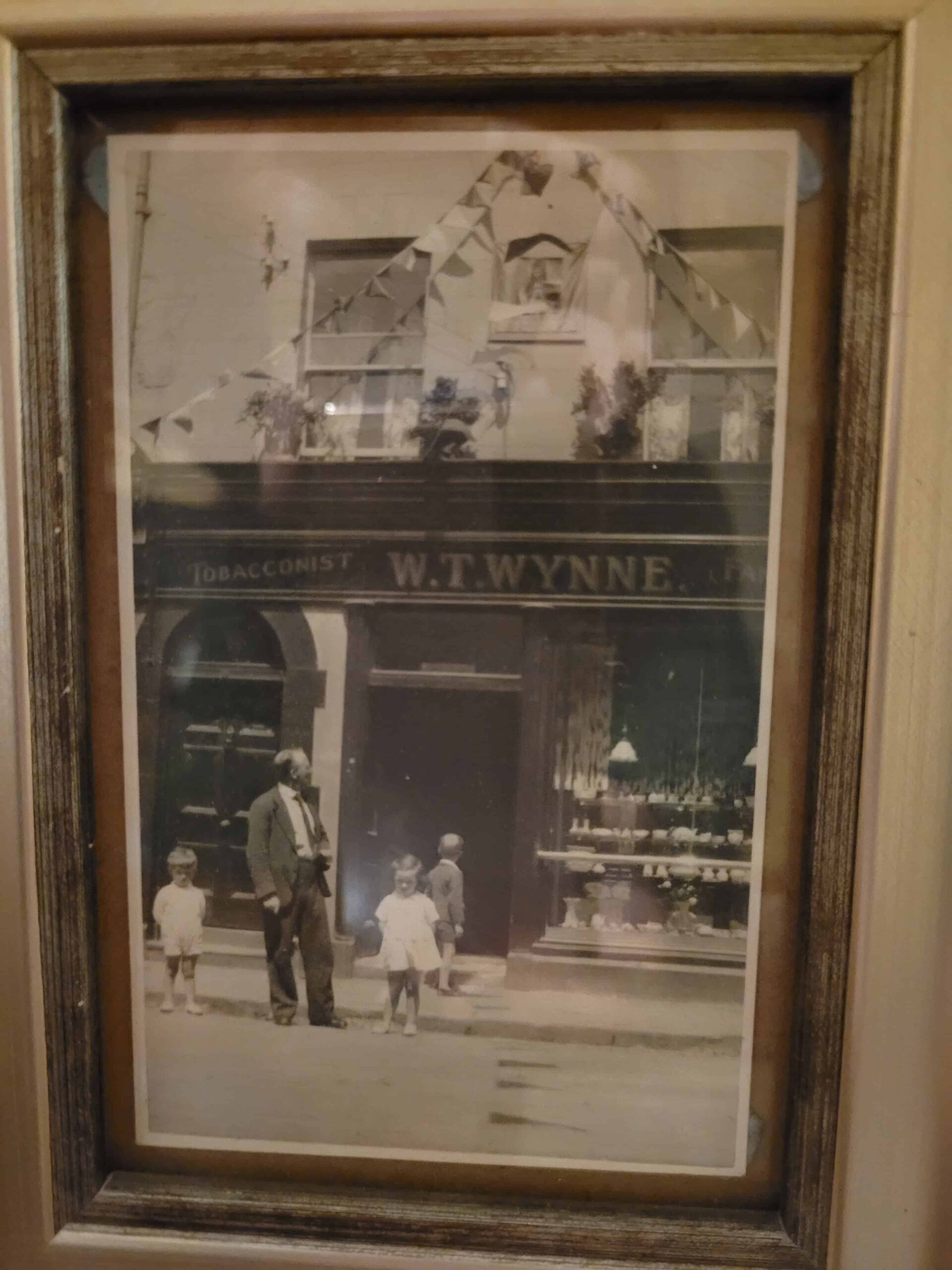
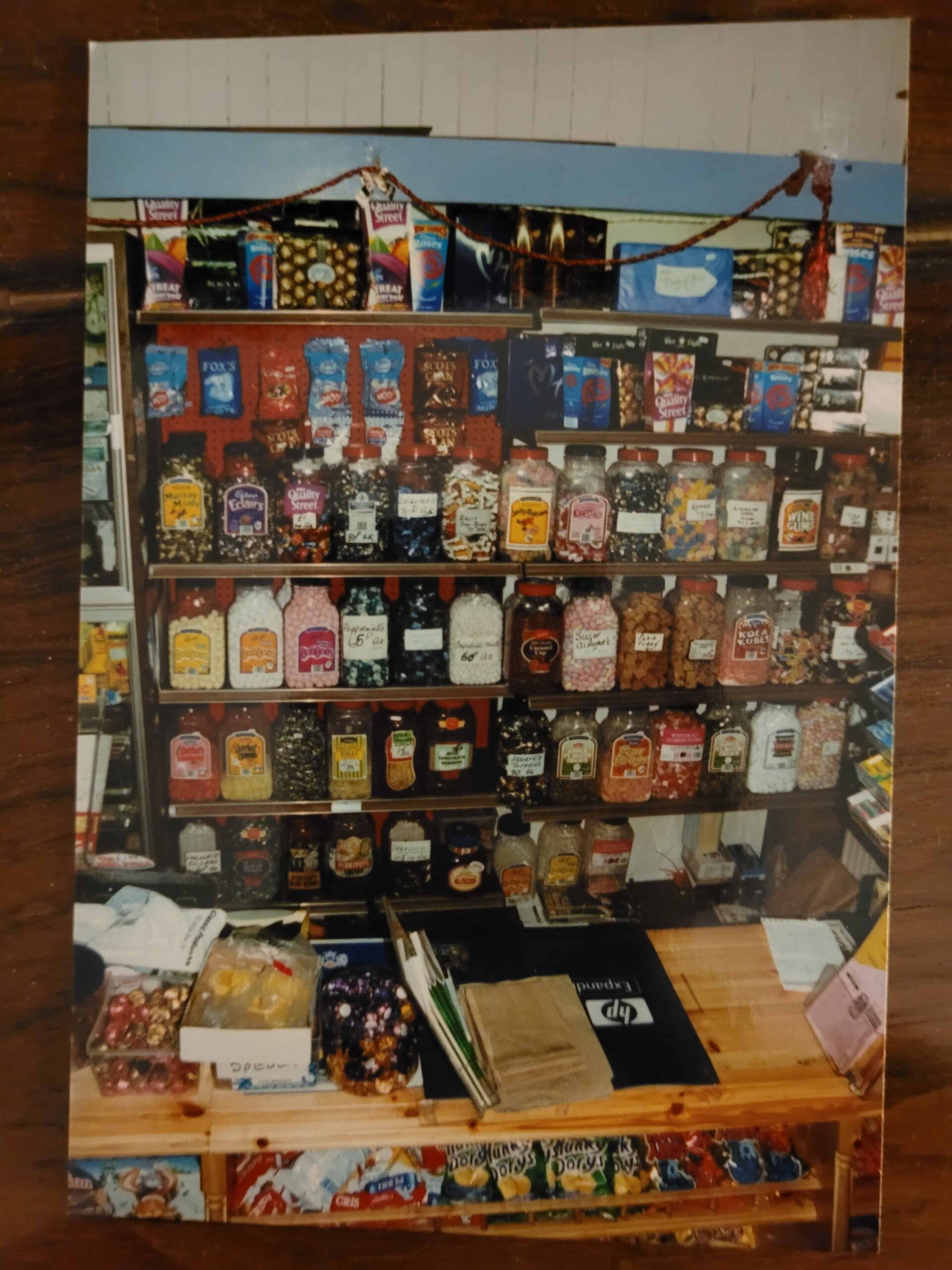
This photo will certainly jog a few memories (spot the peri crisps and milky moos!!).
Thanks to Brendan O’ Dowd for creating and recording the musical piece for the podcast.
BE A GUEST ON THE SHOW!
If you’ve a story about Boyle, we’d love to hear it. You don’t need to have done anything remarkable, and you don’t need to prepare a thing. We sit down, have a chat, and you talk about whatever you want to. It usually takes about an hour.
Thinking of someone else? A parent, a grandparent, a neighbour who remembers how it used to be? Tell us about them. Some of our best episodes started because a son or daughter got in touch. You can find us at info@voicesofboyle.com.