Episode 89
David McGee – Ships, Cameras and a Silver Play Button
HOSTS & GUESTS
Carlo Cretaro
David McGee
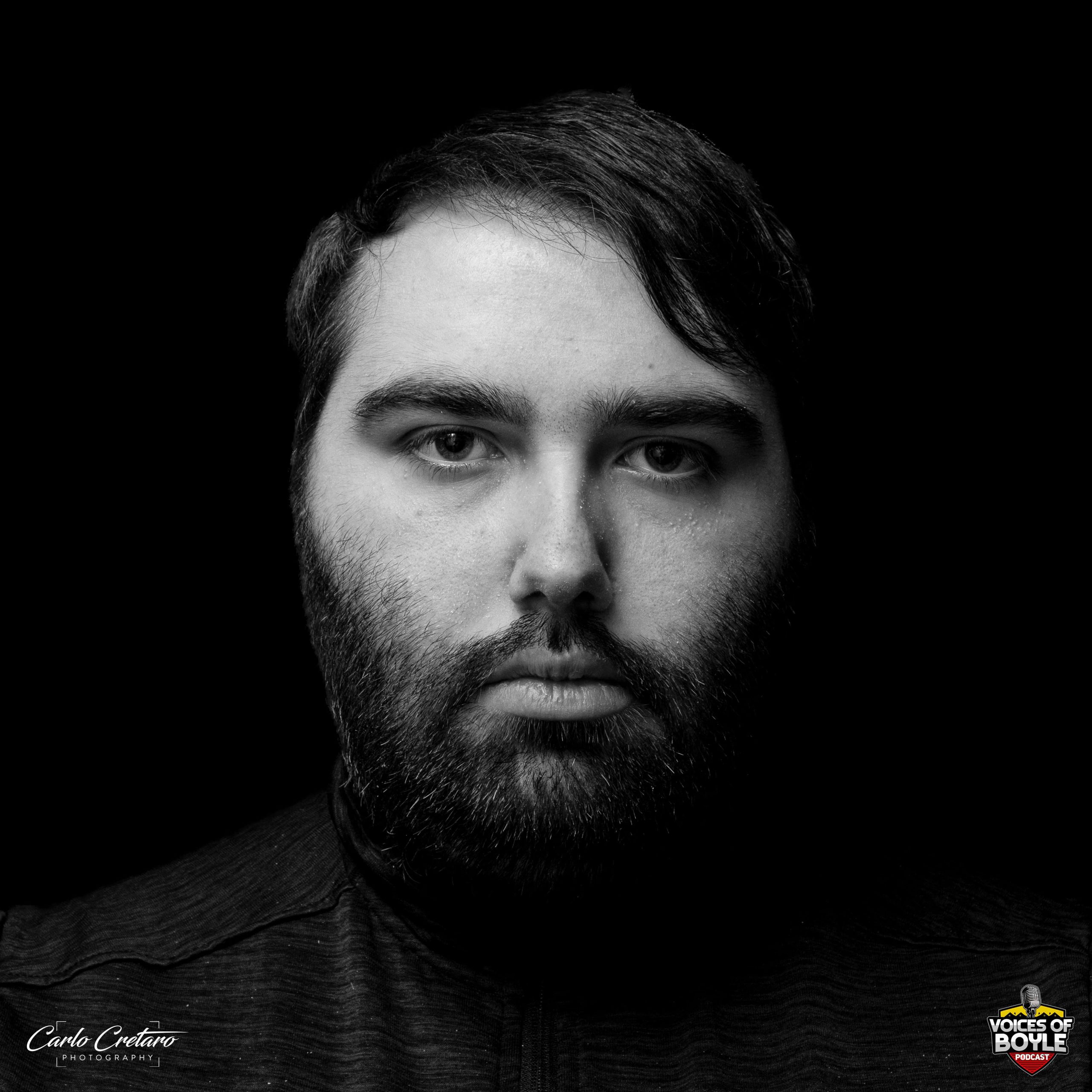
Welcome to Episode 89 of the Voices Of Boyle Podcast!
Most people in Boyle would know the McGee name from Richard (Dick), the photographer whose pictures are in homes across the town and whose book of Boyle photographs is still sitting on the shelf in the family shop. But there is another McGee producing remarkable work, and he has been doing it quietly for nearly a decade.
David McGee runs Blue Star Line on YouTube. The channel is dedicated to historically accurate 3D animated reconstructions of maritime disasters and voyages. It has over 127,000 subscribers. One video is approaching 7 million views. David is in his early twenties and grew up just beside the boys school in Abbey Town.
He joined Carlo on the Voices of Boyle for a conversation about creativity, craft, obsession and what it actually takes to build something like this from a bedroom in the west of Ireland.
It Started with the Titanic at Age Four
David was four or five years old when a babysitter briefly flicked past the James Cameron film on television before deciding it was not appropriate for a young child. The ship. The people sliding. The water. He had never seen anything like it. He went home and asked his parents everything.
“It just started a snowball,” he told Carlo. “And then it got to the point where you realise, oh, there is more than just the Titanic. There are other ships too. But it was Titanic that started it.”
His grandfather Dick McGee had a book of photographs in the shop, pictures of Boyle going back decades. He made mixtape recordings of Disney stories for the grandchildren. David credits both things as early sparks for his interest in visual storytelling and documentation. The idea of recording something so it could be experienced later, whether it was a town, a ship, or a story, was baked in from the beginning.
Short Films on a Nintendo 3DS
Before any of the professional equipment arrived, there were borrowed phones, handycams with mini discs, and a Nintendo 3DS with a built-in camera that could only record in 30-second clips. David and his friends would write stories, film them, edit them on Windows Movie Maker, and argue about who was holding the camera wrong.
“I always loved to direct and also be the cameraman at the same time,” he said. “And then there would be scenes where I’d have to be in it, so we’d have to flip around. And I’d give out because they were holding it portrait instead of landscape.”
One early film was a parody of the anti-piracy warning that used to play before DVDs. They made their own version with their own music, shot across 30-second increments and stitched together in Windows Movie Maker. He still has it. He still laughs watching it back.
All Shook Up and the Technical Crew
Secondary school at Abbey Community College brought two musicals. For both, David worked backstage as part of the technical crew rather than on stage. All Shook Up in Transition Year was the turning point. Students were given real responsibility for the production, and David and a friend became known as the tech team, running late nights to set things up and take them down, managing everything from the opening night right through to the last performance.
“It is a really fast-paced environment, working in technical and backstage,” he said. “It is all live. There is no sitting down. You have to be running around. And I love that kind of environment.”
It confirmed the direction. Not acting. Not writing. Technical production, directing and the behind-the-scenes craft of making things look right.
“I remember waking up the next morning and the video was on 3,000 or 4,000 views and I was like, what is going on here?”
Blue Star Line: From Ship Simulator to 127,000 Subscribers
David launched his first YouTube channel in 2011, uploading gaming footage recorded by pointing a camera at the television screen. Around 50 or 60 subscribers. He also filmed urban exploration videos: inside the Royal Hotel before it was renovated, out at Castle Island on the rental rowboats.
In late 2015, the same week he started secondary school, he launched Blue Star Line with a deliberate plan: six years, from the start of secondary school to the end. See where it lands.
It started with ship simulator footage, because he did not yet know how to create his own animations. When he hit the limits of what the simulator could do, he taught himself 3D animation software. He wanted more realistic visuals. He wanted to add people. He wanted to control every element of what was on screen.
At the time he launched, there was only one other person doing similar content, a creator in the UK. They challenged each other each April around the Titanic anniversary: who could produce the better video, who would get more views. It was friendly but competitive, and it pushed both of them.
Growth was slow, then suddenly was not. Just before COVID, he noticed something changing. He would upload a video at noon and go to bed with a few hundred views. He would wake up to three or four thousand. YouTube’s analytics showed him where the viewers were coming from: the United States, the UK. The algorithm had found him.
What It Actually Takes to Make These Videos
The process for each video begins with anniversaries and events. April means Titanic content. From there: a notepad, a list of ideas, and a check of what models are available and what time allows.
Keyframes can be set up in a couple of hours. The rendering is where time disappears. David has moved from 1080p to 4K because expectations have grown. A nighttime scene, with all its lights, shadows and atmospheric effects, can take several days to render a few seconds of finished footage.
His most ambitious project to date is a 20-minute real-time animation of the sinking of the Lusitania, timed to match the exact 20 minutes the ship took to go down. That one took approximately a month from start to finish.
Quality control is non-negotiable. He has rendered entire clips and watched them back before editing only to spot a man floating through the sky or a propeller suspended in mid-air or a texture flickering red on the hull of the ship. None of it goes in. It all gets fixed first.
“You can’t have that in it,” he said simply.
Commissions, the Film Anne, and the Bumblebee
As Blue Star Line grew, commissions arrived. The first was from an Italian documentary production company making a programme about the Costa Concordia. David initially thought the email was a scam. After a few months of back and forth, he was paid and received a follow-up email with a clip of his animation broadcast to Italian television audiences.
He also worked on the film Ann, which was shot in Boyle and deals with the story of Anne Lovett. He was part of the art department and props team, making sure everything was in place before the camera rolled. He describes it as a really professional production and an important story that needed to be told.
One of his more unusual recent commissions was for Roscommon County Council: an animated bumblebee flying around the county visiting solar panels, windmills and climate action installations, blended with real footage. As different from a sinking ship as it is possible to get. He loved it.
“Take your time. Whether it is making videos or just life in general. Don’t rush anything.”
The Balloons Above the Fog
When the hot air balloons returned to Lough Key this year, David went out with his DJI Mini 4 Pro drone and the proper permissions from the Irish Aviation Authority, which classifies hot air balloons as aircraft and does not want drones flying into them.
The first flight gave him clear footage. The second flight gave him something better. The morning was completely foggy. He sent the drone up above the fog layer, and there were the balloons, floating in clear air above a blanket of white cloud with the landscape hidden below.
“I was able to put the drone above the fog,” he said. “So you could see these balloons floating above a blanket of cloud. That is the one that went viral.”
He edited the footage in DaVinci Resolve. He had aimed for local attention. It went further than that.
Advice for Anyone Starting a Channel Today
Carlo asked David what he would tell someone from Boyle who wanted to start a YouTube channel today. Three things came back quickly.
Do not worry about the algorithm at the start. It will find you if you keep going. Use the right details in your title and make sure your hashtags are accurate, because hashtags are how videos are discovered. And do not upload a lot of average content: upload less and make each one better. When David moved from three or four videos a week to one, the single weekly video outperformed all the previous ones combined.
“Don’t rush anything,” he said. “Take your time. That applies to videos and to everything else.”
Castle Island and What Boyle Means
Asked what Boyle landmark he would never get sick of filming, David did not hesitate. Castle Island. It is the opening shot of many of his drone videos and he has been out to it by kayak, by boat, and by drone in every kind of weather. He says it looks different every single time.
His most lasting Boyle memory is meeting Chris O’Dowd during the filming of Moone Boy when he was seven or eight years old. Seeing someone from the town go out into the world and then come back was something that stayed with him.
He is excited about what is coming for Boyle: Aldi, the library, improvements at the train station, the ongoing development at Lough Key. He wants to see more of it. He thinks the town is worth it.
And Blue Star Line? He is moving to a new rendering engine, teaching himself new techniques, and not planning to stop any time soon.
Key Timestamps
00:00 — Welcome
00:32 — Growing up in Abbey Town beside the boys school
01:00 — His dad’s shop and time with grandparents upstairs
01:35 — Grandfather Dick McGee: photos, mixtape recordings and his lasting influence
02:54 — Dick’s undeveloped photos still to be uncovered
03:15 — A typical Saturday as a kid: making films with friends
03:49 — Primary at the Convent then the boys school, secondary at Abbey Community College
04:43 — Favourite subjects: construction, woodwork, metalwork
05:16 — Favourite teacher: substitute English teacher Mr. Walsh
06:08 — School musicals: Back to the 80s and All Shook Up
07:16 — Being part of the technical crew and why it clicked
07:51 — Making short films as a kid, the bossy director, the portrait vs landscape argument
08:30 — The DVD anti-piracy parody filmed on a Nintendo 3DS
09:06 — Equipment: handycams, mixtape cameras, borrowed phones
09:44 — Windows Movie Maker and why it was ahead of its time
11:43 — Drawn more to directing and technical work than acting
12:17 — The Titanic fascination: it started at age four or five with a babysitter
13:29 — The Olympic-Titanic switch conspiracy explained and debunked
16:14 — Getting the facts right as the channel grew
17:20 — The first YouTube channel in 2011: gaming and urban exploration
18:38 — Urban exploration: the Royal Hotel, Castle Island, the rowboats
19:28 — What those early uploads taught him about quality
20:23 — Blue Star Line: started late 2015, same week as secondary school
22:44 — The only other person doing similar content, a friendly rivalry
23:38 — What makes the channel work: historical accuracy, commissioned voice actors
26:14 — Where the name Blue Star Line came from
26:40 — The range of ships covered: over 300 videos
27:17 — The process: from idea to keyframes to rendering to editing
27:42 — Rendering in 4K: a couple of days for a few seconds of footage
28:20 — The Lusitania 20-minute real-time animation: a month to produce
29:36 — Green Aviation: another Irish niche creator David follows
30:37 — Quality non-negotiables: no flickering textures, no floating men
30:50 — Starlight Media: the wider production and animation business
31:23 — First commission: Italian production company, Costa Concordia documentary
33:19 — Commission packages: exclusive vs non-exclusive, watermarking previews
35:07 — Hitting 100,000 subscribers: the slow build then the overnight jump
36:03 — Realising people worldwide were watching
37:14 — The growth lesson: fewer, better videos beat more average ones
38:38 — Advice for anyone starting a YouTube channel today
41:15 — Voice acting, the Gacy School of Acting, and short films
42:05 — Working on the film Anne in Boyle: art department and props
44:17 — The Roscommon County Council bumblebee animation commission
45:40 — The hot air balloon drone footage at Lough Key
46:06 — Getting permission from the Irish Aviation Authority to fly near the balloons
47:04 — The DJI Mini 4 Pro, editing in DaVinci Resolve
47:24 — The foggy morning that made the footage go viral
48:14 — Photography and how it feeds into animation and film
49:41 — Doing the Leaving Cert in 2021 during COVID
50:35 — The Leo Varadkar announcement on the classroom projector
52:07 — How lockdown changed his social life and accelerated the YouTube growth
52:47 — Deciding to keep going with Blue Star Line after secondary school
52:58 — Where he wants Blue Star Line to go in the next five years
53:46 — Best advice ever: take your time
54:07 — What he wishes he had started earlier
54:34 — The most underrated thing about growing up in Boyle
55:31 — The Boyle landmark he would never get sick of filming: Castle Island
56:06 — What he hopes Boyle will look like in 20 years
56:57 — One Boyle memory he will always carry: meeting Chris O’Dowd during Moone Boy
Guest Bio
David McGee grew up in Abbey Town in Boyle and is the grandson of Dick McGee, the well-known local photographer.
He is the founder of Blue Star Line, a YouTube channel dedicated to historically accurate 3D animated reconstructions of maritime disasters and voyages, which has over 127,000 subscribers and a YouTube Silver Play Button.
He also runs Starlight Media, through which he takes on animation, video editing and production commissions for clients in Ireland and internationally. He worked as part of the art department and props team on the film Anne, which was shot in Boyle.
He has done voice acting through the Gacy School of Acting and captured the return of the hot air balloons to Lough Key on drone footage that went viral locally in 2024.
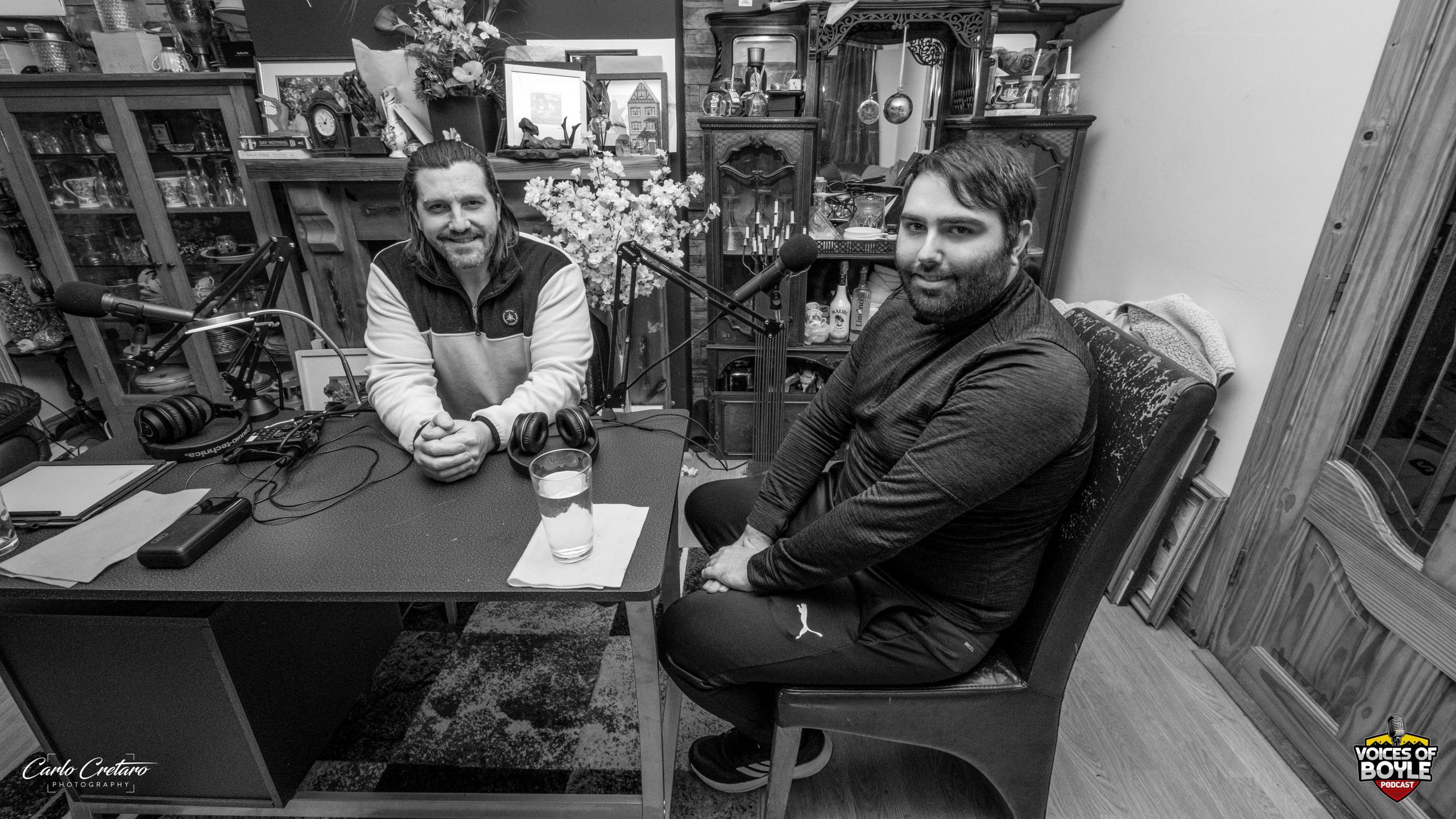
Thanks to Brendan O’ Dowd for creating and recording the musical piece for the podcast.
BE A GUEST ON THE SHOW!
If you’ve a story about Boyle, we’d love to hear it. You don’t need to have done anything remarkable, and you don’t need to prepare a thing. We sit down, have a chat, and you talk about whatever you want to. It usually takes about an hour.
Thinking of someone else? A parent, a grandparent, a neighbour who remembers how it used to be? Tell us about them. Some of our best episodes started because a son or daughter got in touch. You can find us at [email protected].