Episode 17
Gerry McGlynn – Or Ten Men
Hosts & Guests
Florence Cretaro
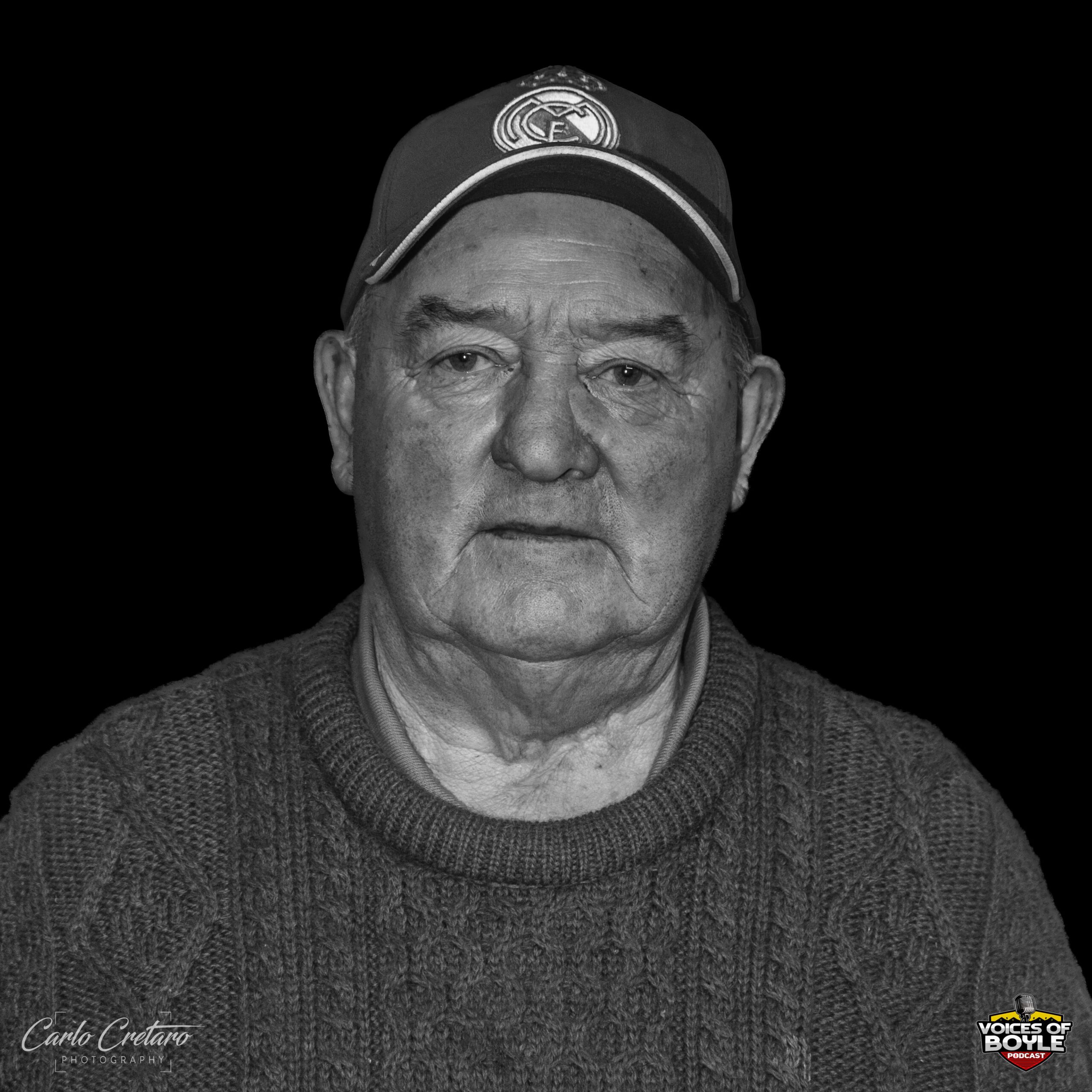
Gerry McGlynn
There is a sign in Gerry McGlynn’s garden that reads “Gerry McGlynn or 10 Men”. Two of his friends, Daniel Geelan and Ed Maguire, put it up one day while he was away. It comes from his time on the ESB, when the gang would ask for a job to be covered and the line was always the same: send out Gerry McGlynn or 10 men.
He is thinking of changing it.
“I’m going to change it down to 9 men. I’m not as good as I was.”
Florence went out to Gerry’s house near Kiltycreighton, outside Boyle, and sat with him at the range. The range went in in 1958, the same year as the electricity. Gerry was born in this house on 23 December 1945.
That’s where my grandmother and grandfather taught
The house was built by his grandparents, Master Brown and Mrs Brown, who taught at the local school. It was built in 1898 and had about 60 children in two classes, his grandmother teaching on one side of the room and his grandfather on the other. By Gerry’s time the teachers were Benny Tierney and Mrs Mannion.
Gerry went, more or less. He spent a good deal of his school days behind ditches, meeting the scholars as they came home. The rest of the family, he says, were great scholars.
His mother’s brother, John Brown, was a solicitor beside the post office in Boyle. Gerry says he took first in Ireland in his exams. He died in 1940, at 29.
If you could call them shoes
Gerry was one of nine reared in the house. Two more died young, which made eleven. His mother later reared his son as well, and between them all she was sending children out to school for 53 years.
You walked to school. You brought a bottle of cold milk and left it beside the school fire for your lunch, with a cut of soda cake. There were shoes in the winter, “if you could call them shoes”, and from May Day everyone went barefoot and was glad of it.
There was no running water. Only two houses on the road were slated. The rest were thatched, with big families reared in small rooms around a turf fire and an oil lamp.
“The pig was the gent that paid the rent.”
Two or three pigs were killed every winter, and the meat went round the neighbours, who sent you some of theirs in turn. Everything else came out of bad land, all stones. Down the road at McElroy’s, the woman of the house would boil a pot of potatoes, tip them into a basket in the middle of the floor, and the whole crowd would sit round it with homemade butter and buttermilk.
I was the only one that stayed behind
At 15 or 16, the young people left. Gerry’s own family scattered to England, America and Africa. A brother in Rhodesia sent home a few pounds every month. Gerry stayed to do the work.
In the 1950s whole households went. Once the fire was out of a thatched house, the roof was in within a year, and a lot of them had nowhere to come back to.
His best friend was Jim Sharkey, reared with Dudley and Annie Sharkey. The two of them worked together at the lime factory in Boyle and planned to go to England and then on to Australia. Jim did both. Gerry married and went his own way. Jim died in Darwin, in the Northern Territory, at 38, and is buried there. Gerry says he “got it with crocodiles out there”. He never saw him again after he left.
“One of the finest gentlemen ever left Boyle,” Gerry says.
The Goatskin Band
Dudley Sharkey was reared at the Mile House on the railway and walked up to Master Brown’s school. Gerry says he can count six generations of the Sharkeys.
Dudley and Annie were the music. People called them the Goatskin Band, and Gerry says they were the first to start the music in Boyle. They played house dances and card nights, and in pubs out in Ballinafad, Corrigeenroe and Clonloe, with Jack Regan on the tambourine.
There was no television and no wireless. Down at Dudley Allen’s by the river there could be a hundred young people swimming. Gerry says the Tinnycarra tug-of-war team won the Connacht final in 1939 and 1940, and Ballinulta had its own fife and drum band, with John Thomas McElroy, six foot four, on the big drum.
And there was Johnny Reilly, who came out the road on his bike with his chimney brushes tied on, singing “Where are you going with your goose for the bed?” Gerry says nobody heeded him then, and if he were alive today he would be famous. He died at 43 and is buried with his parents. Gerry calls him a real gentleman who saw hard times in Boyle.
It was all house dancing
Before dance halls, there was dancing, music and cards in somebody’s kitchen, and people brought drink if the man of the house couldn’t run to it. Summer brought bonfires at the end of the road and dancing on the road itself.
A travelling shop came round, run by a Dowd man from Boyle, but you bought little beyond flour. In town you could get the year’s needs on tick and pay at Christmas.
When drink is in, wit is out
A matinee in Boyle cost 4 pence, when you had it. Around 1960, the pubs filled up. Gerry had his first pints in John Corley’s, where a pint was 1 and 3 pence. Sixteen to the pound, on wages of about a fiver a week, with no rent to pay at home.
He had a car by about 1965, and would bring four or five lads into town, have nine or ten pints and drive home. There were no breathalysers. “You wouldn’t get away with that carry-on now,” he says. His grandmother had a saying for it.
“When drink is in, wit is out.”
Gerry drank for 26 or 27 years, between England and home, then gave it up. He is 33 years off the drink, and off the cigarettes too. These days he meets Pádraic Muldoon on the Crescent for a chat.
The darts match in Clarke’s
Loretto, a great friend, was far better at darts than Gerry. He challenged him to a match in Clarke’s one night at ten. Gerry, knowing he couldn’t win, told him he’d been champion of North London.
On the night, Gerry walked in with his arm in a sling and said it was broken. “His eyes nearly dropped,” Gerry says.
England, and Dominic
Gerry went to England in 1965, when he married, and was back and forth for years, working the sewers in Camden among other jobs. When his marriage ended, he brought his son Dominic home at about four months old, and his mother reared him in the same house.
“It’s all history now,” Gerry says. Dominic went to college in Boyle and on to crane work around the world. He lives in Rainham in Kent and comes home every year. Gerry is now a great-grandfather.
Ballinulta at war again
Gerry is one of the last of the old Ballinulta people on the road. The townland was once famous for falling out, with neighbours owning scattered fields. Gerry remembers headlines in the Roscommon Herald reading “Ballinulta at War Again”. There was even a song about the village’s fighting men, with the barking of dogs and the cracking of stones. He doesn’t know who wrote it. He reckons it goes back 100 or 150 years.
The road was built after the Famine and stopped after a mile or two. Some say the money ran out, some say they hit a fairy fort, and some say the Clonloe people protested so loud you could hear it in Timbuktu.
You always left before dark
Gerry never met the fairies himself, but he wouldn’t rule them out. As a young lad visiting the neighbours, the stories would have the hair standing on his head, and somebody would have to walk him home. You didn’t go near a lone bush. He knew men who did, and it didn’t do them any good. People said children were buried under them, from Famine times, and babies that had to be hidden.
At Dudley Allen’s by the river there was always a sort of presence, and nobody stayed there after dark.
Then there was the night Gerry drove home from Boyle with a few pints taken. Told the guards were at the crossroads with the breathalyser, he turned off by James Cox’s onto roads he knew well, missed his turn, and for three hours didn’t know where he was. He thought he was beyond Woolwich in London. At five in the morning he saw Paddy McCran going home and it all came back.
It wasn’t the pints, he says. If it was the pints, he’d have sobered up in three hours.
A cup from the dump
When Gerry came home in 1990 he went to work at the dump, behind where Martin Downes’ new house is now. He calls his eight years there the best of his life. Everyone came through, and during the divorce referendum he had them all arguing. Gerry was for it.
One day a load came in from Lyons’s pub in Corrigeenroe, and in it was a silver cup, blackened with age. The engraving reads Lough Key Regatta, MacDermott Challenge Cup, presented by Frank MacDermott TD, 1932. Frank MacDermott, of Coolavin, was a TD and later a senator. Gerry told Tom Lyons what he’d found, and Tom told him that if he hadn’t found it, none of them would have it. Mind it, he said.
Gerry did. He once brought it up to Coolavin to show Madame MacDermott, who took it he had brought it for her and went to put it on the shelf. He held on to it.
That was 25 years ago. He wants it back with the rowing club it was presented to, and he has a young man from the Aiken family in mind to give it to, married to one of the Connollys, though he hasn’t spoken to him yet. His worry is simple: if the wrong people got it, they’d melt it down.
“I was just minding it for 25 years and I won’t live forever.”
If you haven’t your neighbour, you have nobody
Ballinulta is quiet now, the land gone wild. Gerry says that where you once saw a rabbit in the meadows, now “you wouldn’t see a giraffe in it”. During COVID he sat out on the lawn and talked to everyone going up and down the road.
“If you haven’t your neighbour, you have nobody.”
Young friends still call out, among them Richard Connolly (“Richard the Lionheart”), Dan Geelan and Wayne Suffin.
He worries the art of conversation is nearly gone, and calls some of the young crowd woodpeckers for the way they look at their phones. But they have to make their own mistakes, he says, the same as he did.
He has a word, too, for Dr Bernard Maguire, who started out on Patrick Street when another doctor warned “the cowboys are coming”. Gerry calls him the best doctor Boyle ever had, a man who wouldn’t take your last penny.
And he remembers his friends Jim Sharkey and Noel Conroy, both gone. “I’ll never forget them fellas.”
The coming back in
Florence asks him for a last word for young people. He gives her two old sayings. A man that never made a mistake made nothing. And this one, to finish.
“It’s not the going out of port, but the coming back in that determines the success of the voyage.”
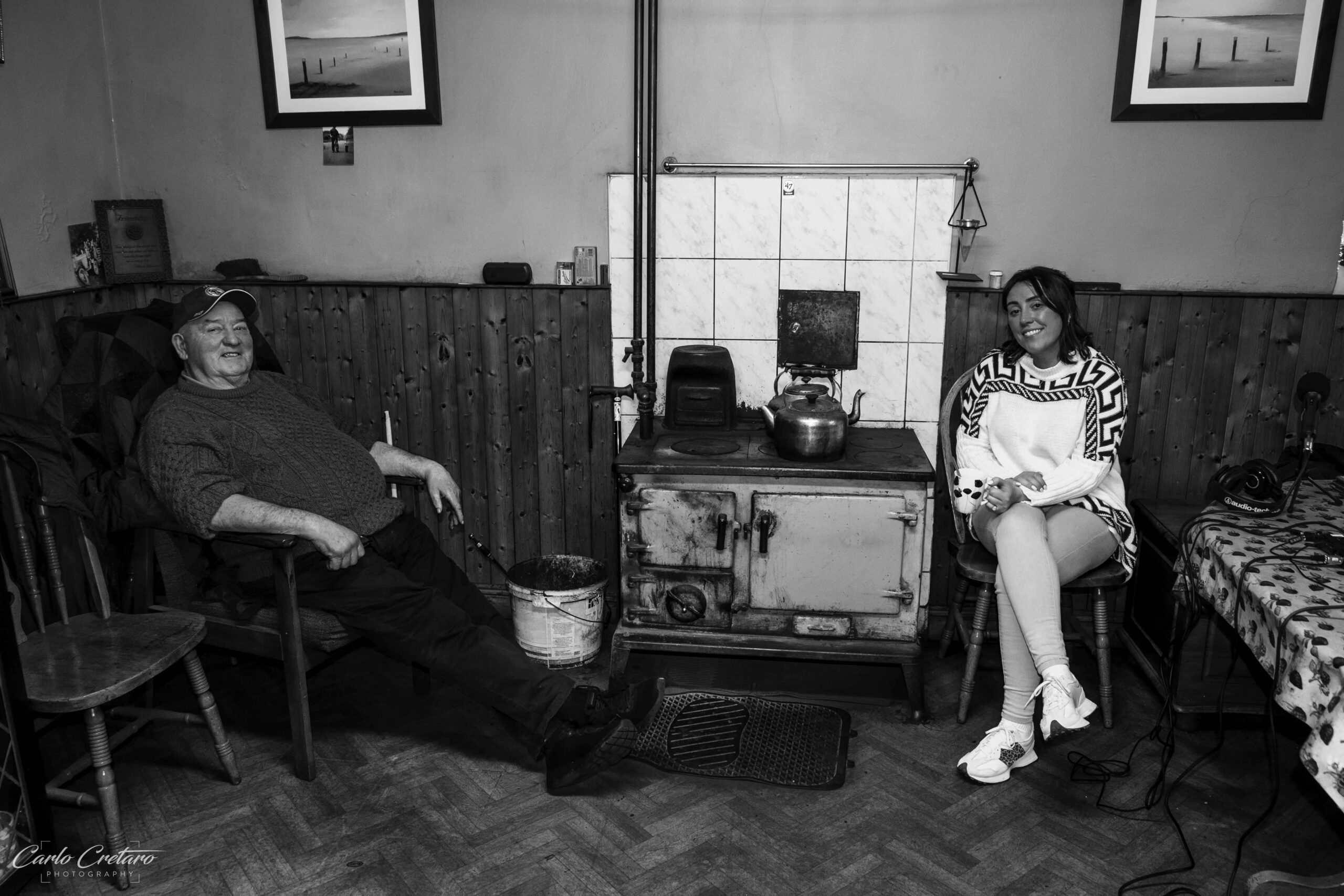
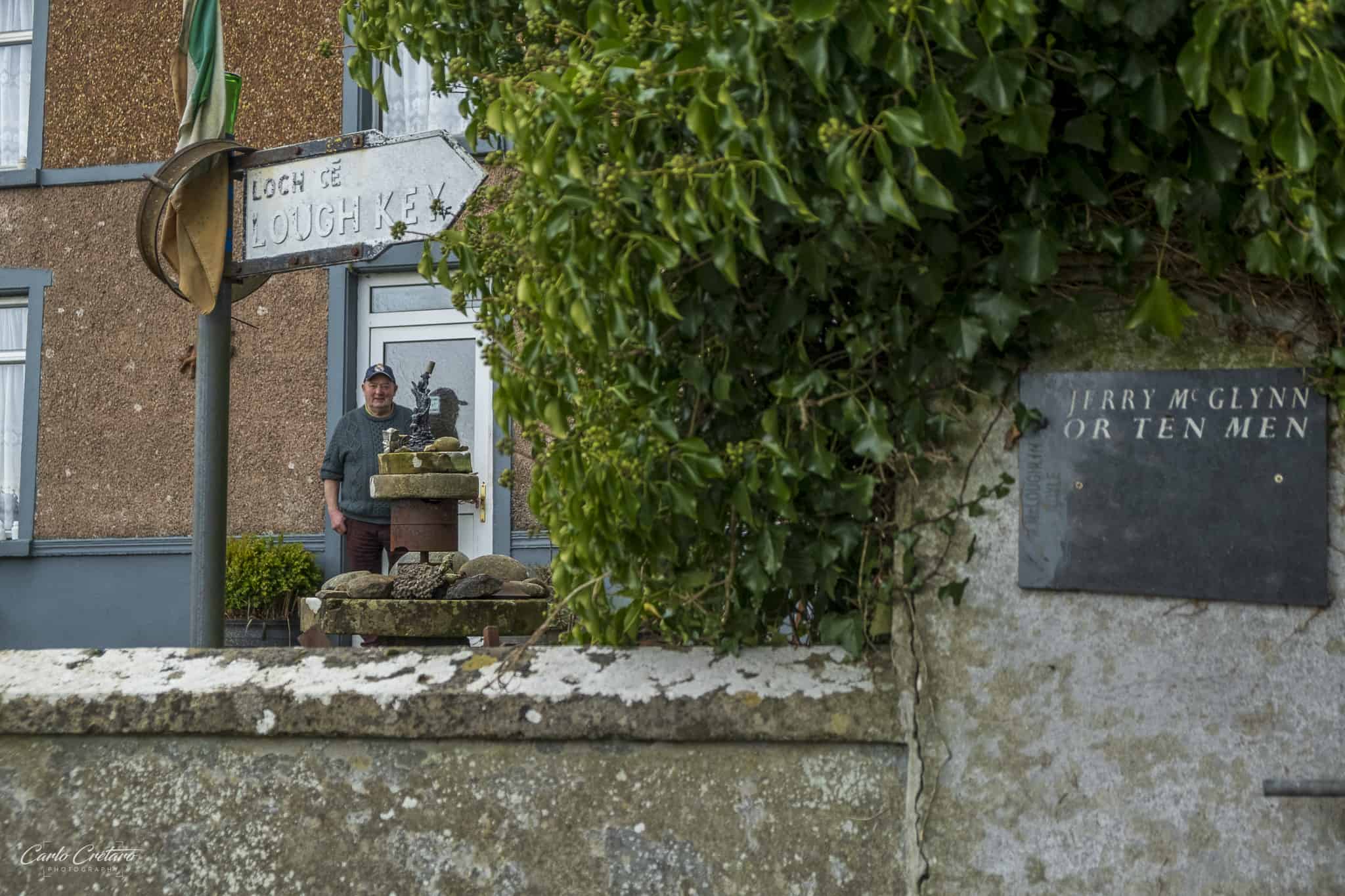
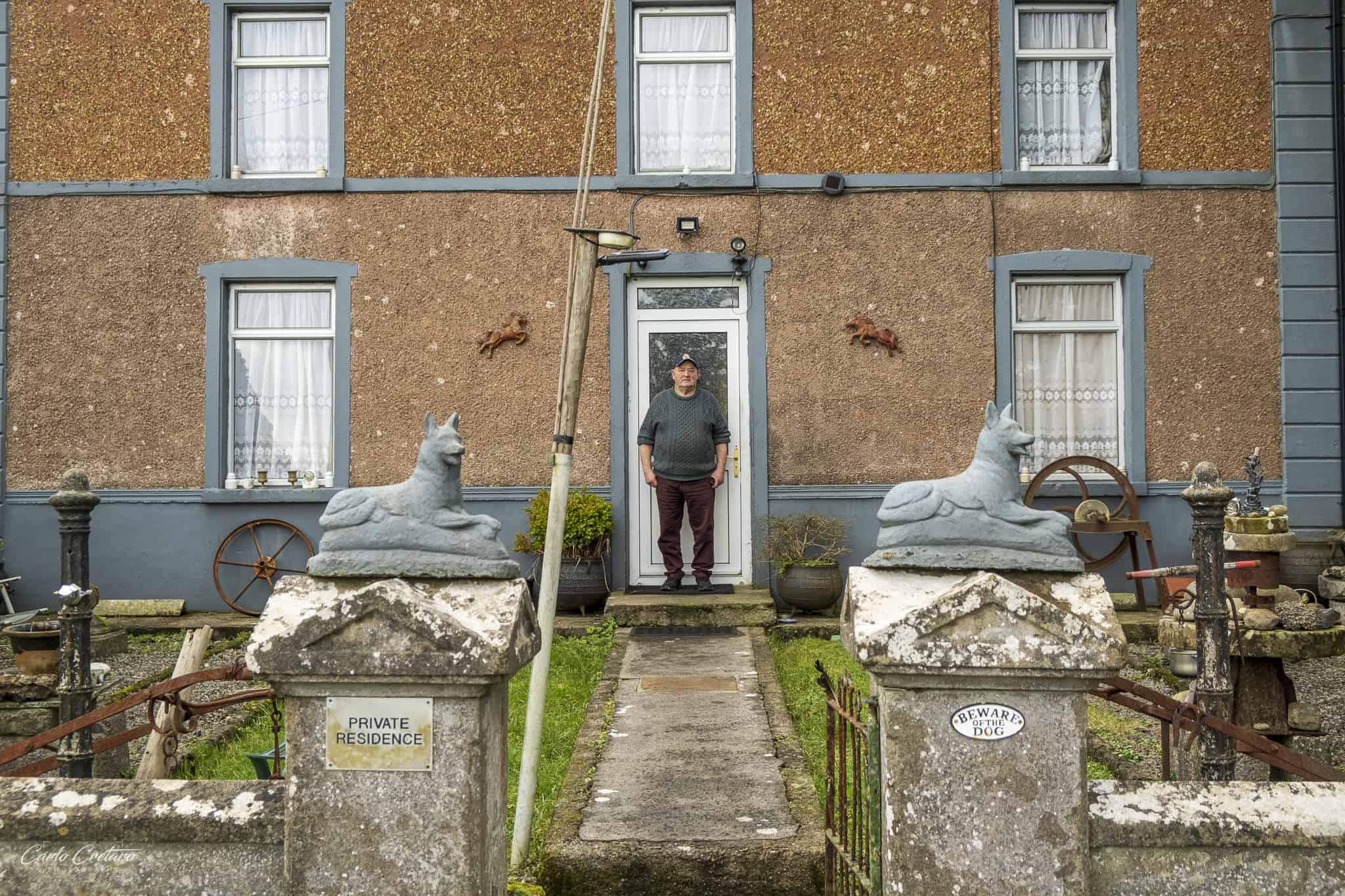
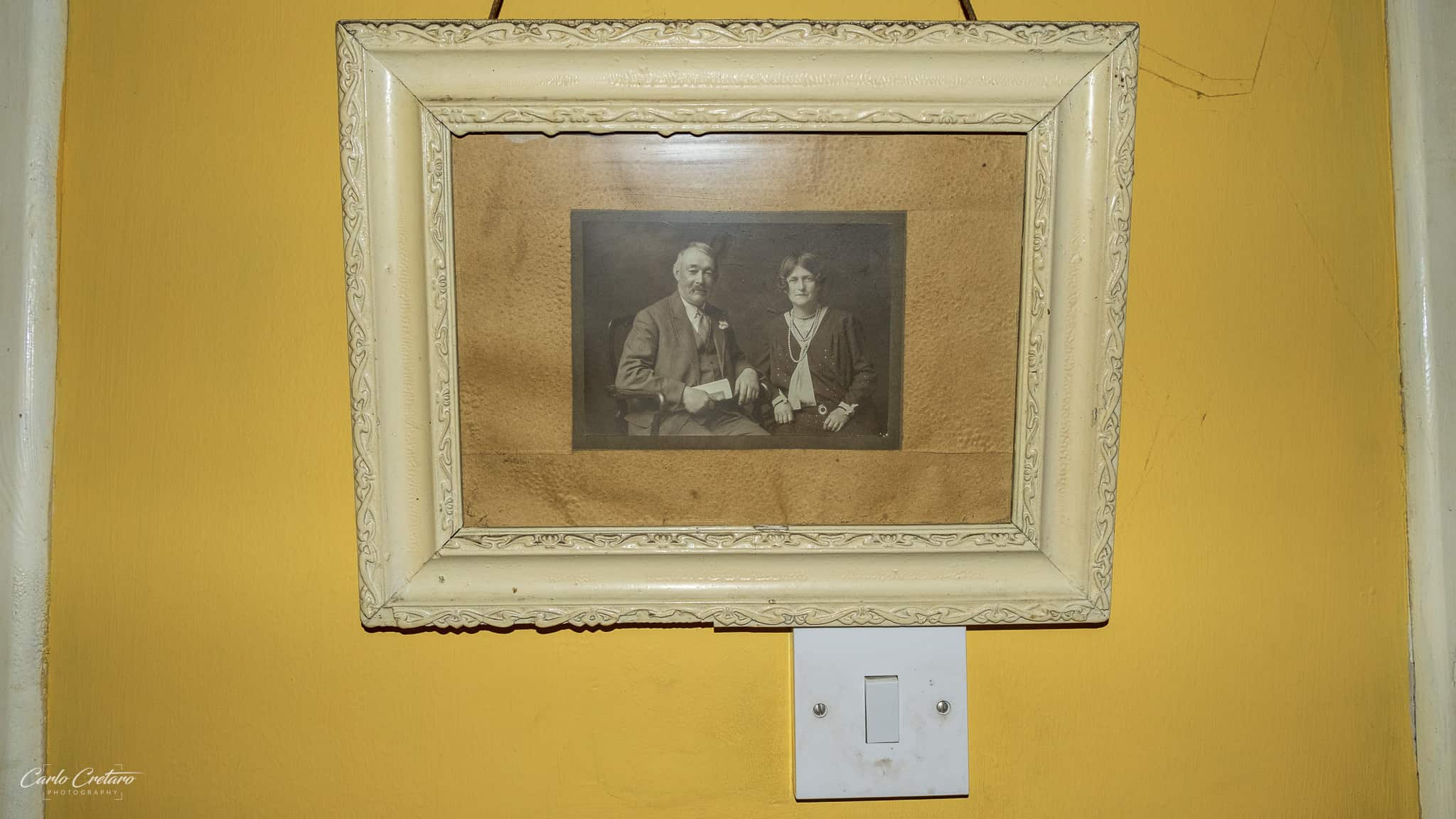
Photo of Gerry’s Grandparents.
Thanks to Brendan O’ Dowd for creating and recording the musical piece for the podcast.
BE A GUEST ON THE SHOW!
If you’ve a story about Boyle, we’d love to hear it. You don’t need to have done anything remarkable, and you don’t need to prepare a thing. We sit down, have a chat, and you talk about whatever you want to. It usually takes about an hour.
Thinking of someone else? A parent, a grandparent, a neighbour who remembers how it used to be? Tell us about them. Some of our best episodes started because a son or daughter got in touch. You can find us at info@voicesofboyle.com.