Episode 30
Jarlath Tivnan – Behind The Curtains of Film And Theater
Hosts & Guests
Carlo Cretaro
Jarlath Tivnan
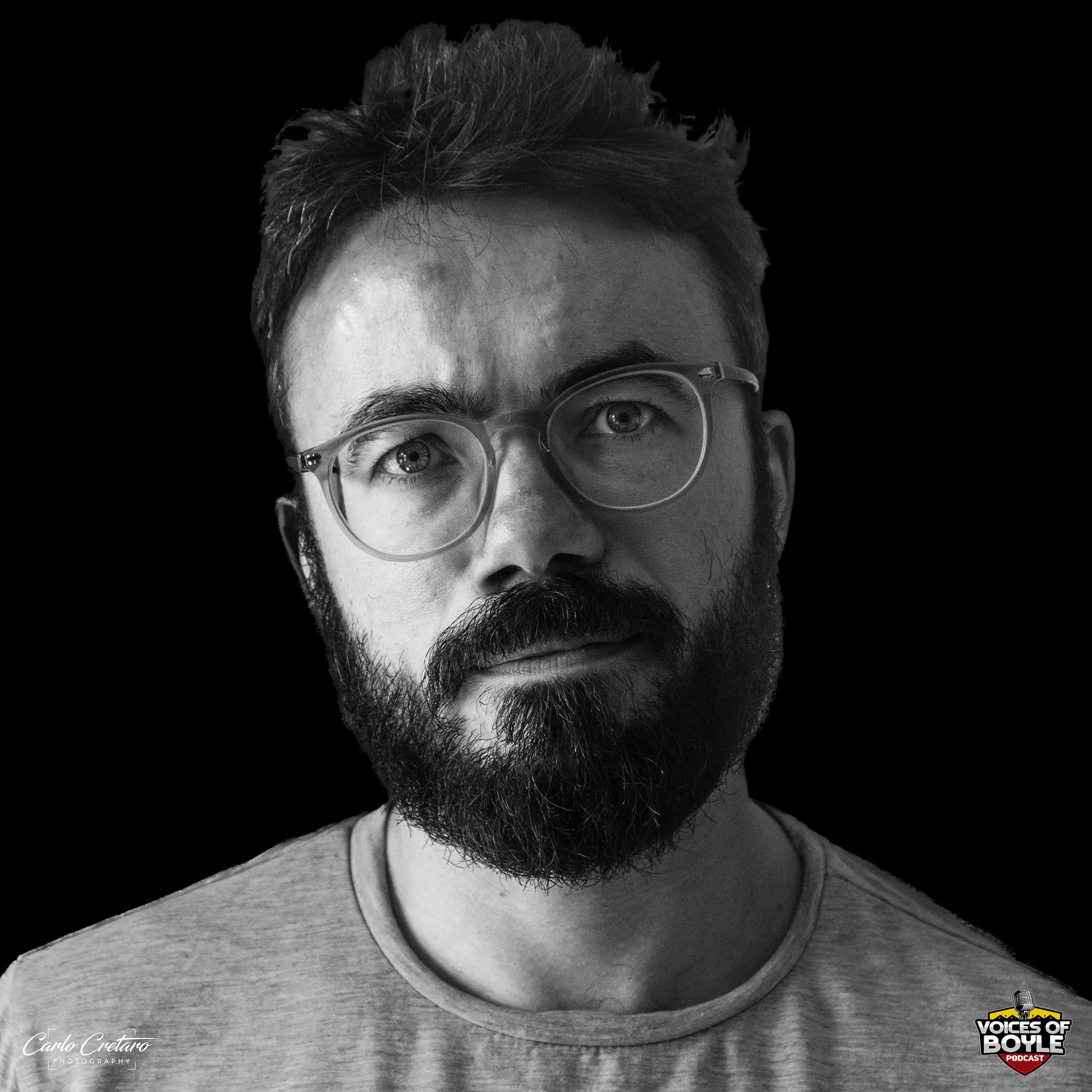
There’s a fiddle Jarlath Tivnan takes out and plays, turn about with his own, because a fiddle left in a corner loses its sound. It was made in 1812. It belonged to his grandmother, Kathleen Morris, and she pencilled her name onto it in two places. He will never add his own. “There’ll never be a J. Tivnan on it,” he says.
How that fiddle came to him, and how a boy who spent years on the GAA sideline ended up on three national tours and writing a film set in Boyle, fills most of an hour with Carlo.
Gas cylinders for goalposts
Jarlath was born in 1990, a bit too late for Italia 90, and grew up on a farm outside Boyle with an older brother and a younger one. He calls it idyllic and half apologises for the word. There were pigs to feed, cattle that wouldn’t go where they were meant to, and two empty gas cylinders for goalposts when his cousin came up the road for a game.
For a few years after school he was minded by Mary Conroy in Forest View, so he grew up half in the countryside and half in the estate, playing football and tag up the green with the Harveys and his Conboy cousins.
“None of you would even look at that fiddle”
The music was on his mother’s side. Older people in Boyle will remember the Ceili House, a pub whose sessions drew musicians from all over Roscommon and Sligo. Jarlath was born long after it closed, and he never heard his grandmother play.
He had no interest in traditional music until she died, when he was twelve. At her wake a cousin, whom he politely declines to name, told him their granny had promised the cousin the fiddle. Jarlath didn’t know what a fiddle was, but it felt like a great injustice. A third cousin joined in, and the three of them were going at it in the hallway when Anne Conboy came out to see what the racket was. She heard them out, calmly, and settled it. None of them would even look at that fiddle until they knew how to play one.
That September all three started lessons at the Michael Coleman music centre in Gurteen, and the prize faded fast. His first teacher, Michael Hurley, was the ideal man to start with, he says.
“Very quickly, I just fell in love with the music.”
Fiddle player’s fingers
Between the Friday lessons, Anne Conboy made sense of the tunes for him. A beginner plays so slowly that a tune is like a painting half finished, and she had the whole picture. She plays only the piano accordion, but she plays it like a fiddler, putting in rolls and triplets where a fiddle player would. It’s as if a fiddle player took up the accordion and kept their fiddle playing brain in their fingers.
The fiddle did come to him in the end. He won’t gloat. He sees it as a family heirloom, and he happens to be the one who still plays it.
“I’m only on for a minute, so I better make the most out of it”
Abbey Community College opened in 2002 and Jarlath was in its very first first year. In 2003 the school put on its first musical, Calamity Jane. He had no named part, just three lines in one scene and a wordless bit as a bellboy carrying a good looking woman’s suitcase, with all the nods and winks that called for.
Something told him to milk it. When St Joseph’s Hall filled up and the laughter hit him in waves, he couldn’t believe it. The week after, Ian Cooney’s review in the Roscommon Herald gave half its space to that little non part, and said that if there were more comedy on Irish television, Jarlath would be the first person he’d cast.
“I can be the captain of this team”
It mattered more than it might sound. From six or seven up to under sixteens he went to GAA training every weekend and hated it, though he never said so. The coaches were lovely, he’s quick to add. He was just very bad. On a squad of twenty with nineteen Boyle jerseys, he got the old Roscommon one from the bottom of the bag, because he wasn’t going to get on anyway.
On stage he knew, before he could have put it into words, that he would always be on the starting team.
“Pull here for an arts degree”
He went to NUI Galway to do Arts and on the first day found that line written on a tissue dispenser in the student building toilets. Within a week, at Socs Day, he’d signed up for Dramsoc and been cast as a far too young Joxer Daly in Juno and the Paycock.
He did nineteen shows in four years, hanging lights, painting sets and flogging flyers for shows with a twenty euro budget, and he failed a lot of exams. He loves the Bank of Ireland Theatre anyway, even though it was built beside the student bar, so a silent, sad scene could have 400 drunk students singing Don’t Look Back in Anger through the wall. He made friends there he still works with.
“Do not audition for this”
In the summer of 2012 he was doing repeats when he saw a notice for Galway Youth Theatre’s Frank Pig Says Hello, Pat McCabe’s stage version of The Butcher Boy. He told himself not to audition. He auditioned, and Andrew Flynn, who also runs Decadent Theatre Company, cast him as Francie Brady, a part that keeps you on stage for two hours.
He thought he could rehearse and study at the same time. One evening, after rehearsing all day without eating, he nearly fainted on the library stairs. He had to choose, and that meant telling his parents. He rehearsed it on the bus home to Boyle and calls it the hardest audition of his life. It came out badly, and he braced for anger or a flat no. They could see how much it meant to him, and they said okay.
He put everything into the show. After one performance Andrew Flynn asked what he was doing in the autumn, and offered him three months on the road with Martin McDonagh’s A Skull in Connemara, for a weekly wage. What delighted him most was ringing home to say he had a job. He was 22, and he took it very seriously.
“If you drop the ball on more than one occasion, there’ll be seven other people who want to replace you straight away.”
“She let me earn my stripes”
Alongside Decadent, the company that shaped him most was Fregoli Theatre Company, founded in 2007 by his cousin Maria Tivnan and her friends, making fast, frenetic work that sent audiences out buzzing. He’s clear there was no nepotism. She let him earn his stripes first.
In 2015 Fregoli got the Mike Diskin Bursary for him to write a play, and he’s still blown away by the trust put in a 24 year old. He writes the way he acts, and won’t write a line he wouldn’t love to say on stage himself. The play was Pleasure Ground, named after the playground in Boyle: four friends home for a funeral, back in their old teenage haunt that night, where secrets come out and scores get settled.
“The pleasure ground looks too good now”
He came into film through short films, with Project Spatula in Galway and Harp Media in Granard, whose feature Lakelands won best feature at the Galway Film Fleadh. With Harp Media he has been developing Pleasure Ground as a screenplay, with development funding from Screen Ireland.
He’d love to shoot it in Boyle, which he thinks looks great on screen, with the Curlew Mountains around it and an eighties look that only needs a few old cars parked on the street. The snag is that the play is set in 2009, and the Pleasure Ground has been done up since. Half the budget, he jokes, might go on stripping the paint off the monkey bars and putting it back afterwards.
“What’s on the line here?”
He thinks the difference between stage and screen acting gets overstated. Either way you’re after the truth of the character. On stage you make it bigger. On film you keep it simmering just under the skin.
“The camera is like Hawkeye. It will see that you’re unsure.”
The worst thing you can do in a Martin McDonagh comedy is know the line is funny, he says. Take it seriously and it’s hilarious. To the man losing his best friend in The Banshees of Inisherin, none of it is funny. It comes back to stakes, and to the gap between what a character wants and what they need.
Flight mode
He learns lines on his feet in the rehearsal room, because you don’t walk around SuperValu with a book in your hand. Early on he watched older actors before curtain up, doing what looked like nothing while he did twenty press ups. They had done the work inside. From them he learned to ground himself fast and listen to the other actor, and to avoid flight mode, where the right words come out but you’re not really listening. Over three national tours of A Skull in Connemara, opposite John Olohan on the first and Pat Shortt on the third, he went from an out of body feeling to being centred and in the moment.
“You can’t create soul”
For the next five years he’d pick film over theatre. He has broken his back on plays few people saw, and a good film performance is lightning in a bottle. The catch is that a bad one lasts forever too.
He has no dream role, only a taste for ordinary people in extraordinary situations who make a mess of getting through them. On AI he doesn’t hedge. He finds it frightening, and worries that actors are losing control of their own faces and voices. But he believes there’s one thing it can’t make.
“An AI might have 10,000,000,000 facts and I might only have 10, but I’m going to have a soul and they won’t.”
“Don’t make it everything”
His advice to anyone starting out is not to do it to be famous. For every actor who makes it there are a thousand working away, not knowing whether the next play will be the big thing.
“It’s almost an extra organ within you.”
Write if you can, so you’re not waiting on the phone. Grow a thick skin, because most of the time you’re not right for the part rather than not good enough. And have other things in your life that bring you joy.
“Where the most extraordinary stories happen”
Boyle runs through all of it. He has no interest in billionaires or superheroes.
“I want to write about people who shop in SuperValu and go to mass.”
Small towns love news and gossip and giving out, he says, and will smile at you and then give you the two fingers once you’re round the corner. To him that’s great craic and great drama, and small Irish towns produce the best raconteurs going. He’s delighted he grew up in one.
His goal, short and long term, is to keep working, and for that work to support him and the people around him.
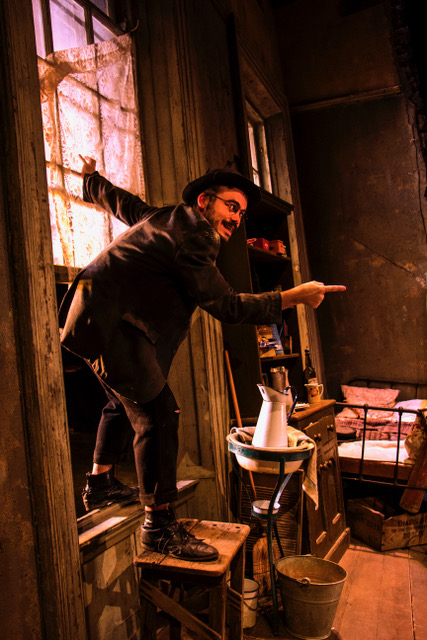
Jarlath as Joxer Daly in Juno and the Paycock.
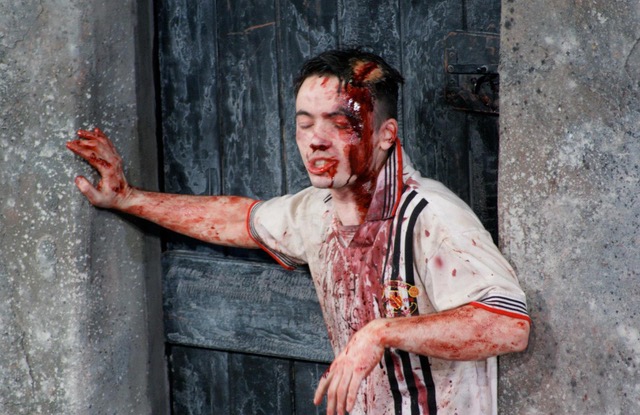
Jarlath as Mairtin Hanlon in Martin McDonagh’s ‘A Skull in Connemara’ (Decadent theatre Company)
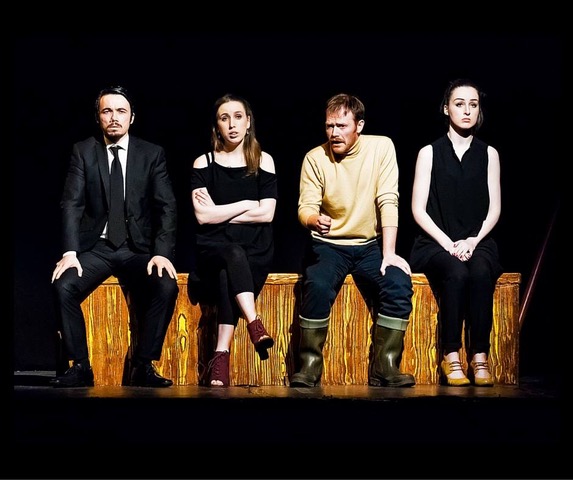
Jarlath with Kate Murray, Peter Shine and Eilish McCarthy in my first play as a playwright- Pleasure Ground. This photo was taken by Sean O Dowd when we performed in St Joseph’s Hall.
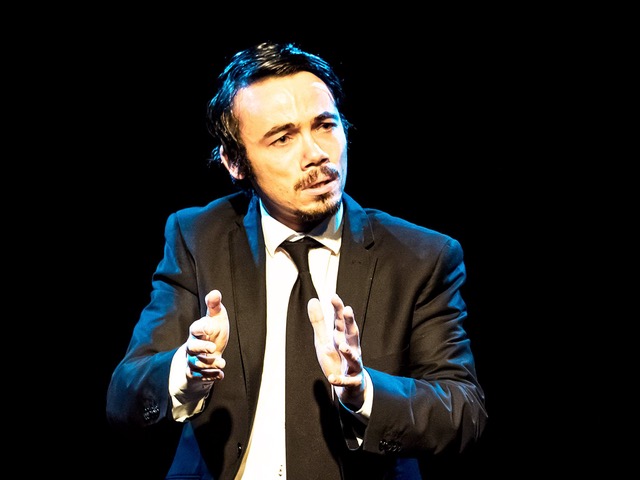
Solo shot, Pleasure Ground in St Joseph’s Hall
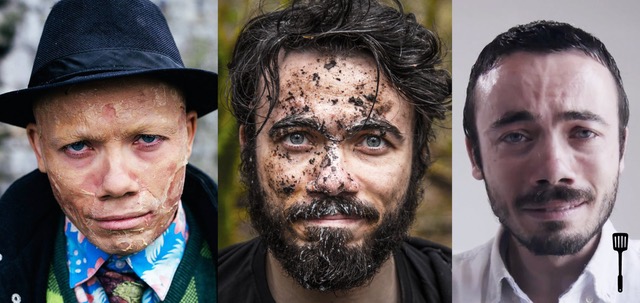
3 combined shots as me in 3 different shorts for film company ‘Project Spatula’
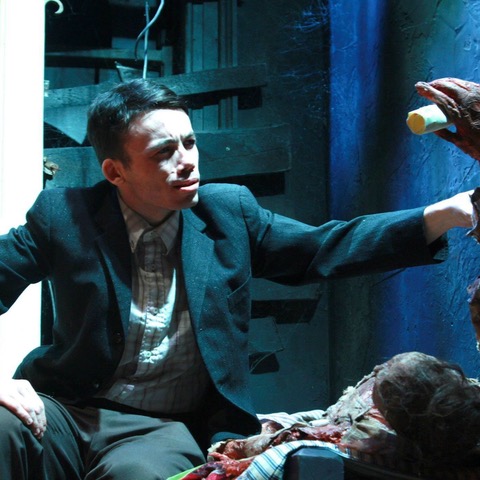
Jarlath in Martin McDonagh’s ‘The Pilllowman’ (Decadent Theatre Company)
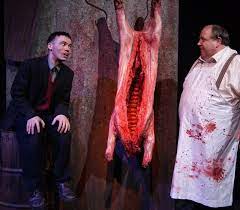
Jarlath as Francis Brady in Pat McCabe’s ’The Butcher Boy’
Thanks to Brendan O’ Dowd for creating and recording the musical piece for the podcast.
BE A GUEST ON THE SHOW!
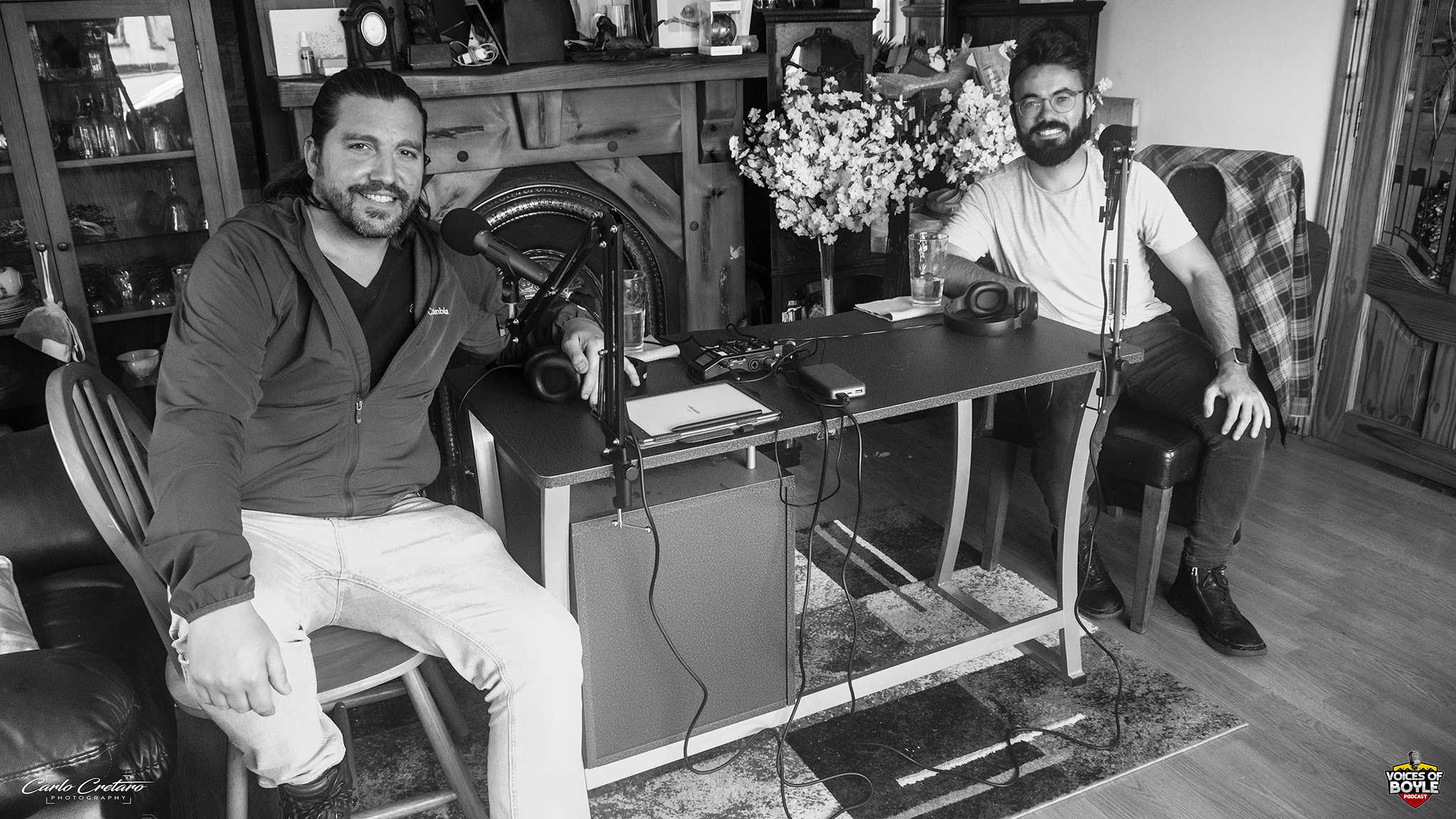
If you’ve a story about Boyle, we’d love to hear it. You don’t need to have done anything remarkable, and you don’t need to prepare a thing. We sit down, have a chat, and you talk about whatever you want to. It usually takes about an hour.
Thinking of someone else? A parent, a grandparent, a neighbour who remembers how it used to be? Tell us about them. Some of our best episodes started because a son or daughter got in touch. You can find us at info@voicesofboyle.com.