Episode 43
Leon Wamari – Podcasting, Business & Personal Development
HOSTS & GUESTS
Carlo Cretaro
Leon Wamari
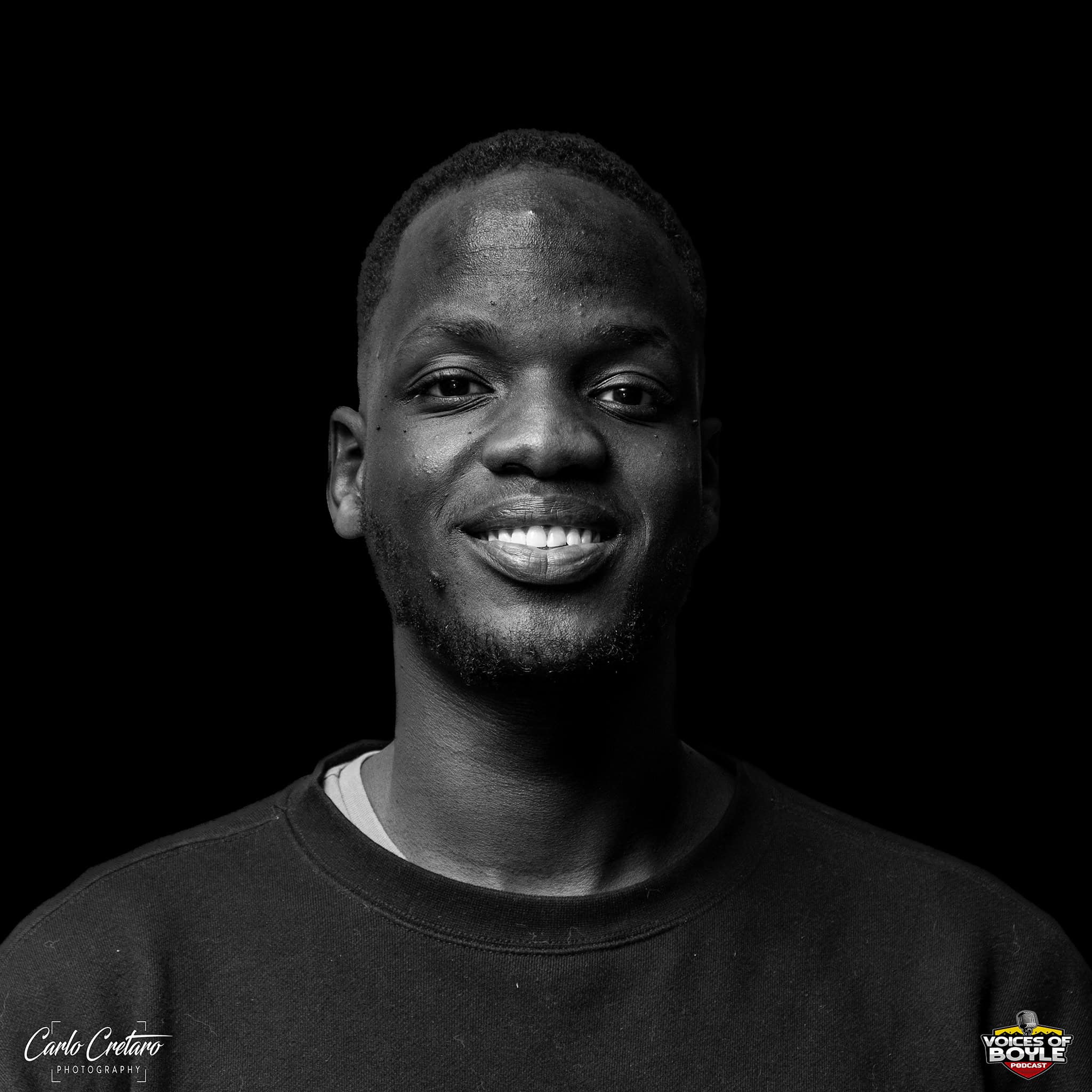
Some days, Leon Wamari’s mother would walk with him down towards Lough Key and hold up the phone while he talked into it. Small motivational talks, he calls them. He’d post them alongside clips of his workouts, and people started texting him. This is really good. Can you give tips?
He was a Leaving Cert student then. By the time he sat down with Carlo he was 19, studying business in Sligo, and hosting his own video podcast. The conversation had been over a year in the making, and Leon admitted he’d half thought it would never happen.
“Tell me a bit about yourself”
Carlo opened with a question Leon had asked in one of his own Instagram clips. It came from helping a college friend practise for an interview, and watching him stall on the most basic questions.
If you don’t know what you’re into or what makes you happy, he says, that question will catch you out. So build a sense of self before you leave college: journal, reflect, try new things.
“Just a wee bit”
Leon spent most of his first ten years in Kenya. His father, he says, wasn’t very present in his life, and he is clear that it hasn’t affected him and that he holds nothing against the man. In 2014 he moved to Scotland with his mother and stepfather, and stayed about a year and a half.
Scotland is where his English came on. He remembers arriving talking like, in his words, “the stereotypical African child”. Hello. How are you today? Carlo was glad he didn’t come away with the accent. Just a wee bit, Leon said.
The family couldn’t stay on in Scotland because of papers, so they went back to Kenya for 2016 and into 2017, and in May 2017 his mother and stepfather brought them to Ireland.
His mother is Kikuyu and his father Luo, two of Kenya’s more than 42 tribes. Leon describes the Kikuyu, with affection, as charismatic, resilient and good at making money, and the Luo as tall and broad-shouldered, fond of their food and their women. He reckons he got a bit of each, “and now it’s just trying to mold something good out of that.”
“How hard it is to actually get your feet going”
The first year in Ireland was a hard one. In March 2018 Leon’s stepfather died of cancer, when they had been in the country about a year. Leon talks about what his mother had to take on then: bills to pay and a place to live to find. They lived out in Cloonloo at first, and then moved into Boyle town.
You don’t notice as a child, he says, how much work goes into settling in a new country: taxes, paperwork, finding work. People back home imagine it’s easy. He points to professionals from Africa or Asia whose qualifications count for less here. There’s nothing wrong with being a cleaner, he says, but going from banker to cleaner is a lot to ask.
“A really high tone”
Carlo first met Leon at his niece’s graduation at King House. Leon went to secondary school in Boyle, and 2022, the year of his Leaving Cert, was a big one. He ran the 800 metres at the All-Irelands and was named student of the year. That, he says, “set a really high tone for me as to what I should expect from myself.”
The running and the fitness clips had him thinking about a career in it, and health science and physiology went down as his first choice on the CAO. Business was second, and he didn’t care much about it. A summer in Kenya changed his mind. He likes money, he says, though he won’t say he loves it, and he likes how businesses work. He started business in Sligo, with a Level 5 in digital marketing alongside it, the September before the recording.
“A new form of education”
Carlo asked whether social media helps or hinders a student. Both, Leon said, and he started with the bad. He quotes a figure from his marketing course, that the average attention span is now eight seconds, and says he sees what it looks like in class: students, himself included, scrolling TikTok during lessons. You crash, and you’re tired for the rest of the day. The good side is how much useful material there is, and tools like ChatGPT. But ask someone where they learned an interesting fact, and the answer is TikTok.
“TikTok is literally a new form of education, but I just think people have kinda become a little bit more antisocial in a way.”
Talk turned to cyberbullying. Carlo made the point that bullying used to stay in the schoolyard, and now it follows children home. Leon said it has happened to him, though not to a big extent, but he has friends who still carry things somebody said to them in secondary school. He would like to see some disciplinary measure for young people who do it. Carlo mentioned the debate in Ireland about whether children under 14 or 16 should have phones at all, and talk of an ID requirement for social media accounts, which he said he is personally not a fan of.
“Do we talk real talk?”
The name of Leon’s podcast came out of nowhere. We’re in the real world. What do we do in the real world? We talk real talk.
It’s aimed at young people working on their sense of self: how to accept themselves, how to plan for their future, and how to read more. Knowledge is power, he says.
One habit he recommends is recording yourself talking to yourself. His reasoning is that you won’t be fully honest with a therapist, with your parents, or even with your best friends. You will be with yourself, and, as a religious man, with God. Record a video on a bad day, watch it two months later when things are better, and you learn that tough times pass, and how to handle the next ones.
“The only person you’d really be honest to is yourself.”
“Consistency is very hard”
Video podcasts are hard work, Leon said: talking to a lens, then editing, cutting clips and posting them. The hardest part is consistency. Carlo knew the feeling. He wanted Voices of Boyle to go out every week, Florence said once a month because she knew what the editing would take, and they settled on every two weeks.
His advice to anyone starting out: jot ideas down, record a first episode on your phone’s voice memos, ask a friend, then plan. He records at weekends and has more than 50 ideas written down. He doesn’t beat himself up over a missed deadline. Put too much pressure on yourself, he said, and you’ll fall out of love with the thing you fell in love with.
“Not in a ring”
At the time of recording, Leon was training for a charity boxing match in Bluebell in Dublin on 30 March. Carlo had assumed it was connected to the fundraiser Boyle Celtic and Boyle GAA were planning for May. It wasn’t. It was organised by a small group run by Leon’s friend Mick, who brought Leon in to lead its podcast. The proceeds were going to a mental health charity that works to raise awareness of mental health and suicide. Leon had never boxed in a ring before.
The fight meant getting back out running. College nights out had put a stop to that quickly. He enjoyed every second, he says, but his fitness dropped.
He had also taken up golf about a month before. At a paid lesson with a professional, one of the three friends watching kept up the trash talk. Leon knew it was a joke. The coach didn’t. He went right back at the friend and told him to come up and take a shot himself. The friend, Leon says, “flopped it so bad”.
Why golf? A lot of business deals go down on the golf course. The business Leon wants to build is online, in marketing, consulting and brand management, for the freedom to work from anywhere.
“Everyone is an actor”
Leon has been listening to Robert Greene’s 48 Laws of Power on audiobook, following along in the book. To Greene, he says, the world is a stage where everyone is an actor, and some actors are better than others. It’s banned in some prisons, he says, because it is so manipulative. Some of it, like how to play to people’s fantasies, he could never do. What he took from it is that pride comes before a fall, and that reading is no use unless you act on it.
“Wisdom is simply applied knowledge.”
“Big and bold today”
Leon has a quote on his wall, right above his mirror, that he reads most mornings and whenever he’s feeling low. It goes: “Remember you are in control of how you show up in the world. I hope you choose to be big and not shrink for the comfort of others. Let yourself bloom wildly and freely without regret.”
On mornings he wakes late for college, with a 30-minute drive ahead, he tells himself to stop. He has a bed. He looks outside, and if the weather’s terrible, he looks back in. There is still time in the day. Carlo’s own answer was to be happy and healthy, with family counted in.
Journaling has taught Leon that things don’t always go to plan. If the podcast doesn’t work out, what he learned doing it will carry over to whatever comes next.
“You don’t have to know what your future will look like. You just have to determine what actions you want to keep on doing now.”
“The real power”
Asked what success would look like five years from now, Leon didn’t talk about numbers. Likes and followers are pointless in the end, he said. You still go to the toilet the same way as the person opposite you. Success would be an event where the people who got something from the podcast actually turn up and talk through their own problems and ambitions together.
“The money would be great, but the real power is in how much you change someone’s life.”
Leon was 19 at the time of recording, and 20 that July. Being young now, he says, means more ways to learn and put yourself out there, and parents who don’t always understand it. A 16-year-old once asked him for advice in the gym, a boy studying law in England under pressure from his parents, who already knew a lot about drop shipping.
The hard parts, Leon says, are what social media expects of you, and the peer pressure around vaping and alcohol, which he counts himself part of through going out so much. The good part is that anything you want to be, you can become.
“People just always say hello to you”
Leon has lived in Boyle for seven years. It’s quiet and homely, he says. Go for a walk in the morning and people say hello to you. In Dublin, nobody cares about you. The only disadvantage is that it’s a small town without a lot to do.
“I can never say I don’t like Boyle. It’s pretty much my second home now.”
You’ll find Leon on Instagram at leon.wamari, and his podcast under I Talk Real Talk on Instagram, Spotify and YouTube.
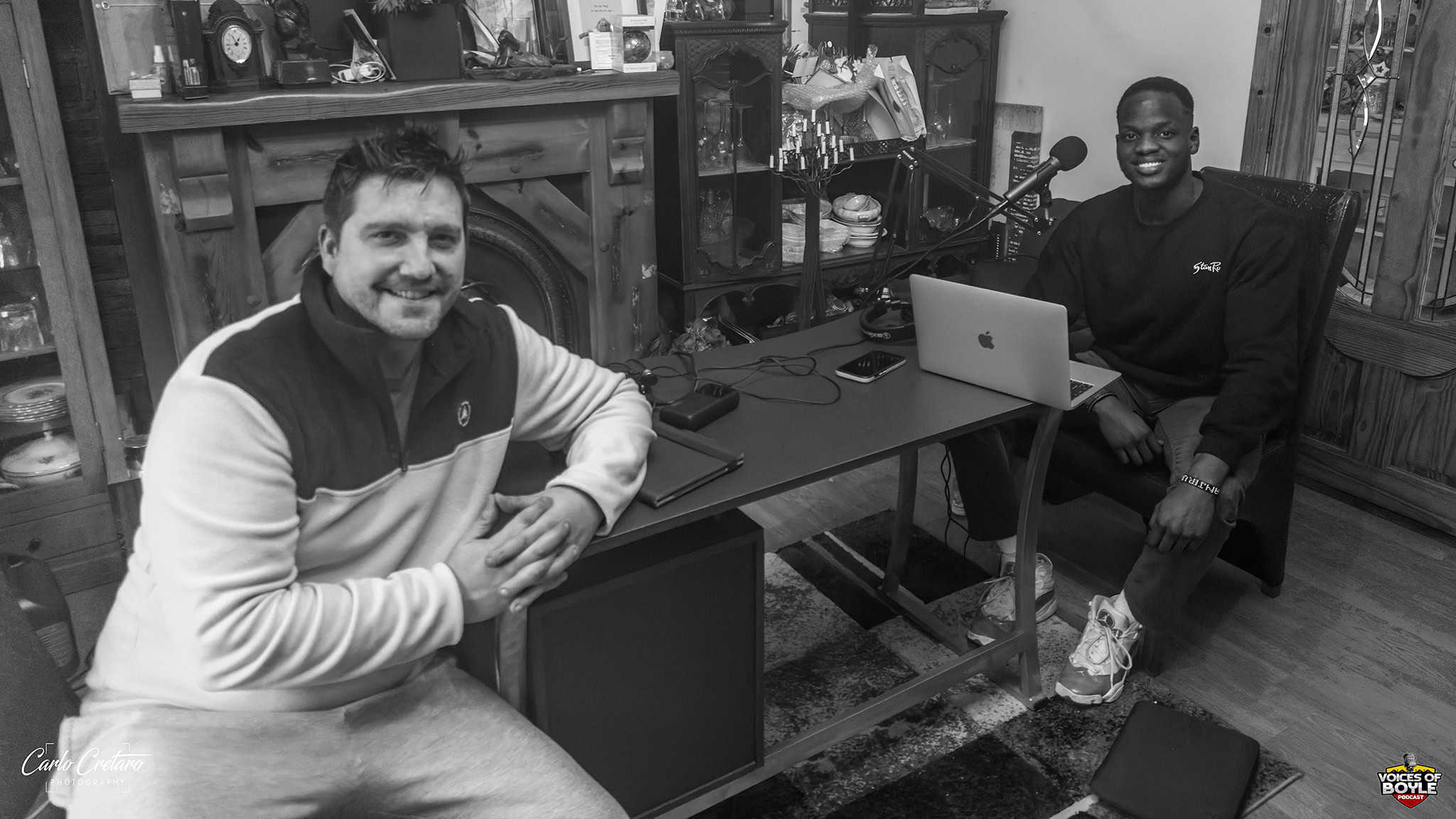
Thanks to Brendan O’ Dowd for creating and recording the musical piece for the podcast.
BE A GUEST ON THE SHOW!
If you’ve a story about Boyle, we’d love to hear it. You don’t need to have done anything remarkable, and you don’t need to prepare a thing. We sit down, have a chat, and you talk about whatever you want to. It usually takes about an hour.
Thinking of someone else? A parent, a grandparent, a neighbour who remembers how it used to be? Tell us about them. Some of our best episodes started because a son or daughter got in touch. You can find us at info@voicesofboyle.com.