Episode 24
Liz Milham – Understanding Holistic Health Through Herbal Medicine
Hosts & Guests
Carlo Cretaro
Florence Cretaro
Liz Milham
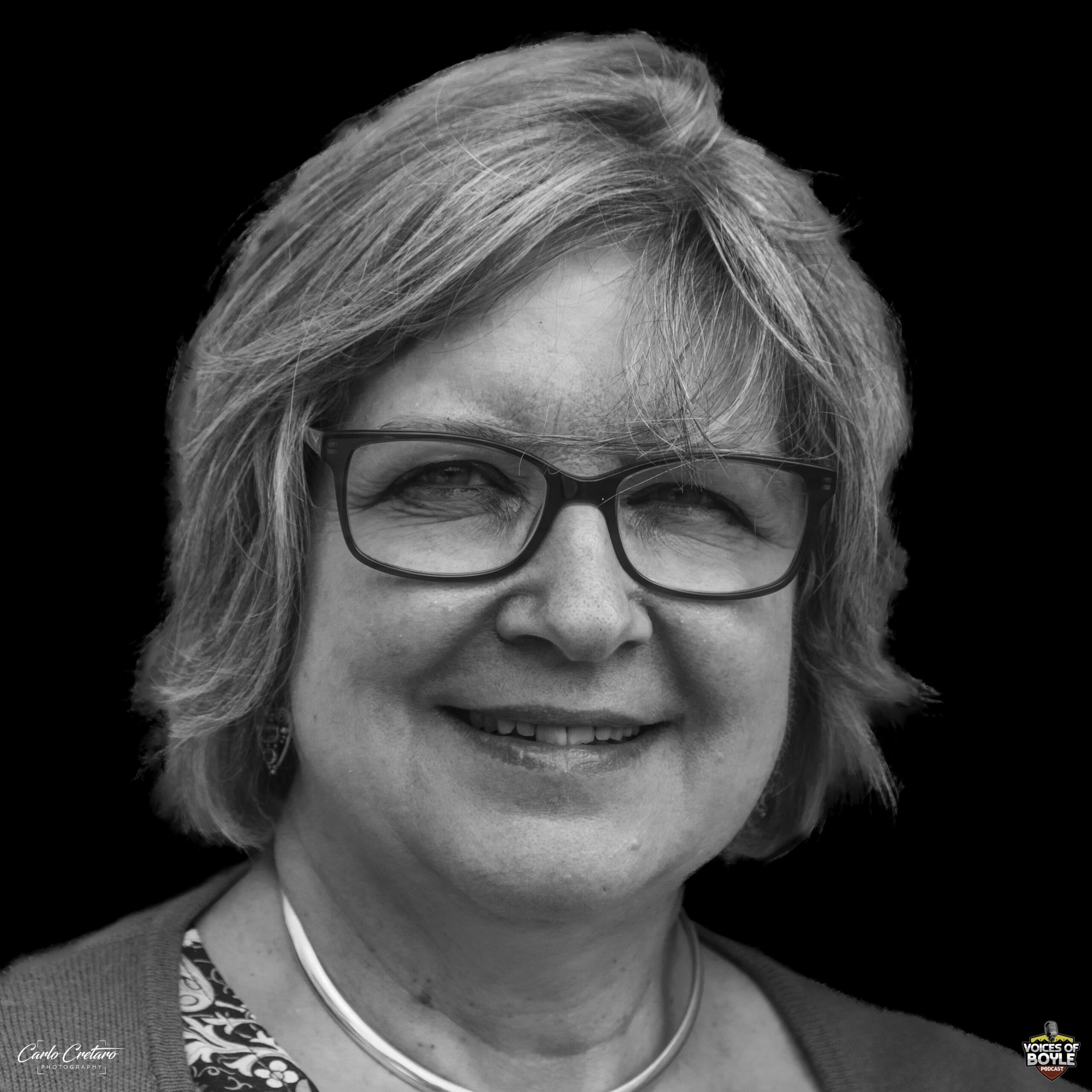
When Liz Milham was a child in Cornwall, she ate the hedges. Her mother was horrified, because to her everything out there was poisonous. Liz had a feeling it wasn’t. She and her brother had a favourite, a leaf they called the lemonade plant, sharp and a little lemony and salty, good for a thirst.
Years later she found out it was sorrel.
She was also making sandwiches out of nasturtium leaves from the garden, and hiding them from anyone who might see. Nasturtium leaves are perfectly edible, she points out. Today Liz runs a herbal medicine practice on Main Street in Boyle, and she sat down with Carlo and Florence to talk about how she got there.
“I would pick things out of the hedge and eat them much to my mother’s horror because to her, everything was poisonous.”
I kinda did it all backwards
Liz’s working life didn’t start with herbs. She qualified as a psychiatric nurse and spent years in mental health. Then came a postgraduate qualification in counselling. Then an honours degree in philosophy and psychology. The herbal training came last.
She’d always done short courses and home herbalist courses along the way, and eventually decided to make it formal. The diploma in herbal medicine took seven years, part time, studied in the evenings around her job. Her training school works on a modular basis: written work sent to a tutor, monthly tutorials, a summer school and an annual meeting with seminars. It’s called the International Register of Consultant Herbalists, and it has members all over the world. At the time of recording, Liz was due to teach at the summer school herself.
“I say easy,” she says of fitting it around work. “It’s really hard work.”
Her dissertation was on the antibiotic crisis, the environment and herbal medicine. It’s a subject she still feels strongly about, and it comes up again later.
A very pleasurable accident
Liz lived in the UK for most of her life. She moved to Boyle about seven years before this recording, and when Florence asks whether she had connections here, the answer is not really. It just happened. One of those synchronicity moments.
“It was just kind of an accident, a very pleasurable accident.”
People have asked her why Boyle, of all places. She has an answer for that too. The town is very like the Cornwall she grew up in. The culture is different, but small towns have their own unspoken rules, and having grown up in one she already understood them. In her words, she came prepared.
She opened her practice on Main Street the June before this conversation.
Just under the surface
Western herbal medicine, Liz explains, is practised mainly in Europe and North America. People have used local plants as medicine since prehistoric times, and it became more formal once it was written down in Greek and Roman times. It works from a holistic model of health, and it uses whole herbs rather than extracts.
In practice that means looking at a person’s constitution and the state of their tissues: whether things are hot or cold, dry or damp, tense or relaxed. It means looking at the pattern of the illness and where it comes from. Two people can walk in with high blood pressure for completely different reasons, she says, so a herbalist treats the cause as well as the symptom.
Carlo raises the oddity of calling something “traditional” when most people now think of it as “alternative”. Liz says it used to be the medicine of Western people, full stop. You went to the apothecary, or a herbalist came to the house. She mentions Nicholas Culpeper, who she calls a bit of a renegade, because he translated the Latin texts into English so ordinary people could use them at home.
“What’s great about Ireland is that there is still that herbal tradition there.”
Plenty of people’s grandparents treated everyday ailments with herbs, she says. It hasn’t gone very far.
I just kinda feel like I’m part of the town
Being on Main Street matters to her. People come in for a chat and to ask questions, and she finds them curious.
If someone walks in with a cough or a cold, she can have a ten minute chat with them and either hand over a ready-made remedy or make one up. Anything longer standing needs a consultation, by appointment, and that takes about 90 minutes. She goes through everything: the problem itself, health history, what’s going on in their life, what they eat, whether they exercise, how much water they drink. Then she goes through every system in the body.
People often say at that point that they feel like a bit of a wreck. They hadn’t realised so much was going on.
The single piece of advice she gives most is to drink more water. Most people don’t, she says. Not on purpose, they’re just not in the habit. In her own house they’ve used distilled water for a few years. Carlo adds that at the very least tap water should be filtered, and later raises fluoride, before Liz brings it back to balance: there’s no point getting anxious about everything, because stress does its own damage.
Everyone’s different
Liz doesn’t use herbs like pills. A lot of people read about a herb online, buy it in a shop for their arthritis, and get nothing from it. That’s often because one herb on its own may not suit their particular condition. A herbalist usually blends several into a prescription for one person.
She is just as wary of the idea that herbs are safe because they’re natural. Generally they are, she says, but there can be interactions with prescribed medicines, so people should get advice first. Herbs can also be the wrong fit. She has seen people taking turmeric and cinnamon as anti-inflammatories, sensible enough, who also suffer from constipation, which those two can make worse. Her answer was to stop them and look at what was really going on.
She works with a nutritionist on harder cases, and with massage therapists and a couple of labs. She’d like to work more closely with GPs. The closest she has got so far, she says, is asking patients to go back for a medication review, and some have come out on far fewer medications. She thinks there’s still caution among doctors because herbs aren’t part of their training, and she’d like to see a module in natural therapies one day.
Room for both
Carlo puts it to her that on social media, saying you prefer herbal medicine gets you labelled anti big pharma. Liz doesn’t accept the either-or.
“I think there’s room for both.”
In trauma medicine, she says, nothing beats the hospital, and antibiotics save lives. The problem is over-reliance, and over-prescribing has helped bring about the antibiotic crisis she wrote her dissertation on. Pharmaceutical drugs are powerful, and she thinks most everyday problems need something gentler that lets the body find its own balance. For anything life-threatening, or for severe high blood pressure, she says go to the GP.
She explains how many drugs started out as plants. Aspirin came from salicylic acid in meadowsweet, a herb she says is actually gentle on the stomach. Metformin came from goat’s rue, and digoxin from foxglove. Once a single chemical is pulled out of a plant, she says, it starts to behave like a pharmaceutical. Carlo tells the story of the word “quack”, from the Dutch quacksalver, a seller of remedies who shouted his wares like a goose.
Yarrow, I use nearly all the time
Florence asks the obvious question: which herbs does she use most? It goes in runs, Liz says. One week it’s loads of dandelion root, another week calendula. Oregon grape comes up a lot; she uses it for general support, the liver and the skin. Nettle, agrimony, and yarrow, which she uses nearly all the time. She has well over a hundred herbs in her practice. Some she grows, some she forages, and the rest come from professional suppliers. Brexit made that harder, but there are good Irish companies now, and she picks the ones that treat the plants well rather than importing herbs that arrive looking sad and sorry.
Dandelion root sets Carlo and Florence off. They went two years without coffee, drinking a roasted dandelion root blend called Dandy Blend. People thought they were mad. You can make it yourself by digging up and roasting the roots, Liz says. A friend of theirs did. Florence admits they just bought the bags.
For listeners at home, Liz suggests ginger in tea for the stomach, rosemary tea after a heavy meal, and her winter mix of equal parts yarrow, mint and elderflower, with honey and lemon. If she feels something coming on herself, she takes echinacea. If you grow elecampane, she says, you can dig up the root after two years, slice it, keep it in honey and take a little each day as winter comes in. Her sister did just that. When the first wave of COVID came, her sister caught it and was very unwell, but Liz believes it could have been worse had she not been looking after her chest.
Food be thy medicine
On food, Liz says it depends on the person, but she aims people at seven portions of fruit and vegetables a day, as many colours as they can, a little protein with each meal, and less dairy. She often suggests people with sinus trouble come off dairy for a while, and some find an intolerance they never knew about. Sometimes she asks for a food diary, and the pattern shows itself in a few days.
She loves Mediterranean herbs and spices. Chilli and ginger for circulation, garlic for nearly everything, and the old ones people forget, like summer savory and lovage. Florence quotes Hippocrates, and then tells a story. Back from Sri Lanka, with Carlo’s mother keen on the cooking there, they brought home five kilos of spices, and got stopped at customs for the first time ever. They told the truth and were waved through. The spices were far stronger than anything from the supermarket. Liz’s tip is to buy from specialist Asian grocers, where the turnover is higher and the spices are what the owners cook with themselves.
Lots of small changes
When Carlo asks if there’s anything they haven’t covered, Liz takes a moment. Then she talks about the house. The shower gel, the shampoo, the plug-in air fresheners. She’d swap those for an oil diffuser and take stock of how many chemicals are in daily use.
Then the basics. Water. The best food you can afford, organic if you can manage it. A few vegetables if you have the space. A 20 minute walk a day, which she says can be life changing. And if you go vegan, learn about B12 first.
“If you do lots of small changes, it has a really big impact.”
As a child in Cornwall, Liz knew the lemonade plant wouldn’t hurt her. Seven years of evenings, a dissertation and a move across the water later, she can tell you exactly what it is. Her six-week home herbalist course finished in June, and next she plans day workshops on making teas and creams. Keep an eye on her Facebook page for dates.

Thanks to Brendan O’ Dowd for creating and recording the musical piece for the podcast.
BE A GUEST ON THE SHOW!
If you’ve a story about Boyle, we’d love to hear it. You don’t need to have done anything remarkable, and you don’t need to prepare a thing. We sit down, have a chat, and you talk about whatever you want to. It usually takes about an hour.
Thinking of someone else? A parent, a grandparent, a neighbour who remembers how it used to be? Tell us about them. Some of our best episodes started because a son or daughter got in touch. You can find us at info@voicesofboyle.com.