Episode 68
Jane Suffin & Lucy Egan – ‘Friends of Assylinn’
HOSTS & GUESTS
Florence Cretaro
Jane Suffin
Lucy Egan
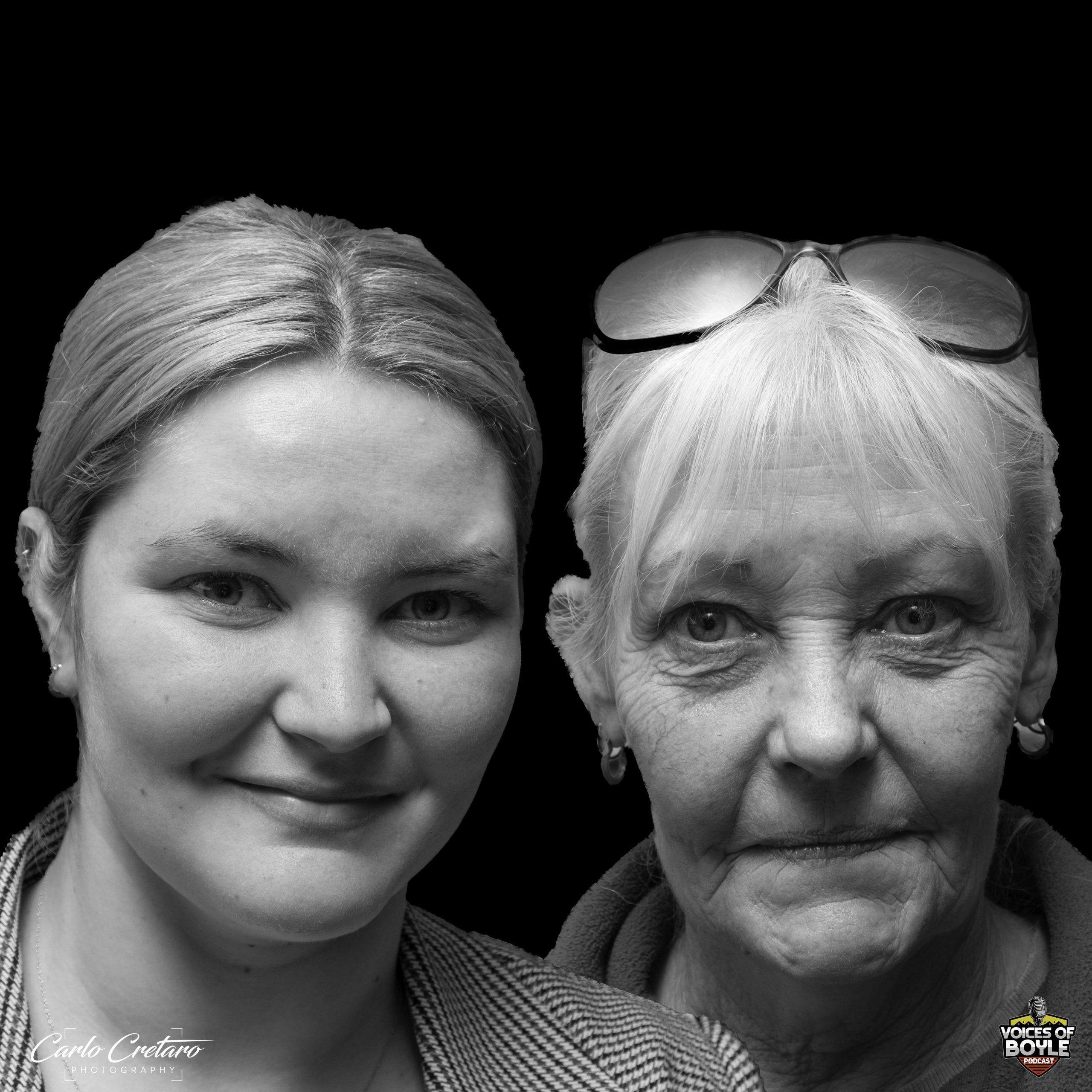
Assylinn sits up on the hill above the river, and there is hardly a family in Boyle without someone buried there. It is a beautiful spot. It has also, by common agreement, been left to itself for a long time. In November a group of people in the town decided that had gone on long enough, called a public meeting, and got a committee elected. Jane Suffin is its chairperson. Lucy Egan is its PRO. Between them they explain to Florence what the last few months have actually involved.
Two meetings and a committee
The first public meeting had a decent turnout, but not enough of one. Rather than push ahead on thin support, they called a second meeting a fortnight later. That one filled the room, and the committee was elected from the floor by the people who came.
Six members: Jane Suffin as chairperson, Maria Colman as vice chair, Chanel Corrigan as secretary, Regina McLaughlin as treasurer, Stephanie Quinn as vice treasurer, and Lucy Egan as PRO.
What followed was less romantic. There was no handover of paperwork from the previous committee, so everything had to be built from the ground up. A bank account. Insurance. Tax clearance. Registration with the various departments at Roscommon County Council. Months of it, before a single blade of grass was cut.
The new name came out of that. Friends of Assylinn signals a clean slate, and as Jane puts it, it does not sound as cold as cemetery committee.
The first cleanup day
They put out a call for a community cleanup. Two hours, on a Sunday. Lucy admits they had not even set up a Facebook page at that stage, which she now regards as a mistake, and word went around anyway.
People came. A steady flow of them, all morning, including plenty they never expected to see.
“It would sort of bring a tear to your eye to think that these people want the exact thing that you want.”
Neither of them could believe how much got done in two hours. The pile of clearings at the end of it was enormous. What has come since is almost as useful: offers of machinery, offers of labour, and a steady run of people asking to be told when the next one is on. There will be four or five or six of them across the year. The old graveyard is big enough that the first day barely touched the front of it.
What the council can and cannot do
Grass cutting is currently done under the Farm Relief Services scheme, which amounts to two and a half days every second week. There were four men on it. Two have since retired. Jane is careful to give them their due: for years they kept an enormous site in order with a strimmer each and not much else.
Her preference would be to see a CE scheme back in the cemeteries, the way there was years ago, when a group of eight worked it week on and week off and the place was never in better condition.
On the works themselves, the council has been supportive in principle and empty in the pocket. The committee has put a list of projects to them and been told there is no objection to any of it, only no money for any of it. The local engineer has committed to a new gate at the top of the old cemetery, so that people who cannot manage the hill can be dropped by car and walk in on the level. The council will supply paint for the wall. Machinery, no.
Where the money for a plot actually goes
The detail that surprised Lucy most, and will surprise a lot of listeners, is what happens to the fee you pay for a burial plot. It does not go back into the cemetery. It goes into the council’s general fund, and from there to roads. County councils receive no dedicated central funding for cemeteries at all.
Jane, who served two terms on Boyle Town Council, has a view on this and does not soften it.
“Give money to the people that are trying to do better for their communities.”
Around ninety per cent of graveyards in Ireland are council property, she points out. Boyle has three cemeteries between the Church of Ireland ground and the two at Assylinn, and none of them are funded. Her call is to every public representative in the country, not just Roscommon, to lobby for a specific central allocation so that committees like hers are not starting from zero.
The trees
Top of the list of works, and the one that will cost the most, is the trees in the old cemetery. They have to come down. They have damaged graves. Their roots and weight are putting enough pressure on the boundary wall that it will eventually go into the field. Every bit of wind brings more branches down, and during storms debris flies into both the old and the new cemetery.
It is a health and safety issue as much as an aesthetic one, and it will run to thousands.
Getting there safely
The committee is not confining itself to the walls of the graveyard. The approach road from the town has no footpath. People walk it, including mourners walking behind a hearse, and if a car comes the only option is the ditch on either side. There are parents bringing children up to graves, listening out for traffic the whole way.
They have taken the engineer through the whole site and put the case for a footpath running the length of the approach, along the stone wall and past the dry drain, where they say there is no good reason one cannot go. The riverside stretch on the left coming from town has not been cut in about five years and has been raised with the council too.
What a graveyard is for
Lucy makes the point that a cemetery is never going to be a happy place. What it can be is peaceful. A bench, so that somebody can sit down without having to say anything. Long evenings and birdsong. Somewhere to look at that is not a pile of rubbish in the corner.
She talks about the meitheal of men who turn out to dig a grave for a neighbour in the west of Ireland, and how that tradition is worth holding on to. Part of what the committee wants to be is a point of contact for families at exactly that moment, someone to ring who will know who to ask.
“A cemetery is the one place where everyone can come together for the better good.”
Who has come on board
With no money in the account, the committee has leaned on goodwill and got it. Sean and Tom Rock have offered to do the stonework on the gap at the bottom of the old cemetery, which is currently impossible for a wheelchair or anyone with mobility issues to get through. Johnny Kevel is sponsoring the new gates for it. Wayne at Suffin Memorials has covered this year’s insurance.
That accessible entrance is the first job on the list.
How to help
A church gate collection is planned for Easter weekend at St Joseph’s Church, and a GoFundMe is going live around the same time so that people away from Boyle can contribute. Jane is blunt that nobody is expecting large sums.
“We’re starting with nothing. There’s no such thing as any bit being too small.”
Money is not the only thing they need. They are looking for people who can do concrete work and similar jobs, people with machinery, and people who can give a couple of hours on a cleanup day. As Florence says in the episode, if you cannot make the Sunday, a couple of pairs of gloves is a contribution too. They had to go looking for gloves last time.
Updates go up on the Friends of Assylinn Facebook page and are shared on Boyle Community Hub. There is an email address for anyone not on Facebook.
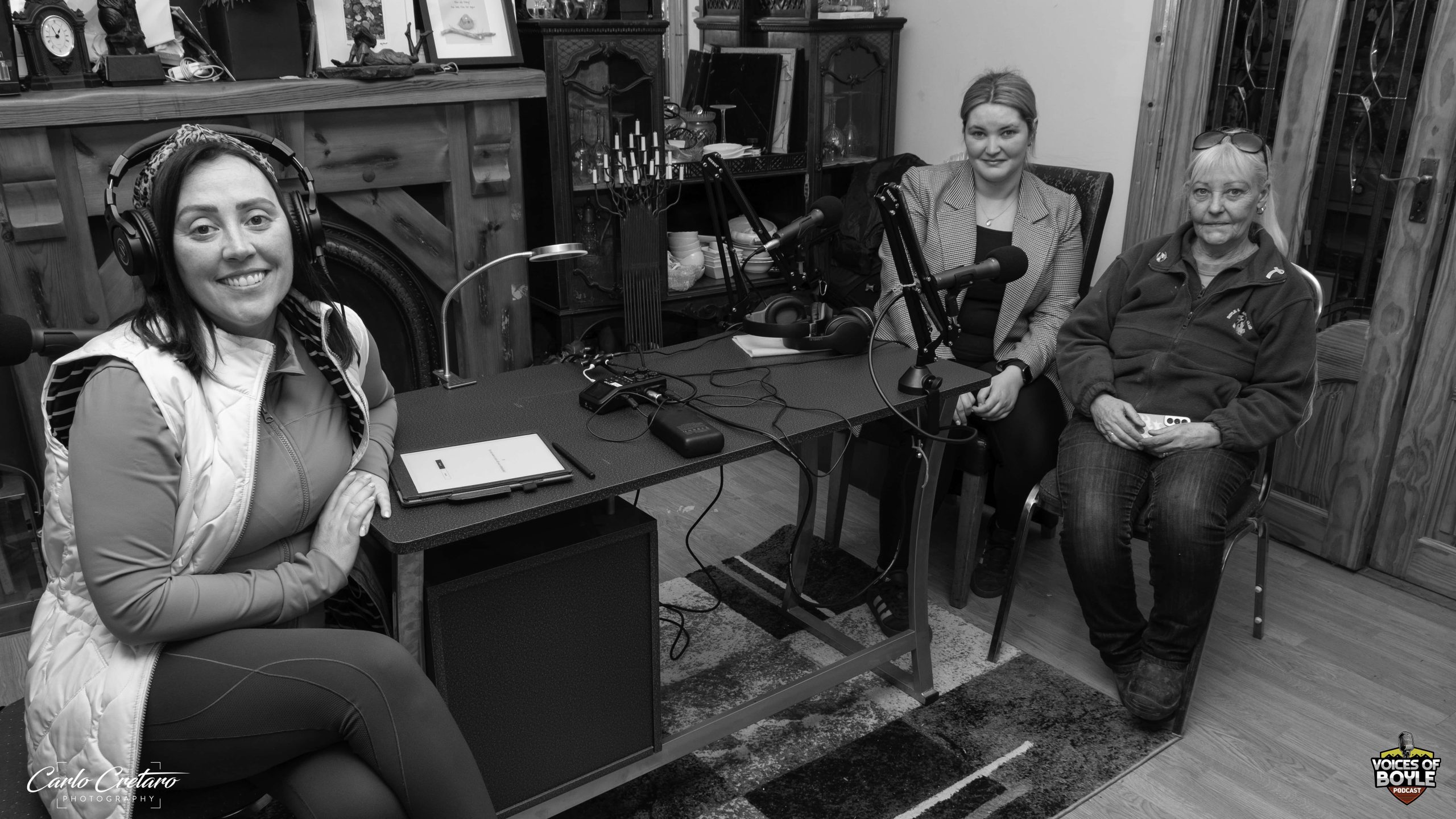
Thanks to Brendan O’ Dowd for creating and recording the musical piece for the podcast.
BE A GUEST ON THE SHOW!
If you’ve a story about Boyle, we’d love to hear it. You don’t need to have done anything remarkable, and you don’t need to prepare a thing. We sit down, have a chat, and you talk about whatever you want to. It usually takes about an hour.
Thinking of someone else? A parent, a grandparent, a neighbour who remembers how it used to be? Tell us about them. Some of our best episodes started because a son or daughter got in touch. You can find us at info@voicesofboyle.com.