Episode 54
Mary Regan – Capturing Life’s Moments
HOSTS & GUESTS
Florence Cretaro
Mary Regan
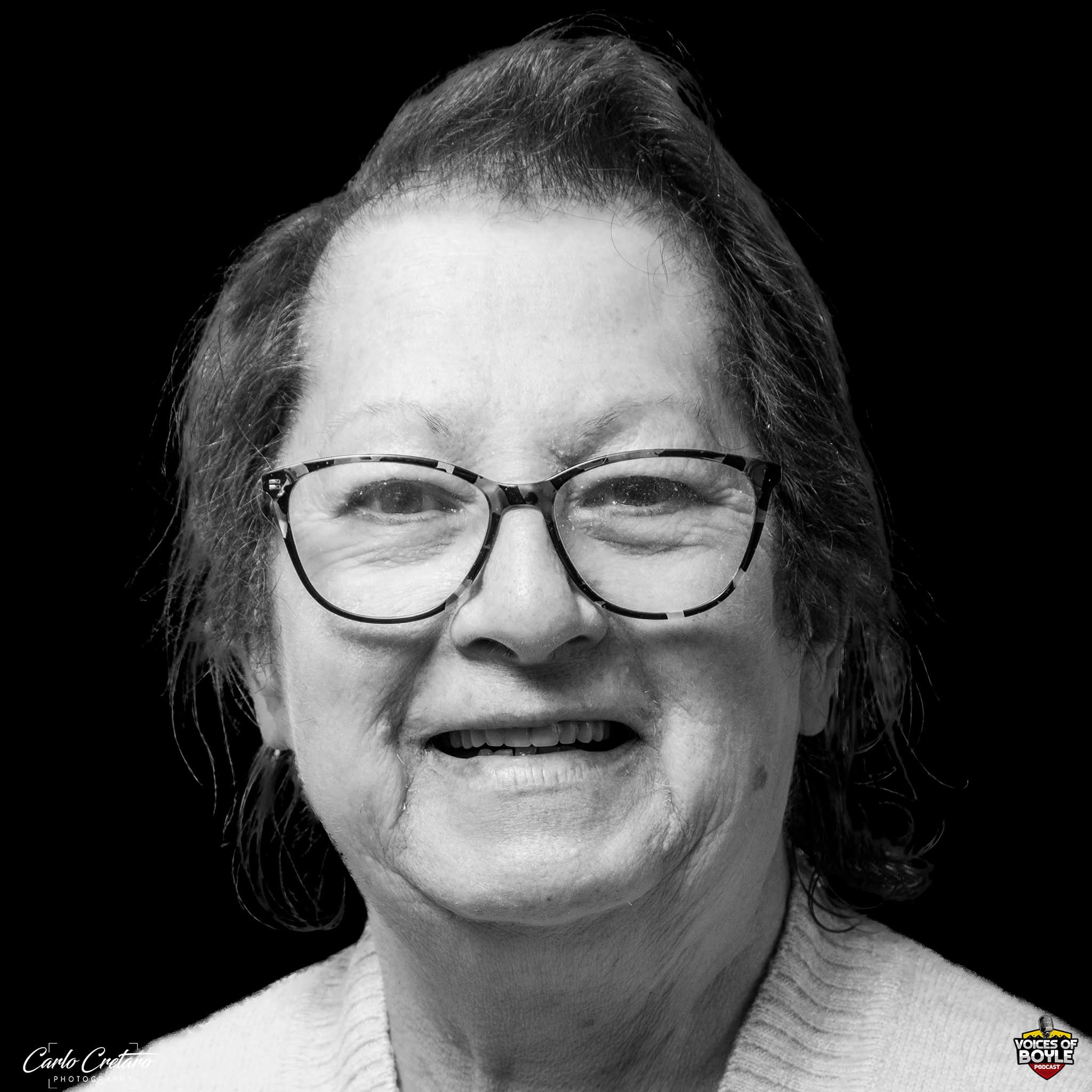
In 1989 Christie Regan was laid up in Sligo General with a wedding booked for the weekend, and he was in a tizzy about it. Who would they get? How would they manage? His wife Mary had been going out on jobs with him for a while by then, writing down names for the captions while he took the pictures. She had never covered a wedding on her own.
She told him to leave it to her.
It was a Church of Ireland wedding. It went fine, and she enjoyed it. Mary Regan photographed weddings and events for the Roscommon Herald from then until she retired last year. She had wanted to do it since she was in school.
“I said, leave it to me. And I’ll do it. I did it.”
“I always had a great liking for photographs”
Mary was born Mary Bridget Tansey and grew up on a farm near Elphin. Her father, John Tansey, came from Ballinameen, and her mother was an Elphin woman. She started in a small country school, then moved to the school in Croghan, where her teachers were Mrs Annie Faye and Michael O’Callaghan, an Elphin man. In 1968 she went to the convent school in Elphin, run by the Sisters of Mercy, which later combined with the grammar school. Good times, she says, “as well as cross times”.
All through those years she wanted to study photography. Nobody at home was keen. The feeling was that it would never be much of a livelihood. So when she finished her Leaving Cert she went to work on the switchboard at Morris’s post office in Elphin, and stayed four years.
She had been running into Christie Regan “here and there” for a while, at different things, and she can’t say for certain when they first met. But she knows the first official date to the day.
“The whole country would be at it”
Sean Rattigan, Peg Rattigan’s husband, was a contractor, and every January he held a dinner dance in the Royal Hotel in Boyle. Mary came down from home for it on 4 January 1978. She and Christie went out for two years after that, and on 19 April 1980 they were married in St Patrick’s Church in Elphin by Father Gearty, with Father Michael Donnelly and Father Bobby Jones of Boyle there too.
The reception was in the Forest Park Hotel, run then by the Gilmartin family. Mary says the Forest Park was the place for every wedding. When she looked through Christie’s diary in those years, there wasn’t a vacant Saturday from May until September. The ones that didn’t go to the Forest Park often went to the County Hotel in Carrick-on-Shannon, the sister hotel to the Bush, which is gone now.
After a honeymoon in County Clare they came back and opened their studio at the bottom of Green Street, in what had been Mary Lavin’s fashion shop, where Matt Burke’s is now. They lived above it. For a woman who had wanted to study photography, she says, it was just “a clicking together” of the two of them.
A darkroom on Marion Road
The studio was where they met people and took photographs. The printing happened somewhere else. Christie had the use of a darkroom from Sean Fox and Mickey on Marion Road, and everything had to be printed and ready for the Herald’s Monday morning deadline.
He had learned all that as a boy. Christie grew up in Bellspark, the eldest of five, and as a youngster he’d go into Murt O’Leary’s chemist in the evenings and at weekends. Murt was Liam O’Leary’s father, and he had the young Christie helping him develop films. Mary explains that a developed film needed a big wash afterwards, to make sure no residue was left on it. That was where Christie learned the process, and once you have a liking for something like that, she says, it doesn’t take much to bring it out.
He had other loves too. He ran well enough in school to come home with trophies. He played double bass in the Blue Rockets and was in a band called the Jivoneers. He gardened for Hugh and Pam Stewart for more than twenty years, and he drove all over north Roscommon, Sligo and Leitrim in a Renault 4. When Florence asks about the registration, Mary has it straight away: OEI 50.
Three years into the marriage their first child arrived, and gave them a fright. Joe was born in Sligo General on 7 July 1983, ten weeks premature and three and a half pounds, and he was in hospital until 12 September. He had a shaky start, Mary says, but everything came better. Evelyn came on 8 December 1986, a Christmas baby, and Enda on 30 January 1990.
“Out the door and gone”
For a long time the Regans had no phone. When there was a story, somebody came round the corner to tell Christie, and he might have ten minutes to get going. Mary went with him more and more once the children were in secondary school, and distance was never an issue. They’d end up “here, there, and everywhere”.
“He always had the Wellingtons in the car because you never know what kind of conditions you’d have to go into.”
The weddings he took are beyond counting. So are the events. Mary remembers him covering the fire at the meat factory in Ballaghaderreen in the eighties. When they were out together, Christie took the photographs and Mary took down who was in them. It was too fast, she says, for one person to shoot and write captions at the same time.
“It would nearly send shivers down you”
Some of the jobs were frightening. Christie was sent to the bank robbery at Ballaghaderreen when guards were shot, and Mary saw his photographs of the patrol car with the bullet holes in it. He was at Ballinamore when Don Tidey was rescued from the wood. With both, he got very short notice and, as Mary puts it, “put the pedal to the road”.
Was he brave? Florence asks. He was, Mary says. But she thinks it’s more that you don’t stop to think while you’re working.
“You do the job, but you think last.”
It’s only looking back, she says, that you realise how dangerous some of it was.
“Leave it to me”
Which brings it back to 1989, Christie in Sligo General, and a wedding with nobody to cover it. Mary didn’t want to let someone else in on their patch. She went, did the wedding, and came home knowing she could do it. “Right,” she said to herself. “Here goes.”
She covered weddings, social events and news for the Herald from then on, all over the area, anywhere from Elphin to Strokestown to Ballaghaderreen. When she retired last year her son Enda took it on, and he’s kept busy with weddings of his own and social events for the paper. Enda has his father’s music in him too. He drums in a band called The Sessions and does the musicals, and Mary can see Christie coming out in him.
“Every Tom, Dick and Harry”
Mary liked the people end of it. She says hello to everybody, and after all those years on jobs she knows everyone and anyone.
The one thing that drives her mad is the person who ducks out of a photograph. “Oh, will you stop?” Florence makes the point that it’s not until you’re older that you see how much those pictures matter. There are characters in Christie’s books that people have only heard about and never actually seen until now.
“Someday I’ll see cracks in that ceiling”
The attic of the Regan house is full of boxes of negatives. Mary sometimes thinks the ceiling will give under the weight of them.
A lot of them are two and a quarter inch square, off the Rollei. Mary explains that the square negative gave a much better photograph than 35 millimetre, and you could blow it up to 16 by 20 and it would still be perfectly clear. The trouble is that there’s no way of printing them now. Kodak has gone out of Ireland and the film isn’t being made. They check on the boxes to make sure they’re all right, and Mary says she won’t be getting rid of any of them.
“I can tell you the amount of boxes of negatives that’s above in our attic.”
She’s convinced film will come back in time, even if it takes a long while. Digital is quick and handy, she grants, but not every digital image will go up past 20 by 16.
“Goodbye, film, and goodbye, darkrooms”
The switch to digital wasn’t really a choice. Mary remembers Christie saying they’d have to buy a digital camera, because the paper wanted photographs quickly and film couldn’t provide that. With digital you had the image the minute you took it, and there were machines to print it. When digital came in, she says, that was it for film and for darkrooms. You either went with it or you fell out of the limelight.
“We’re going to attack it”
Christie had brought up the idea of a book now and again over the years. Mary would laugh it off and tell him it would happen in time. She knew, and didn’t want to say, that it might have to wait until he was gone. In the introduction to the first volume she wrote that he knew she would not do it in his lifetime, because of his ill health.
About a fortnight after Christie died, Christina, the editor of the Herald, rang Mary to ask whether she’d ever think of doing a book. Mary said maybe. She didn’t want to say yes too quickly. She talked it over with Joe, Evelyn and Enda, and they decided to attack it.
The hardest part was the captions. You can find a bundle of photographs, Mary says, and have no idea who is in them. They worked through them, had the book ready for printing by the end of November, and launched Christie Through the Lens in King House. The bookshop above in SuperValu sold about four boxes of them on the Saturday, and people were still looking for more.
A second volume followed, because there were enough photographs left over to fill one. Between the two books they raised €5,000 for SHOUT, which Mary describes as part of the oncology department at Sligo General. Both volumes are still available, and Enda sells a good few online.
Inside there’s Mother Teresa receiving the freedom of Sligo, Jim Lloyd the postman at the Northern Bank pillar box, the old musicals, school photographs and dinner dances, the houses going up on Green Street, the last steam train leaving Boyle and the last wall of Rockingham House. Mary hears people say that whatever you don’t notice going through them the first time, you’ll see the next.
“Take a photograph of that”
Florence calls what Christie did documentary photography, and Mary agrees. She has one piece of advice she always comes back to.
“Say if your shop closes, take a photograph of that because that’s going to change.”
Mary hasn’t planned anything big for retirement. She still has a personal interest in photography and says she’ll see what the future brings. For now it’s good to have a bit of time for herself.
At the end, she thanks her parents, John Tansey and Kathleen Denniston, Christie and the Regan family, everyone who helped her over the years, and Joe, Evelyn and Enda for their help with the books.
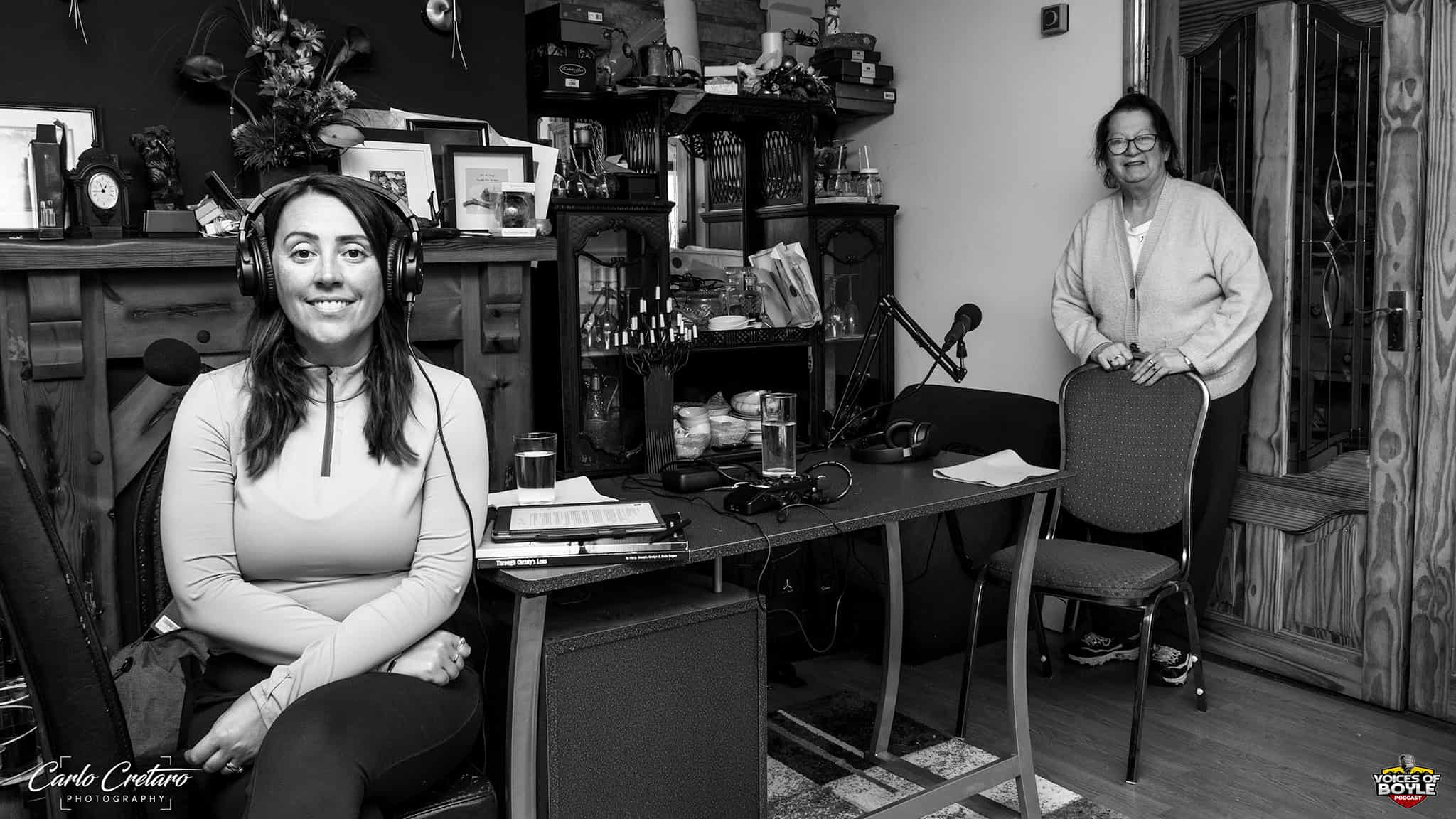
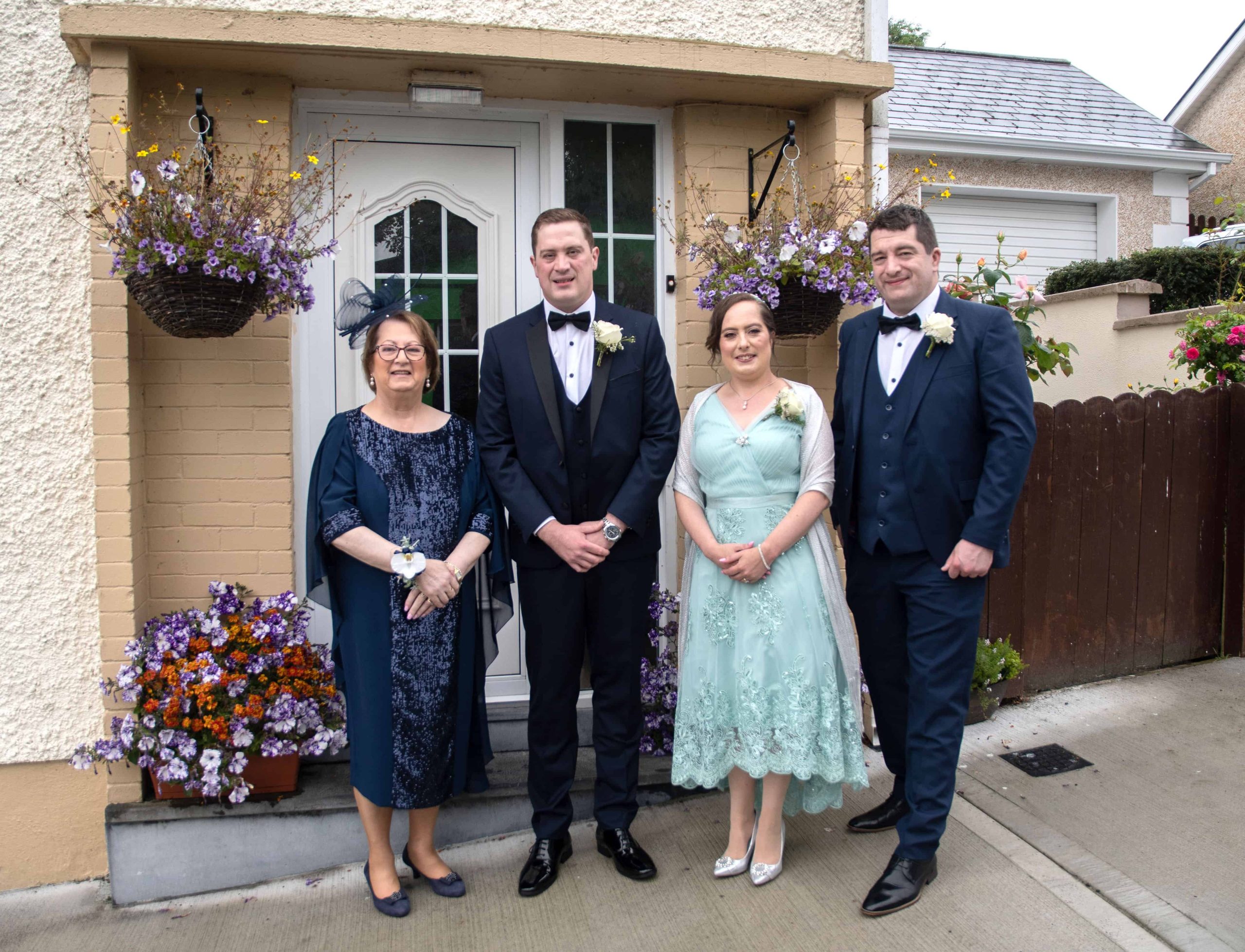
Mary, Enda, Evelyn and Joe on the morning of Enda’s wedding day
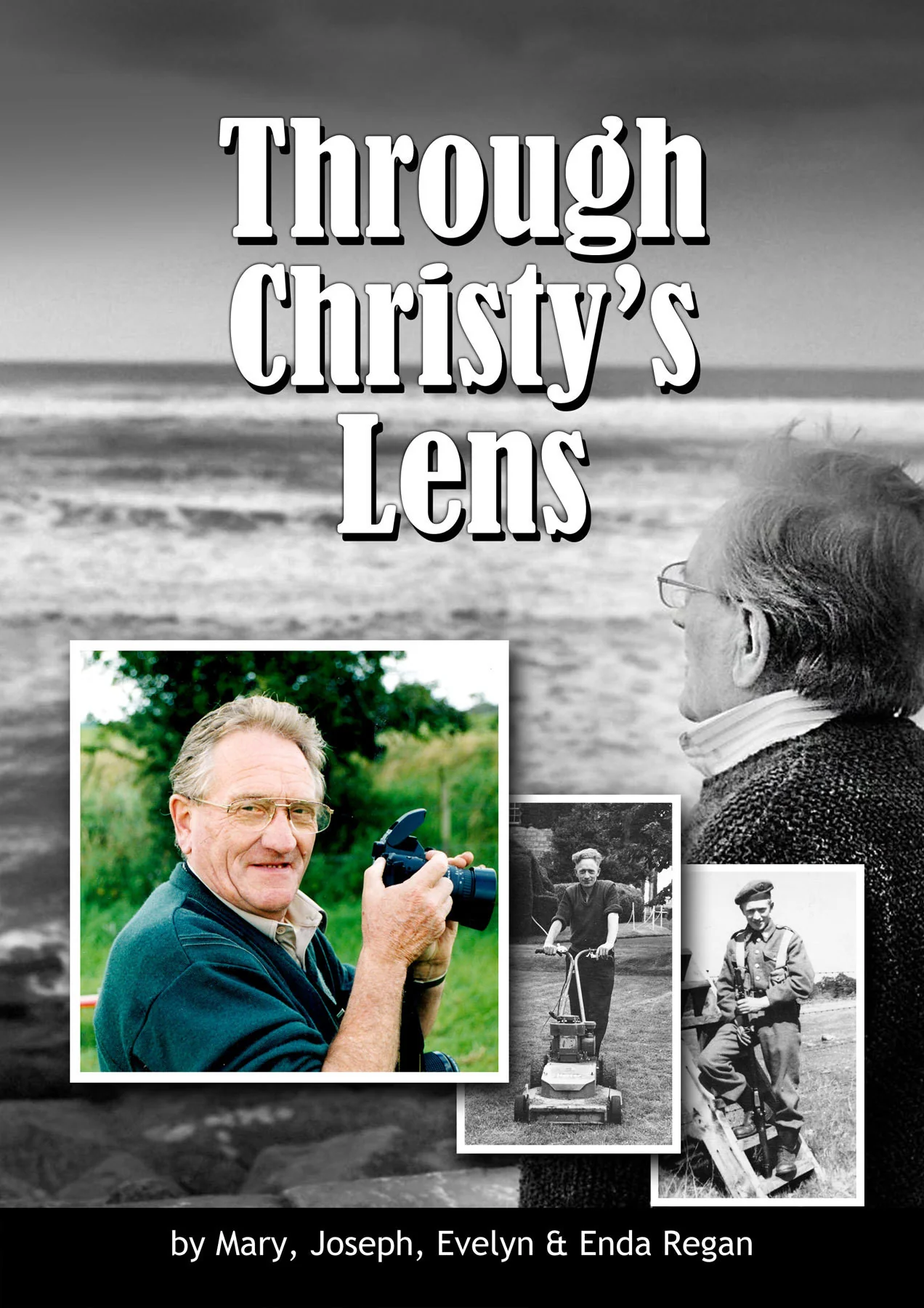
The front cover of the book “Through Christy’s Lens”
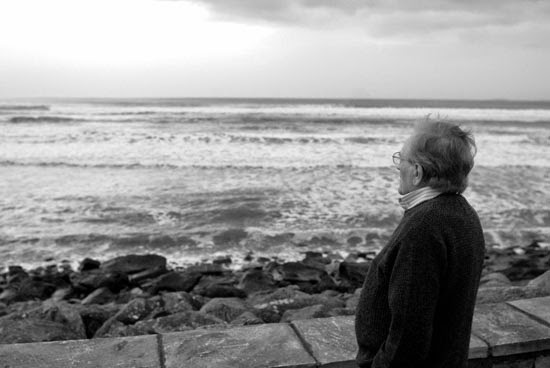
Christy looking out at the waves in Strandhill. Phone Credit: Enda Regan
Thanks to Brendan O’ Dowd for creating and recording the musical piece for the podcast.
BE A GUEST ON THE SHOW!
If you’ve a story about Boyle, we’d love to hear it. You don’t need to have done anything remarkable, and you don’t need to prepare a thing. We sit down, have a chat, and you talk about whatever you want to. It usually takes about an hour.
Thinking of someone else? A parent, a grandparent, a neighbour who remembers how it used to be? Tell us about them. Some of our best episodes started because a son or daughter got in touch. You can find us at info@voicesofboyle.com.