Episode 21
Michael Devine – From Boyle To London And Back
Hosts & Guests
Florence Cretaro
Michael Devine
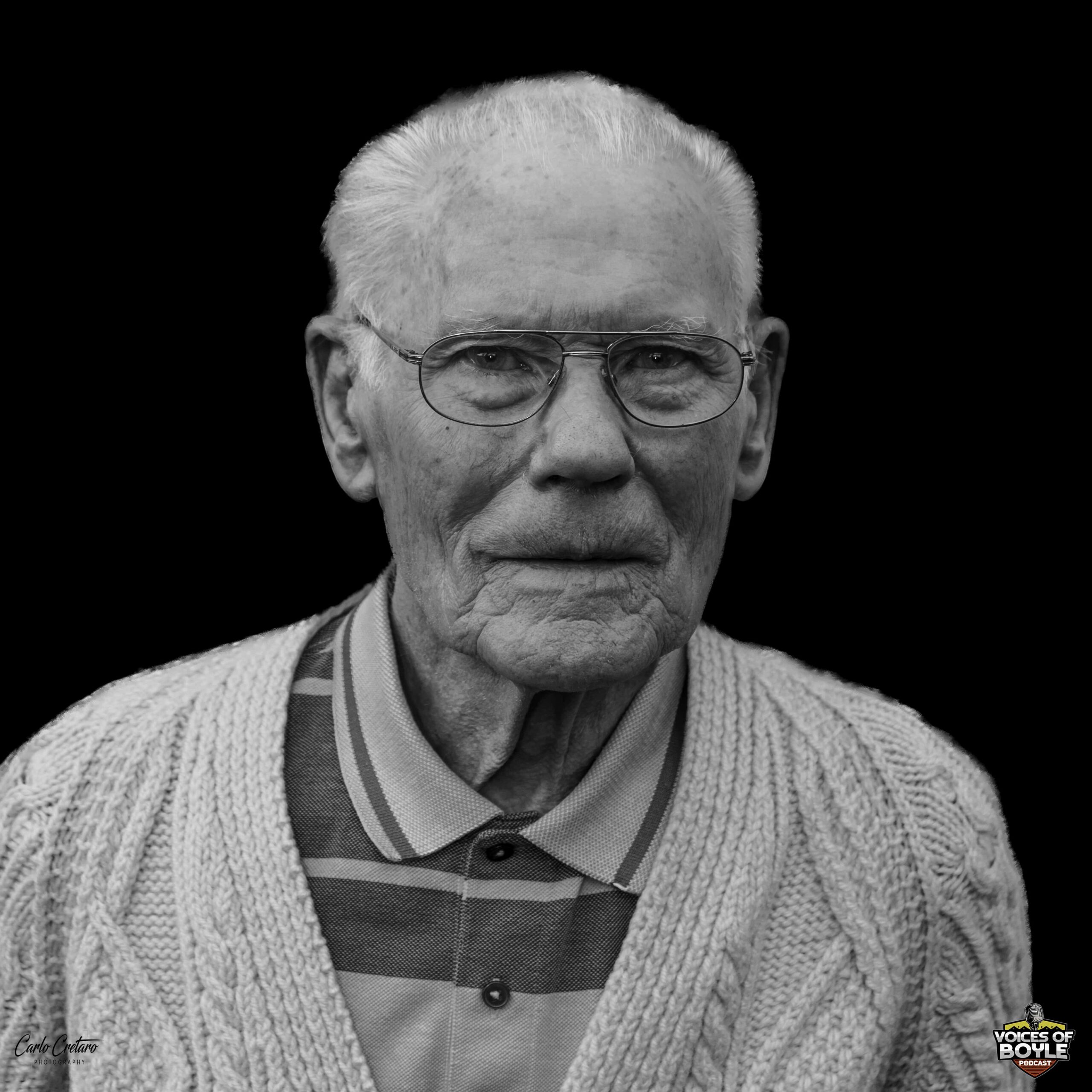
From the back door of the house on Elphin Street it was a hundred yards to Boyle railway station. Michael Devine says a hundred metres, then corrects himself. It was yards back then.
He was seven. The stationmaster was a man called McCarron, and Michael knew the McCarron children well enough to get into parts of the station nobody else saw, and now and again a lift on the engine itself. Born in 1939, he spent 44 years in London before coming home in 2000. He sat down with Florence in the house his grandmother once owned.
That was one of our playgrounds
On fair days hundreds of cattle went out by train to Mullingar or Dublin. Candon’s warehouses had their own private line into the sheds, and the boys watched the wagons being juggled in and out, sitting at the end of the platform and letting them roll right up to their feet.
When he wasn’t at the station he was at Feely’s. Barry Feely was his closest friend then and still is. They knew every hedge on both sides of Greatmeadow, hid their bows and arrows from their parents, and fought over a mound of turf mould behind one of Candon’s fields, half the gang defending and half attacking. Nobody needed to steal apples, since Feely’s had an orchard and so did his grandmother. It was the sneaking in that mattered.
“We could leave the house at ten in the morning and not reappear till two in the afternoon and nobody worried about us.”
Washing the tar off with margarine
After the convent, Michael went to Deerpark School, three miles out where Green Street meets the old Sligo road. His Aunt Lily, his mother’s sister, taught there. It was a single room, with nine-year-olds at the front and teenagers at the back studying for the civil service. Lily didn’t sing, so one of the older boys, Paddy McDermott or Tom Wynn, Michael thinks, taught the singing.
In winter they went out in Paddy Byrne’s taxi, a Rolls Royce if Michael remembers rightly, which also did funerals. In summer they walked home. The road was tarred and pebbled, and in the sun the tar bubbled. They burst the bubbles with their toes and came home with black legs, which their mothers washed with margarine.
His sister Mary became Sister Mary Devine and taught maths in Castlerea, Roscommon and Boyle. Florence was one of her pupils, and remembers her patience. The convent had such a name for preparing girls for the civil service that people used to say:
“You can’t go into a department in the civil service without finding somebody from Boyle.”
We discovered the lens cap had been left on
In 1968 his brother Tom, who had studied with the Spanish Augustinians in England and in Fuenterrabía in northern Spain, got permission to be ordained in Boyle. Michael says it was a first for the town. Tom was asked to address the townspeople, and Michael has the photograph: Tom on the back of a trailer outside Cavanagh’s, then a butcher’s, making the sign of the cross over the crowd, with Mícheál O’Callaghan, editor of the Roscommon Herald, beside him.
[INSERT PHOTO: Tom Devine addressing the crowd from a trailer outside Cavanagh’s, Boyle, 1968]
An uncle handed Michael a cine camera with two spotlights on it and told him to point it and press the button. He stood for a whole hour, worrying away.
“When I was finished, we discovered the lens cap had been left on.”
“I accept no responsibility,” he says.
A foot of snow made no difference
From Deerpark he went to the boys’ school in Mocmoyne, then followed a newly qualified teacher, Benny Tiernan, to Kilty Creighton when about eight mothers decided their children would go to her. They walked out every day, picking up others along Patrick Street, in boots with nail studs that were great for sliding.
Kilty Creighton was a two-room school, girls with Mrs Mannion on one side and boys with Benny Tiernan on the other. Michael says she could have been a film star. She came out every morning on an NSU Quickly, took off her weatherproofs and sat at her desk to put on her make-up. Only then did school start. The school is gone, but two stones marked Girls and Boys are still at the side of the road.
She never gave them to us
When Franciscan missionaries came recruiting, Michael put his hand up and ended up with the Franciscan brothers in Clara, Co. Offaly. He says it “wasn’t the greatest place to be”. The whole school followed a tractor with baskets at potato picking time, which he calls a cheap form of labour. He told his mother he wasn’t going back, and started at Blackrock in January 1953.
His mother kept every certificate and never showed them to her children. In 2000 his sister Mary found them in a box in the loft of the house on the Crescent, and Michael learned he’d got an honour in science in his Intermediate Certificate.
[INSERT PHOTO: Michael’s Intermediate Certificate]
The planets were in alignment
At about 13 his mother sent him to the tennis club. By 17 he was playing for Boyle on the junior and senior teams, and that’s how he met Mary.
After a junior match in Ballina in July, the team went to a dance. Michael says he was a bad dancer, but he saw a blonde girl, asked her up and walked her home. Two weeks later he was back with the senior team. Mary wasn’t at the dance, but a friend ran to tell her he was there. She changed, got her half crown for admission and came down. She told him later she walked past him to see if he’d notice her. He did.
Then his Aunt Agnes got him an interview in London with the Canadian Bank of Commerce. On the morning he left, the postman handed him a letter from Mary: she’d be in London on holiday in the middle of September. He stretched his stay, lodged with his Uncle Jack, and met her in Trafalgar Square. He was coming on 18. She was 19.
Three pounds a week
The bank wanted him to get London experience first, but every bank offered £3 a week, and his digs were £2 10s. He became a booking clerk for the Great Western Railway at Ealing Broadway instead, then did a spell in Nestlé’s accounts and night classes in technical drawing in Acton. Mary came over, a good shorthand typist with a job the next day.
After they married he joined Vandervell Products, makers of the Vanwall racing car, and met Stirling Moss in 1960. He left to sell weighing scales for 18 months, then was asked back as head of his old department, and became their principal buyer, bringing in steel, bronze and tin by the hundreds of tons for engine bearings. When GKN took over and the work went to Poland, he moved to other steel companies, but nothing matched Vandervell.
He was just 48
Michael and Mary had seven children. Mary came from a family of six, so she went one better. One son is in Melbourne, his youngest daughter is in Eastbourne, and the rest live within five minutes of each other in Northolt, Hayes and Greenford.
Their son Andrew died suddenly at 48. He collapsed walking to the shops and was dead within an hour. There’s a photograph of him in a hat he brought back from Australia, after visiting his brother Richard, and at the funeral his brothers wore the same hats. “He was strong,” Michael says. “He had hands like spades.”
The election of the snows
Of Boyle’s old hotels, the Central stood on the corner of Patrick Street and Bridge Street. Michael knew it as the Northern Bank.
In 1917, the year of the election of the snows, his grandfather T.J. Devine stood against Count Plunkett, a papal count, and Jasper Tully. Michael puts it at about 3,000 votes for Plunkett, 1,700 for Devine and 600-odd for Tully. Arthur Griffith, Sinn Féin’s founder, was at the count. Drawing on Fr Thomas Flynn’s book about the election, Michael says that at a meeting in the Central Hotel afterwards it was decided Plunkett would not go to Westminster, the first time that decision was taken, and a policy Sinn Féin still keeps today. T.J. went back to his business and died in 1941, when Michael was two.
Serving meals 24 hours a day
His mother kept lodgers, and Michael was sent to the Royal Hotel for vegetables from the big walled garden where the car park is now. She later moved to the Crescent and turned the front room into a dining room. During the Fleadh in 1966 she served meals 24 hours a day for a week, with people in for dinner at four in the morning. She hadn’t time to count the money till the following week.
“How she did it is anybody’s business, but she was one great woman.”
When St Anne’s, further up the Crescent, came up for sale, Tom Carroll tipped her off. Michael’s brother Willie, studying to be a solicitor, bought it in his own name with an eye to a county council grant, and a cousin who was an architect made a dining room that sat about 20. At Christmas she brought in people who’d otherwise be on their own: Stephen Mahon, the Havana Trio from the pink house where Lucia later had her hairdressers, and Frankie Spellman, known as Forty Overcoats.
A very sympathetic job
Michael was left the house his grandmother had owned. Chris Henry was living there, and they agreed she could stay as long as she liked. When she went into the Plunkett Home, they kept only the house and garden. The end walls and front wall stayed, and the rest was built up to two storeys. Mary loved gardening. His friend Pat Beirne at Kingsland oversaw the work while Michael was still in England, and the county council called it a very sympathetic job.
[INSERT PHOTO: The renovated house, from Michael’s own photographs]
Mr Lotto
Barry Feely asked him to cover for his storeman for eight weeks, and because Michael could use a computer, that led to office work for a festival in Boyle and then to the Chamber of Commerce lotto. Mary Cretaro interviewed him in the Forest Park Hotel. When he offered her a cigarette, she said that was her brand. He got the job, stayed 17 years, designed his own bookkeeping system and became Mr Lotto to some of the town.
“People respect people who are doing their best.”
One finger up
Devine Conlon’s on Patrick Street was T.J. Devine’s shop, a grocery on one side and a bar on the other. After T.J. died, Michael’s Aunt Agnes ran it with Jim Conlon from Ballyfarnon. Agnes was a singer who sang in New York in the 1920s and, in 1927, on the opening night of a Chicago radio station. Fifty years later they invited her back to sing the same song.
Imelda Duffy, later Imelda Haddock, cooked, bottled the stout and served the bar. There was a pot-bellied stove, and two snugs for women, since it wasn’t the done thing for a woman to be seen drinking. A woman slid back the hatch and ordered a gin and tonic. For the second, she held up a finger.
It became The Three Counties under Michael Martin and is now The Well. At Christmas the relatives held a party upstairs around the piano, and everyone had to do a turn. Michael couldn’t sing, so he recited a verse and ran home as fast as he could.
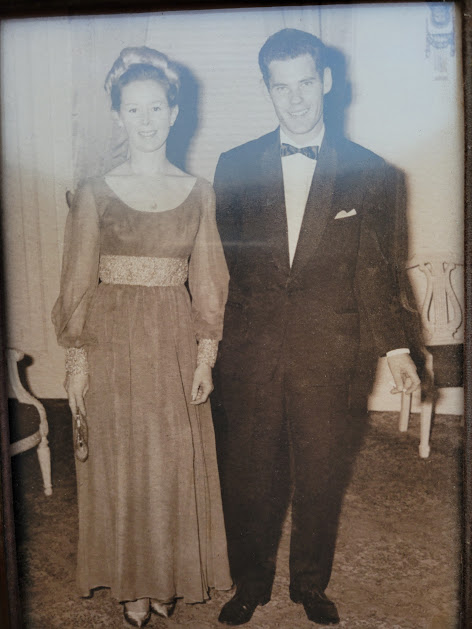
Michael & Marie
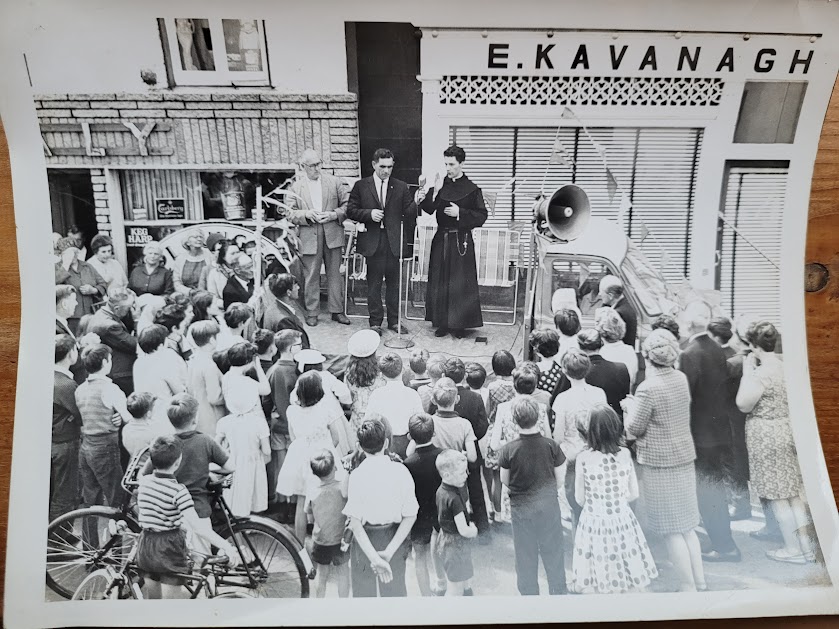
Photo of Michael’s Brother Tom Getting Ordained in Boyle in 1986
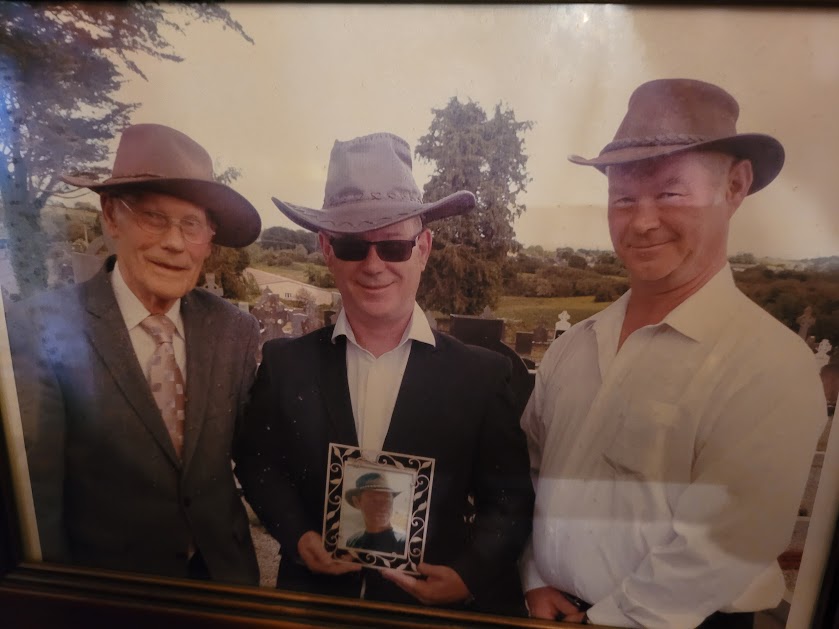
Michael and His Two Sons Holding a Photo of Andrew
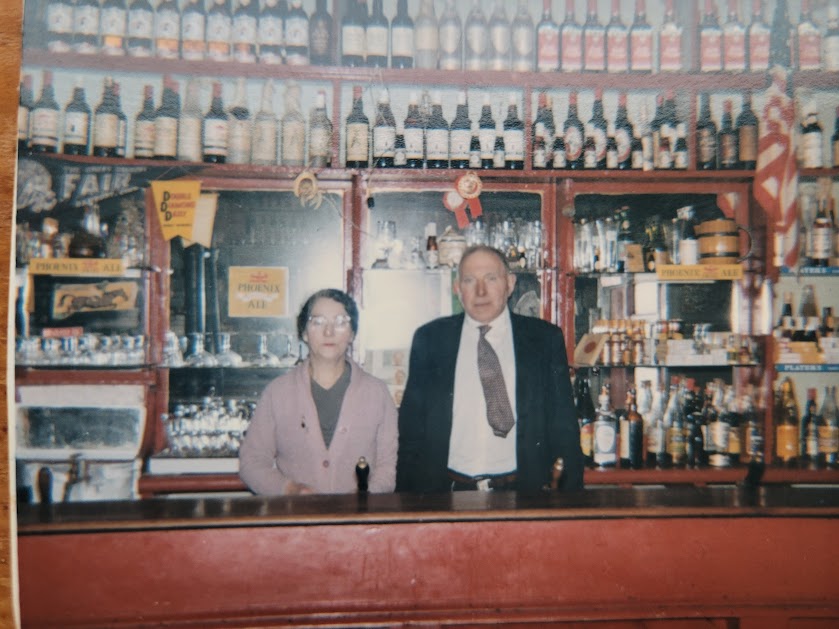
Photo of Devine Conlons
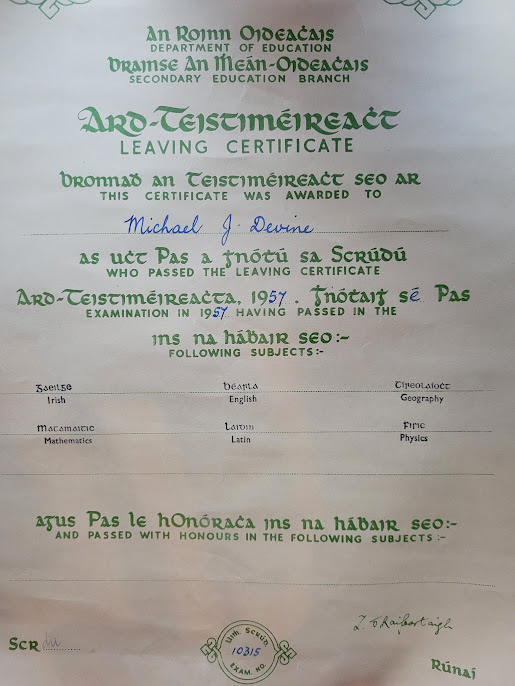
Photo of Michael’s Certificate (His Mother kept them Hidden Away in the Attic for Safe Keeping)
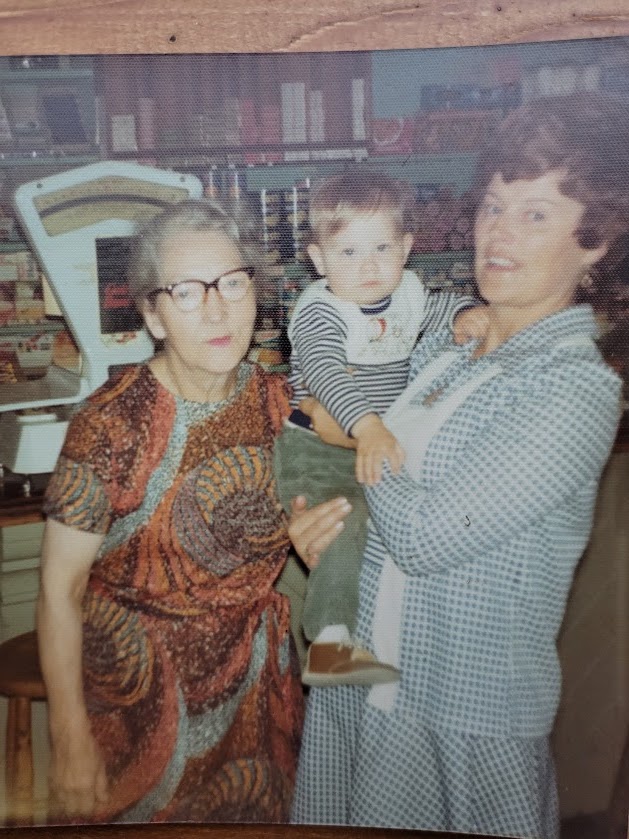
Photo of Devine Conlons
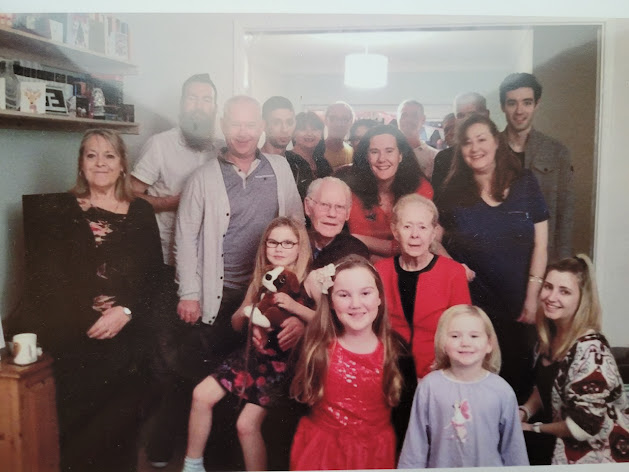
Family Reunion Over a Christmas Holiday
Thanks to Brendan O’ Dowd for creating and recording the musical piece for the podcast.
BE A GUEST ON THE SHOW!
If you’ve a story about Boyle, we’d love to hear it. You don’t need to have done anything remarkable, and you don’t need to prepare a thing. We sit down, have a chat, and you talk about whatever you want to. It usually takes about an hour.
Thinking of someone else? A parent, a grandparent, a neighbour who remembers how it used to be? Tell us about them. Some of our best episodes started because a son or daughter got in touch. You can find us at info@voicesofboyle.com.