Episode 57
Miko Stewart & Cory O’ Donoghue – A Little Bit of Everything
HOSTS & GUESTS
Carlo Cretaro
Miko Stewart
Cory O’ Donoghue
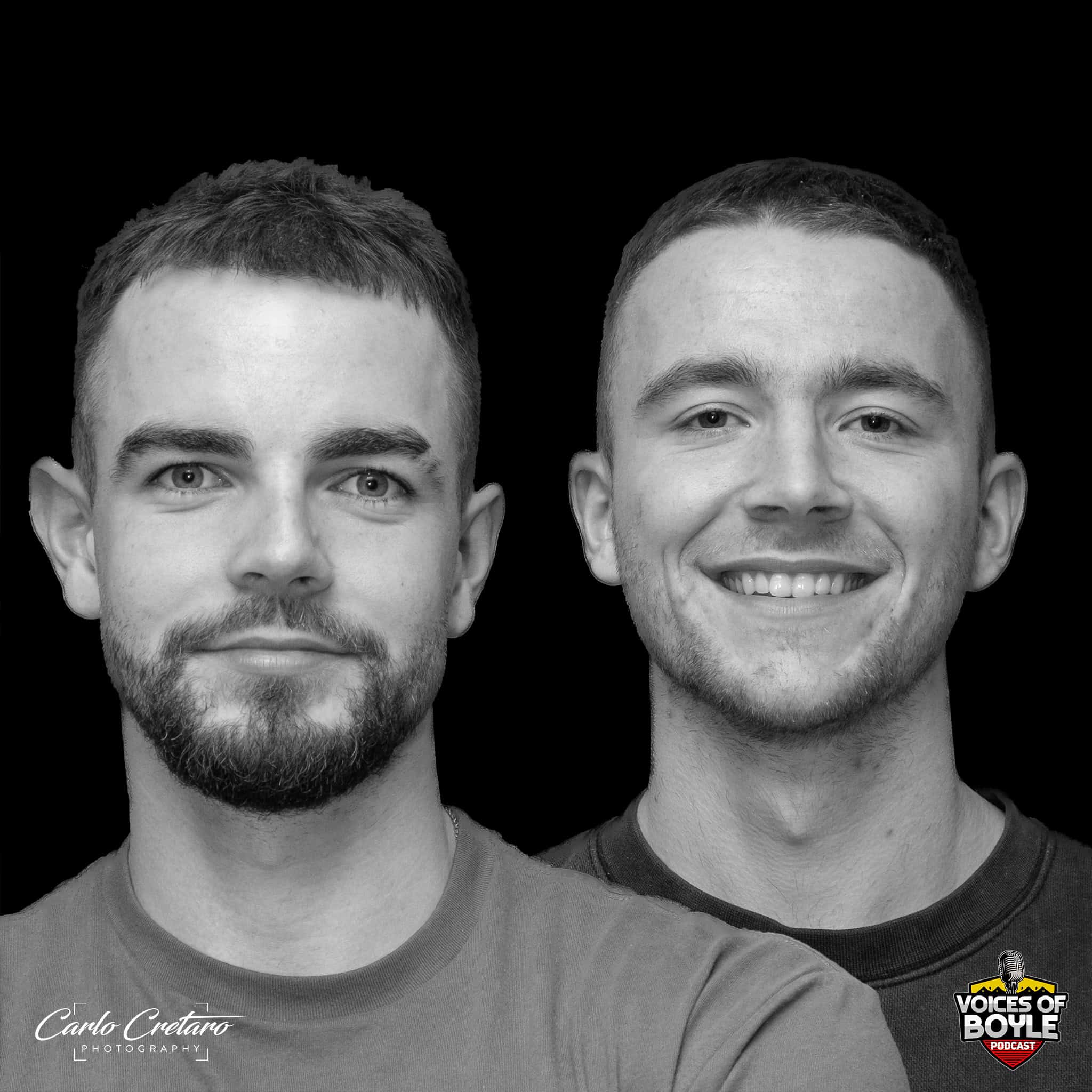
Miko Stewart was on Voices of Boyle in January 2023. He had left his job, sold his car and moved to Gdansk in northern Poland with almost nothing to show for it. No client list. No fallback. Just a calculation that if he removed everything else he would have to make it work.
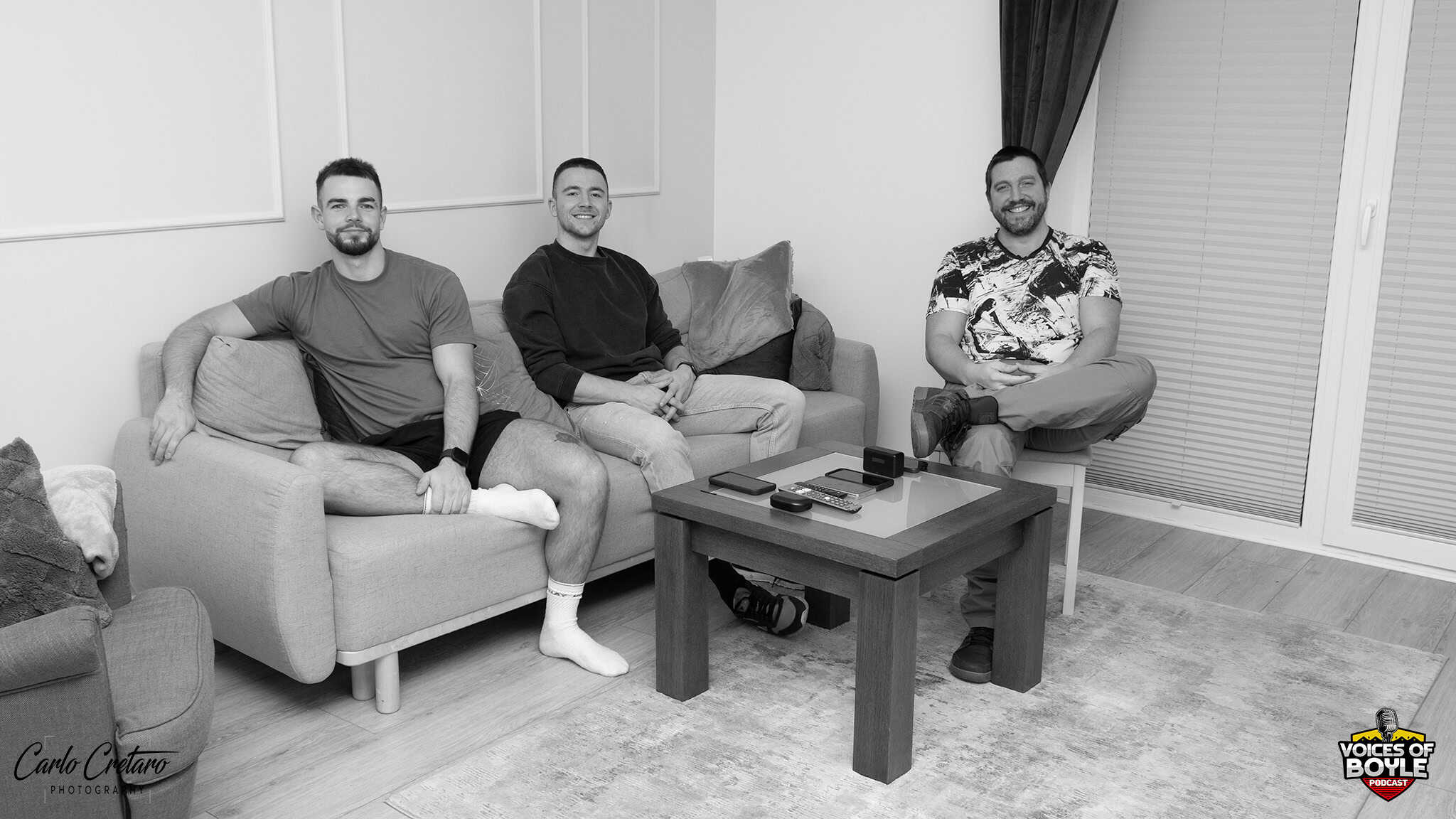
Carlo caught up with him out there. Miko brought Cory O’Donoghue along, a friend from the same job at home who followed him over the following January. What was meant to be a catch up about coaching ran to two hours and twenty three minutes, the longest episode this podcast has done.
How Cory ended up in the Baltic
Cory was going fully online and in his head that meant somewhere warm. Portugal, maybe Spain. Miko suggested Poland and sold it on the beach, the summer and the nature. What held Cory back was not the weather. It was the thought of moving in with a friend, hating it, and leaving Miko stuck with the apartment.
They did something about that before they went. Both are only children, and Miko proposed they each write down what they wanted from the ten months. He had real anxiety about asking, because the friendships he had at home did not run to that. Cory was straight on for it. The lists had the financial and client goals on them, and both, separately, had written something about building a brotherhood.
Two ways of leaving a wage
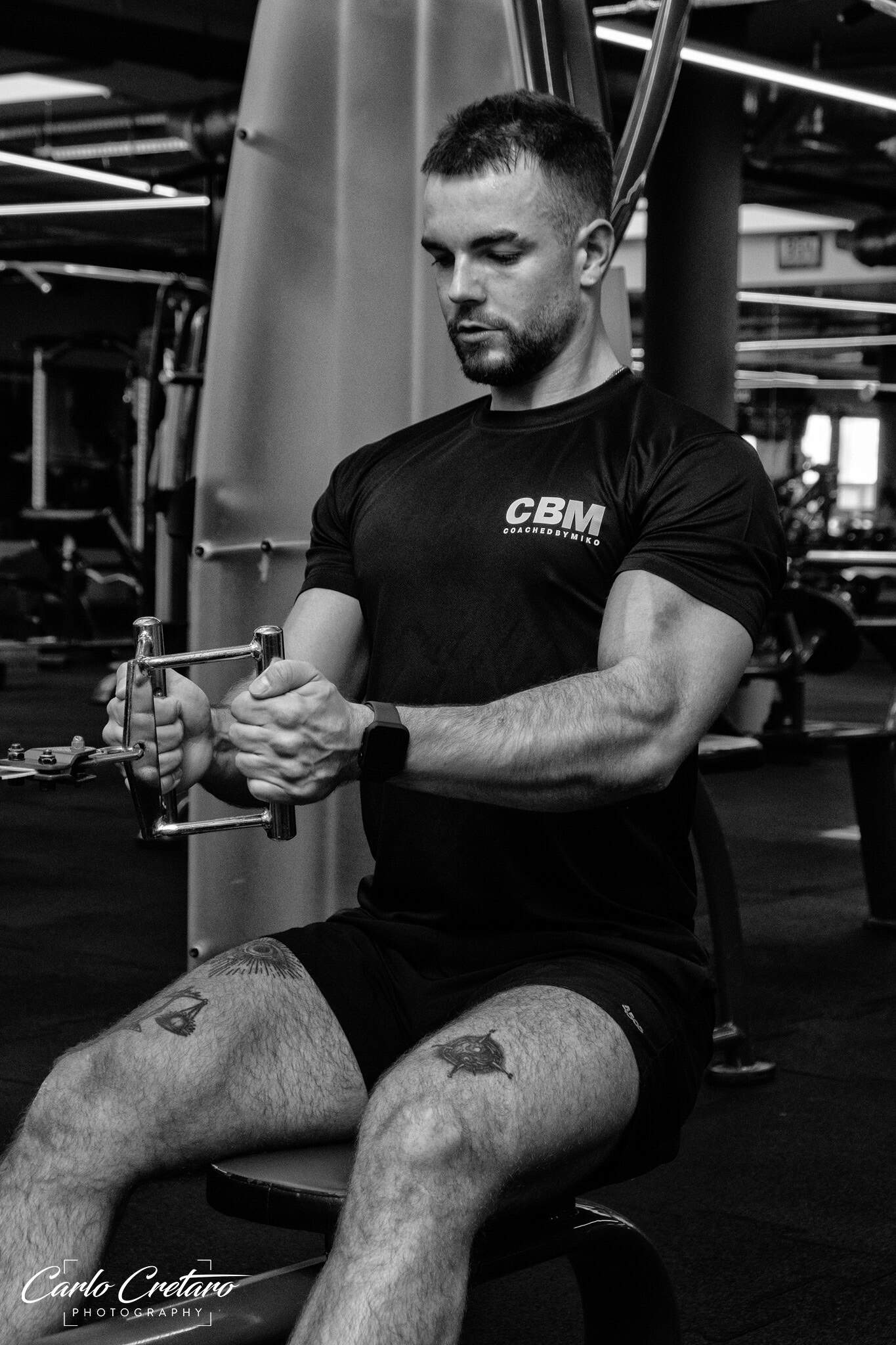
They left their jobs completely differently and neither thinks the other was wrong. Miko went with nothing behind him, because the pressure was the point. He had tried building it on the side and had no mental energy left by the evening. Cory would not move until he had six consistent months of income behind him, and no red flags, before he chanced the leap.
“Having that all or nothing mentality is so important, because it removes the thing to fall back on.”
What online coaching actually involves
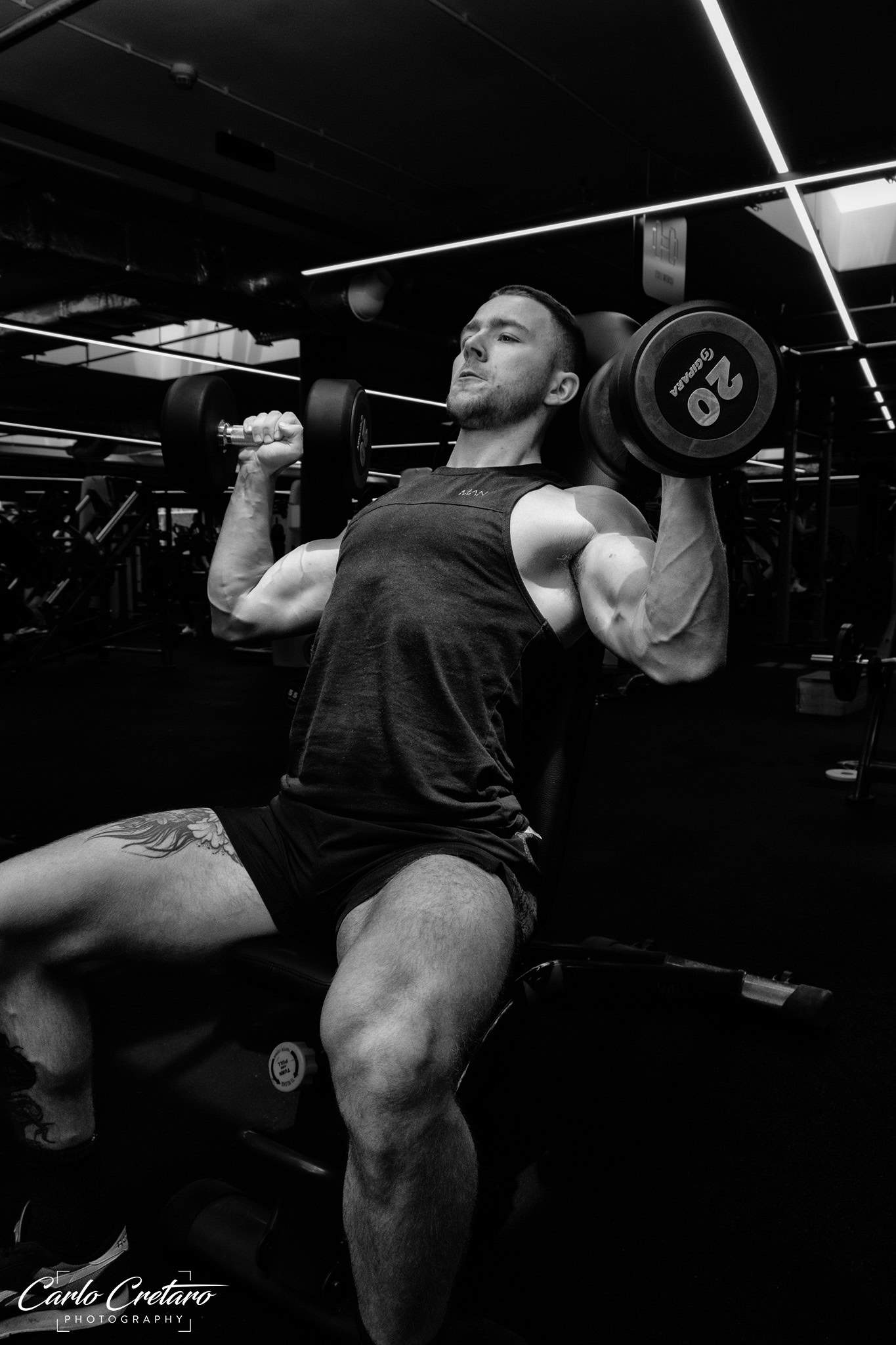
Cory gives the clearest breakdown. Pay a personal trainer 40 euro and you buy an hour of their time. The other 151 hours of the week, you are on your own. Online coaching covers the week rather than the hour: training plan, meal plan, then sleep, energy, calories and water tracked and reviewed. Miko’s example of what goes wrong is somebody doing everything right and getting nowhere because they weigh cooked pasta instead of dry.
Both rate accountability above almost everything else. Miko has a coach himself, and says it is not discipline he lacks, it is that work has crowded in and he will let a session slide if nobody is watching. He borrows a line from Alex Hormozi: your parents nagged you into brushing your teeth, and now you do it without thinking.
Three digits on a scale
Around the eight week mark a lot of clients stop losing weight. Cory’s argument is that the plateau is rarely the problem. What kicks in is the person’s own doubt. They read a stall as failure and quietly give up.
“The one thing everybody gets obsessed on is three digits on a scale.”
His answer is to widen the view: measurements, photographs, energy, sleep, strength, work output. Miko’s is more technical. If somebody plateaus in a fat loss phase you bring the calories back up, let the body reset, and go again.
Both are suspicious of a short goal. If your vision stretches only to eight kilos you will lose eight kilos and stop. Cory has a client who came in wanting to lose ten and, almost a year later, was two weeks out from his first half marathon.
It is not motivation, it is education
Ask Miko how he gets people to stop eating rubbish and he pushes back on the premise. It is not motivation people are short of, it is information. Plenty eat nothing but healthy food and lose nothing, because nuts, avocados, whole eggs and full fat yogurt are all fine and all calorie dense. He builds plans from food the client already eats, on an eighty twenty split.
“For me, it’s not motivation. It’s education.”
He is careful to say this is not coming from somebody raised on it. He smoked weed every night for about ten years and describes waking up with chocolate biscuits stuck to his chest. He has lived both versions to the extreme, and the reason he does not eat sugar now is not restraint but that he can feel his energy drop when he does.
The bit of the business nobody advertises
Neither of them can switch off. Cory compares it to an unwritten assignment hanging over you in college, a dark cloud of guilt that follows him through any free hour. Miko cannot stop working until he goes to sleep, because there is always somebody out there working harder, and he calls that unhealthy while admitting he cannot shake it. His case for why the long days are survivable is purpose, and he links a lack of it to most of what people reach for when they are unhappy.
The shaking retreat
About forty minutes in, the conversation changes direction. Miko’s parents have been doing a shaking meditation practice every Friday night for twelve years. He spent his teenage years mortified by it, keeping friends at the far end of the house while his parents and their friends laughed their heads off. He now travels to retreats in Holland to do it himself.
He describes it as meditation on steroids. The practice came out of Bali. You stand and shake with intention, holding a picture of the man who founded it in mind, with a blessed tobacco and a set of mantras. Miko says the four together work like a wifi password to your soul. He knows how that sounds, and argues it is no stranger than sets and rep ranges in a gym, just aimed at something else.
The shaking itself turns out to be tiny. He demonstrates it: a bend at the knee, about an eighth of a squat, letting the body rock from the hips. Cory explains the point of it as experience being stored in the body, and people shut down as children carrying blocks that stop them expressing anything as adults. Sessions run to two hours. Two hours of laughing, Miko says, or two hours of your back in bits.
Why a 25 year old man goes looking for a cry
Cory went to one after him with a specific goal. He describes his default as ignore and override: think logically, not emotionally, grit the teeth, it is fine. He has spent five years writing his thinking down and trying to trace his behaviour back to where it came from, and had reached the limit of what thinking could reach. So he went wanting to feel whatever was down there.
He says it came. By the last day he could well up and cry, which he had not managed in years. Miko’s follow up is that suppressed feeling does not go anywhere, it gets stored and starts running the show. What convinced him he was on the right track came from an unlikely direction: Ant Middleton, ex special forces, says the bravest thing he ever did was getting real with himself.
Masculinity, and the label attached to it
Carlo puts it to them that some people would hear all of this and reach for the phrase toxic masculinity, and what follows is theirs rather than the podcast’s. Cory reckons the category is smaller than it is made out to be, and more a social media thing than a day to day one. Miko argues the label is a way of framing self improvement as a threat, and draws on The Way of the Superior Man for a reading of masculine and feminine as opposite polarities, equal but suited to different things. A masculine man in his definition is stoic, grounded and in hold of his emotions. A man who is strong, cold and aggressive is the opposite, and dangerous. He has a lot to say about Andrew Tate too. Carlo pushes back, and the views there are the guests’ own.
Lockdown, as they saw it
Carlo has been asking guests lately how they remember the COVID years, and this is one of the franker answers. Cory was 20 and in college in Galway, did his assessments from a laptop, and says he was never in fear mode. Miko got it after a festival and was delighted, because the cert let him travel.
Both say they did not take the vaccine and explain why. Cory’s reasoning comes from watching a family member deal with side effect after side effect over years. Miko cites a World Health Organization survival figure, which is his claim rather than a verified one, and argues that people who never cared about their health suddenly did. Carlo, who has a pharmaceutical science degree and left the industry after three months, agrees with them about locking down a whole population rather than the vulnerable. It runs on into conspiracy theories and Trump. Those views are the guests’ own and Carlo’s own, and are best heard in full rather than in pieces.
Phones, Fortnite, and what AI cannot do
Cory noticed something once he was working alone in a room all day. His scrolling went up and it tracked his mood exactly. He feels worse after time on his phone, and he goes to the phone because he already feels worse. Miko’s example is a twelve year old cousin being eaten alive by Fortnite and YouTube shorts between rounds. He does not moralise, because he was a Fortnite obsessive himself for a year and knows the games hit every reward system the brain has. He then turns the same lens on his own grandmother, with her television magazine and her programmes highlighted, and calls it old person TikTok.
On AI, all three agree that any business ignoring it is finished. Miko is happy to automate anything mundane, but draws the line at the coaching itself. He has taken clients off automated programmes built from pre recorded videos and scheduled check ins, and what they complained about was that there was nobody there. Fitness has real protection from all of it, Cory reckons, because what it sells is a relationship.
Buying back your time
The last stretch is the most useful part of the episode for anybody running anything. Cory brings up Dr John Demartini’s rule: anything low in your values, you hand to somebody else. Demartini does not cook, clean or drive.
“It’s not about the financial outcome. The skills you develop along the way are insane.”
Miko thought this was nonsense until recently. Why pay somebody to do the dishes when you can do them yourself. What changed his mind was hiring an editor and finding thirty videos cut without him touching one. Carlo’s version is slower. Hiring a project manager felt like losing control, and it took him and Florence years to accept that things could run without them.
There is also a detour through Graham Hancock and the Easter Island heads, and a lovely aside about Nino Chilton, of the alpaca farm out in Knockvicar, who played a jazz concert in an underwater cave.
Five years
Cory would have had a blueprint for this a year ago and does not now. The coaching stays at the centre of the career and the introspection at the centre of everything else, and he expects the two to meet somewhere. Miko has no idea what he will be doing but is certain who he will be doing it as, and somewhere in there is a ranch in Costa Rica that arrived unbidden and will not leave. He has never been. Carlo would like a base in Boyle, and 100 countries before he is done. He is at 75.
Thanks to Brendan O’ Dowd for creating and recording the musical piece for the podcast.
BE A GUEST ON THE SHOW!
If you’ve a story about Boyle, we’d love to hear it. You don’t need to have done anything remarkable, and you don’t need to prepare a thing. We sit down, have a chat, and you talk about whatever you want to. It usually takes about an hour.
Thinking of someone else? A parent, a grandparent, a neighbour who remembers how it used to be? Tell us about them. Some of our best episodes started because a son or daughter got in touch. You can find us at info@voicesofboyle.com.