Episode 27
Mossie Martin – Strings of Heritage: A Fiddler’s Journey
Hosts & Guests
Carlo Cretaro
Mossie Martin
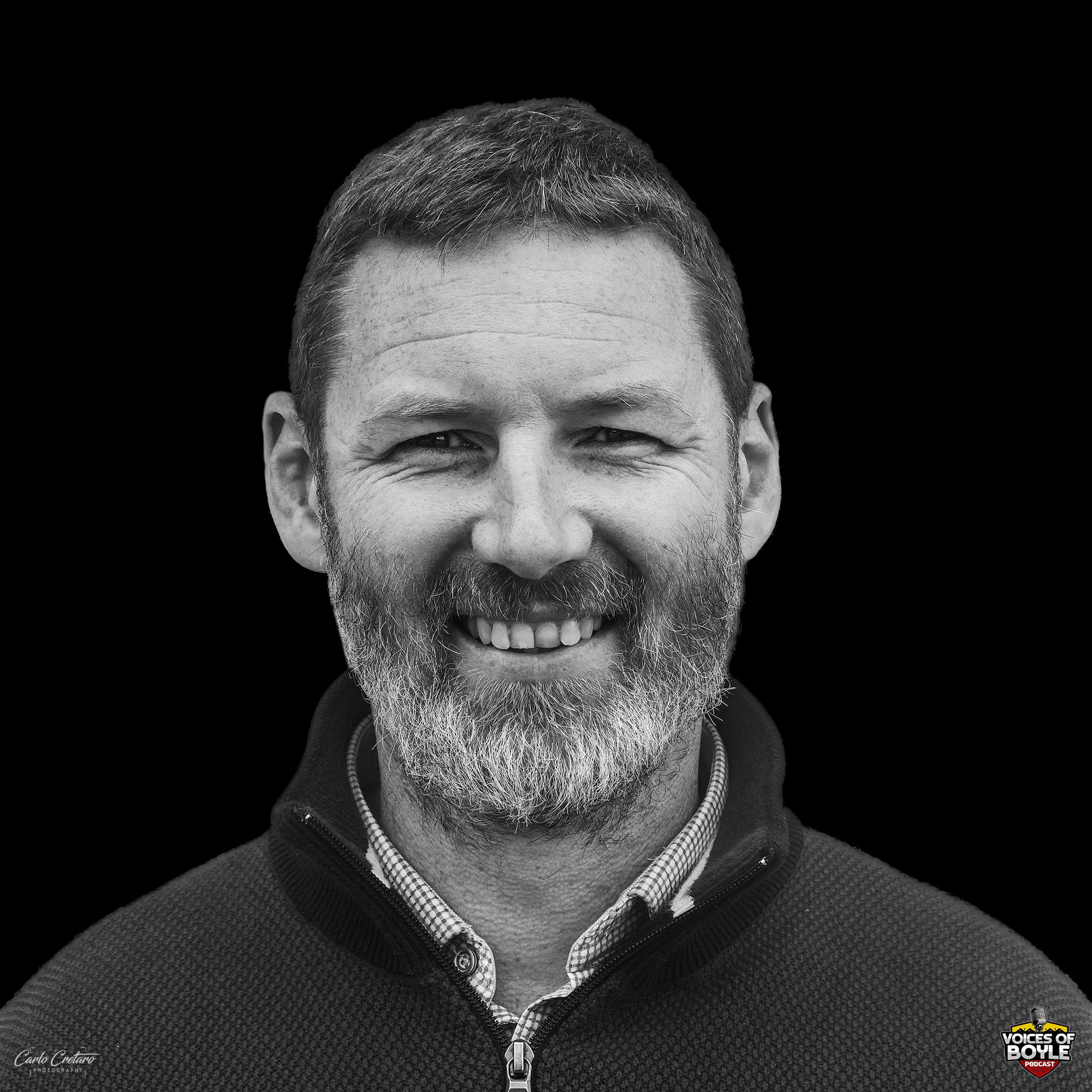
In 2006 Mossie Martin was cutting greens at the golf club in Carrick-on-Shannon, and he liked it. Paddy Ryan was retiring from the traditional music course in Drumshanbo and the job was advertised. So at the eleven o’clock break Mossie went home, had a quick shower, put on the suit and did the interview.
“Half an hour later I was back cutting greens.”
A couple of days later they offered him the job. He has been there ever since. Mossie tells most of his stories like that, as if luck did the work. But his hour with Carlo, who played beside him on the Boyle Celtic underage teams, is a fair account of how a fiddle player gets made: a tin whistle at seven, a teacher who drilled him bow for bow, a lot of sessions, and one very bad year he had to climb back out of.
Boyle was our town
Mossie grew up in Derrinicusen, a townland a couple of miles outside Keadue, where his parents bought land and built a house. His mother, Susan Sweeney, was from Enniskillen, trained as a dentist at UCD and came to Boyle around 1976. His father, Tom Martin, grew up when Lucan was a country town, picking spuds and saving hay.
Mossie went to St Mary’s in Boyle from 1992 to 1997. He and his younger brother, Pajo, cycled to the crossroads, locked the bikes to the gate and caught the bus from Geevagh through Ballyfarnon and Carrigeenroe. There was a bus to Drumshanbo too, but their mother was the dentist in Boyle. “Boyle was our town,” he says.
We had linesmen
Mossie played centre half for Boyle Celtic from the first under 13 team, and he reminds Carlo of a final in McSherry Park against Merville on a pitch like a carpet, with linesmen. They thought they were real pros. Pajo kept goal for Boyle Celtic for years. Mossie was still on the team in 2001 when they won the Super League.
Can you talk slower, please?
Five or six from his Leaving Cert year agreed to go to UCG for the crack. Two turned up, and one of them, John Brennan, knocked on Mossie’s door at nine one morning to bring him to the student bar. He had a third round offer to Trinity. Mossie stayed on alone, studying commerce with Spanish, and spent a year on Erasmus in Bilbao. Spain was already in the family: grandparents who holidayed there nearly every year, his mother coming home in the mid 1980s with exotic sweets, an uncle who had lived in Salamanca and Mexico.
He still arrived lost. He rang numbers off a notice board looking for a room and kept asking people to slow down.
“I remember coming out of a class at the end of November and thinking, oh my God, I understood what went on.”
He is fluent now. He married a woman from Barcelona, and their daughters, Susan, who is twelve, and Sophia, who is nine, both speak Spanish.
I’ll never get to the bottom of that
In August 2001 Mossie had just finished college. He was 21 and spent about ten days away with another musician, playing every day and out every night. Back home, the hangover would not lift. On the second night he had what felt like a panic attack and began to suspect his drink had been spiked.
The next day he was in casualty at Sligo General Hospital, where a test found three things he had not taken: tricyclic antidepressants, PCP and a Valium derivative. It caused drug induced psychosis. He spent two weeks on the psychiatric ward in Roscommon Hospital on heavy medication, went home to his father, and went back in for a month that November. He came out before Christmas, was on medication for about a year and a half, and made a full recovery.
He describes it carefully: paranoia, connections that were not there, a sense that everything was about him. It was extremely scary. He thinks it happened in a pub and will never know whether the drink was meant for him. For a while he tried to work out who and why. Then he stopped. He could not play football for a year or two and never got back to the same level, though he played some Gaelic with St Michael’s. By then the music had taken over anyway. Playing both, he says, you would be at the match thinking about the fleadh you were missing. “You’d never be happy.”
Note for note, bow for bow
His mother sang and played guitar, and his father still plays mouth organ, bodhrán and guitar. Mossie started on the whistle at seven or eight with Bernie Flaherty from Boyle, then went to Paddy Ryan. For the fiddle, his father found Seamus Thompson, originally from Longford, who played in Cryan’s in Carrick-on-Shannon and The Thatch. For about three years they went once a week and learned by ear, note for note, bow for bow, until they played like a little orchestra. Mossie has his own style now, but the bowing was the foundation.
About 500 pound a night
Carlo admits he knows nothing about the fiddle and asks the obvious question.
“The difference between a fiddler and a violinist is about 500 pound a night, and it’s not the fiddler getting that money.”
It is the same instrument, he explains. A violinist plays classical, jazz or chamber music, and a fiddler plays folk. He would feel inadequate being called a violinist, because he cannot play Mozart or Vivaldi.
The holy trinity
The older he gets, the more he feels the history of the tunes. South Sligo’s Michael Coleman, James Morrison and Paddy Killoran emigrated to America in the 1910s and 1920s just as records took off, and their recordings still shape the local repertoire. John McKenna, from the Leitrim side of Arigna, did the same for the flute.
Further back is Turlough O’Carolan, born in 1670 in Nobber, Co. Meath, whose father worked for the MacDermot Roe family at Alderford House in Ballyfarnon. He went blind as a teenager and was sent to a local harper to learn a trade. The words of his songs are mostly lost, but the melodies survived, mixing Irish music with the Baroque of Vivaldi and Corelli that he heard in the big houses. Mossie also names Josie McDermott, John Carty and Tommy Guihan.
It was their parents’ pub
Carlo asks about the Céilí House on the Crescent in Boyle, long gone, which was the town’s focal point for traditional music. Mossie says Bernie Flaherty, Jerry Morris and Anne Conboy would know more, as it was Jerry and Anne’s parents’ pub. As a teenager he played in the Railway Bar with Seamus Thompson, Anne, sometimes Jerry, and Francis Gaffney on guitar. Now he gets to the fortnightly Friday session in Dodd’s when he can. In 2019 he launched his album at Boyle Arts Festival in Clarke’s Bar, and met people he had not seen in years, among them Mary Horan, his mother’s dental nurse.
A pretty big stepping stone
The Drumshanbo course grew out of the Joe Mooney Summer School in 1997, and it takes people of all ages, levels and instruments from all over the country. Mossie always wanted to make an album, and a few things helped along the way. Leitrim County Council’s Leitrim Equation project brought Lúnasa in for an 18 month residency, and Mossie and his father recorded a track for its double CD at the Glens Centre in Manorhamilton. Dervish came next. When their fiddle player Tom Morrow could not travel for a week long tour of the Netherlands, they asked Mossie. The last night was a theatre of about 3,000 in Rotterdam.
A bit of warmth
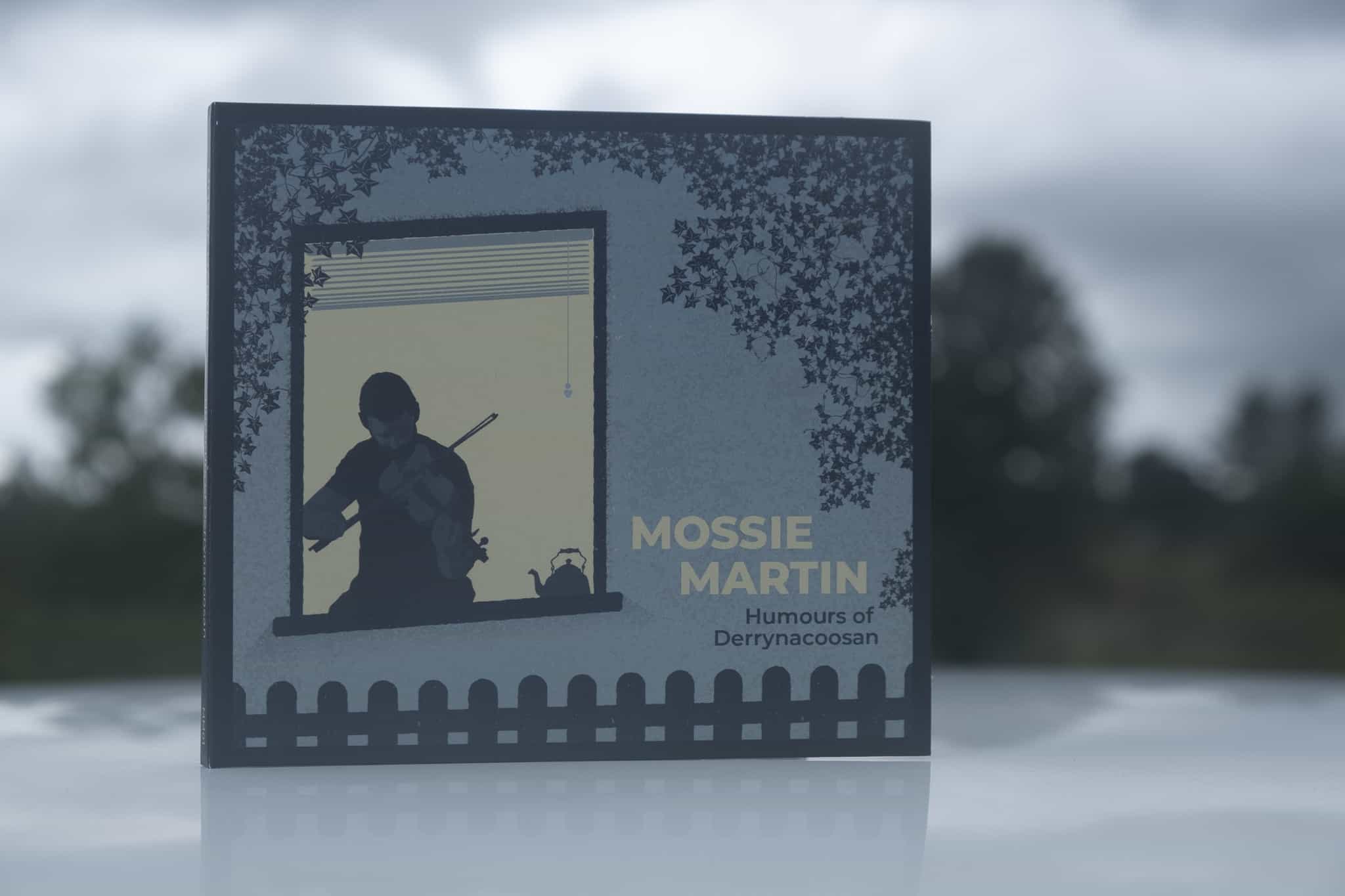
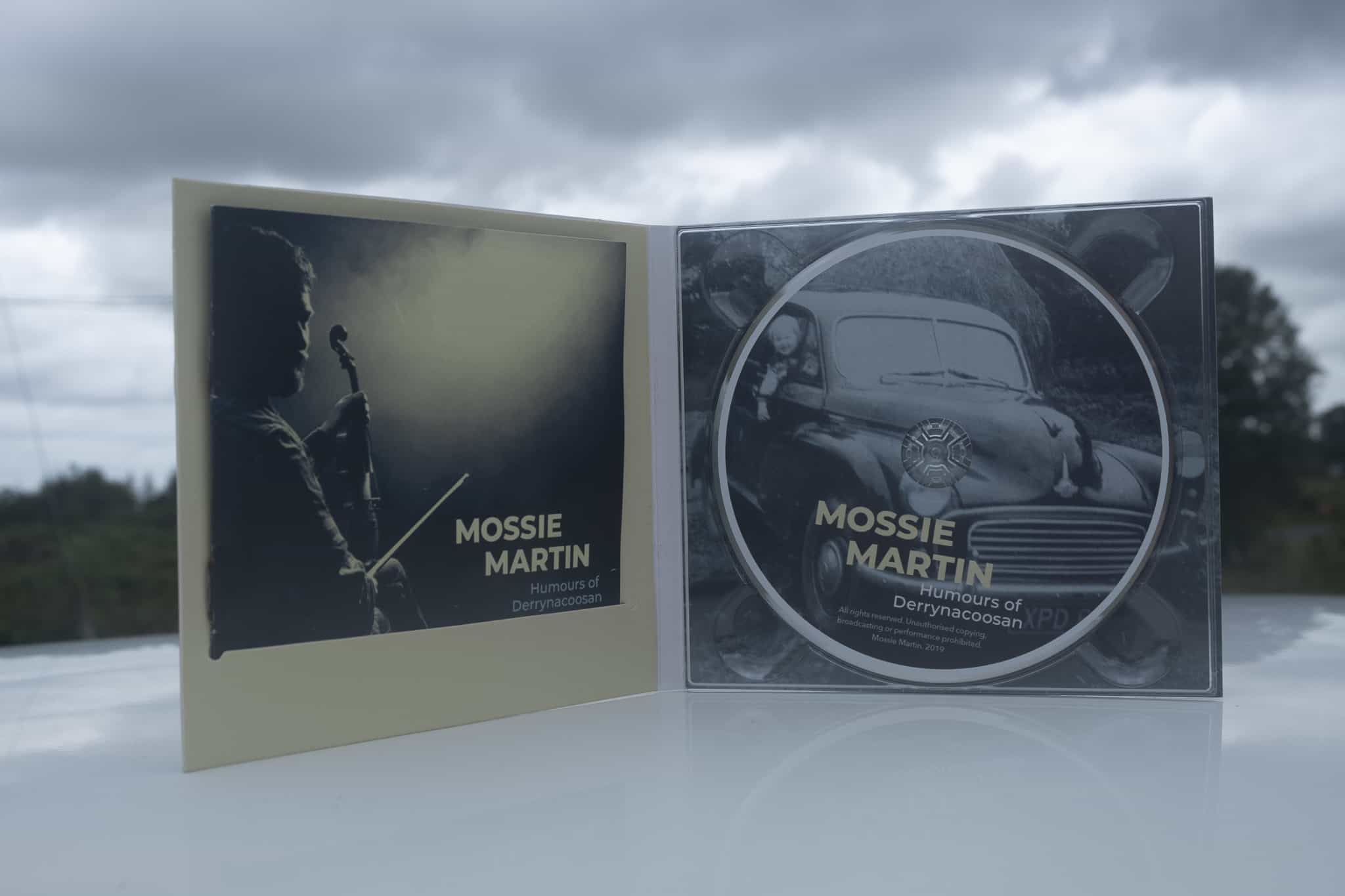
In 2018 he began recording The Humours of Derrinicusen at his father’s house, with his father on mouth organ, his brother on banjo and fiddle, his sister on harp, and John Blake, a multi-instrumentalist and engineer, setting up the microphones.
“I didn’t want to go into a studio and work in booths and record separately with headphones.”
The opening track is two jigs he wrote, one named for his mother and one for the townland. There are plenty of tunes called The Humours of somewhere, he says, so he added another one to the pile.
On your own can be a lonely station
With the Dartry Céilí Band in Sligo he won the senior céilí band competition at the All-Ireland Fleadh in Tullamore in 2009. He loves sitting down with someone new and feeling the music take off, and the fact that you can find a session in Sydney or Chicago and play for two hours with strangers. His standout gigs include Rotterdam, a square in Bagà in Catalonia with Seamie O’Dowd, and the Dartry on the gig rig at the Fleadh in Sligo, in front of thousands of friends and neighbours.
Play them nice and easy
There is always another tune to learn, and teaching puts the fiddle in his hand most days. He would like to record Carolan’s music with the Sligo Baroque Orchestra, but is not sure it pays now that people have stopped buying CDs. His advice to learners is to build a bowing technique, listen widely and play each tune over and over, slowly, with a bit of swing. Most of what he plays is dance music.
“It’s supposed to get your toe tapping and your face smiling.”
His album is on sale at his website and at Liber and The Record Room in Sligo, and his YouTube channel holds hundreds of short teaching videos he started posting during lockdown.
People in Boyle still remember her
After Carlo had signed off, Mossie talked about his mother. Susan Sweeney died in 1988, aged 34. Mossie was eight.
“I still meet people in Boyle that remember her and talk about her to me and that’s wonderful.”
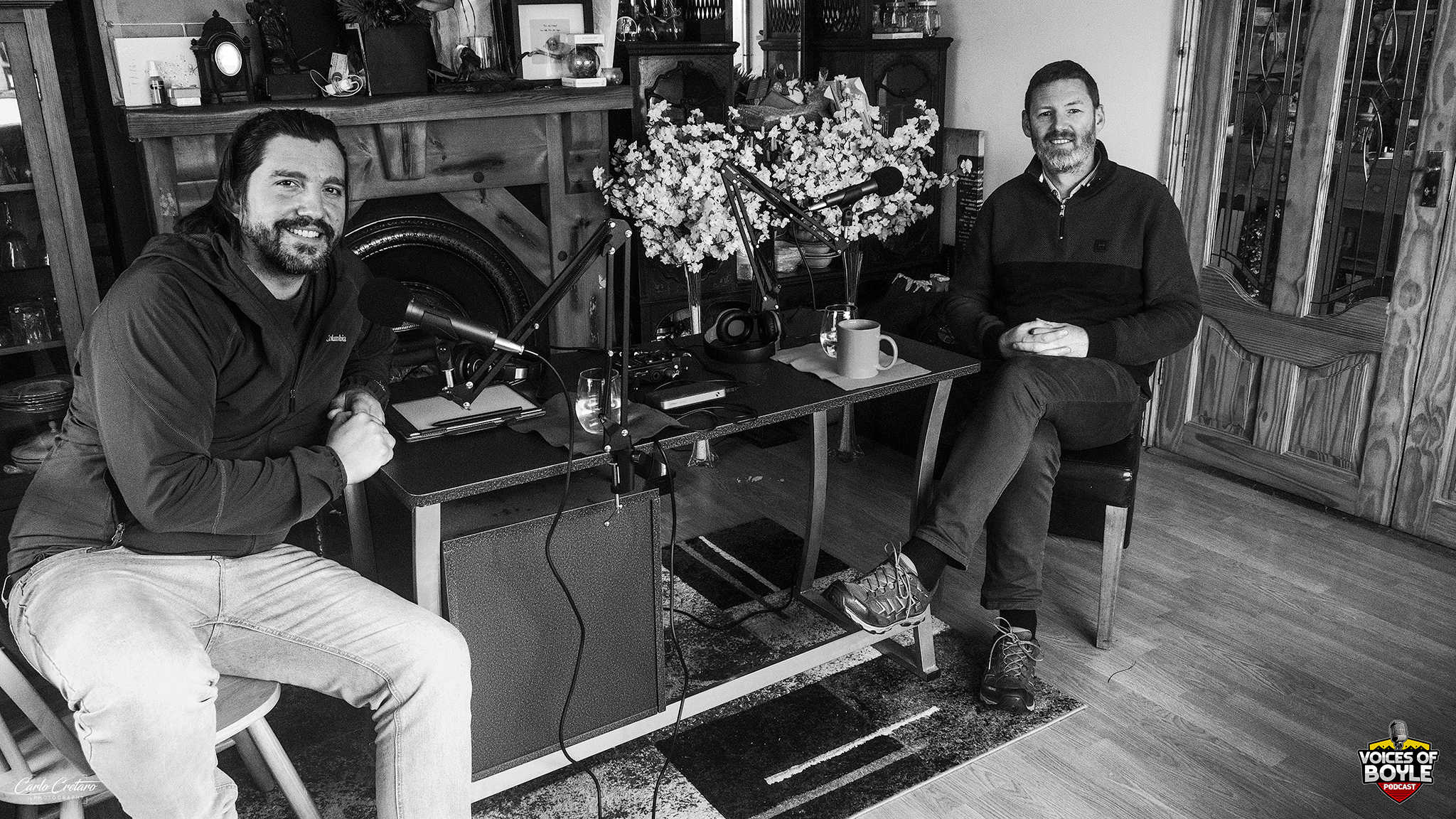
Thanks to Brendan O’ Dowd for creating and recording the musical piece for the podcast.
BE A GUEST ON THE SHOW!
If you’ve a story about Boyle, we’d love to hear it. You don’t need to have done anything remarkable, and you don’t need to prepare a thing. We sit down, have a chat, and you talk about whatever you want to. It usually takes about an hour.
Thinking of someone else? A parent, a grandparent, a neighbour who remembers how it used to be? Tell us about them. Some of our best episodes started because a son or daughter got in touch. You can find us at info@voicesofboyle.com.