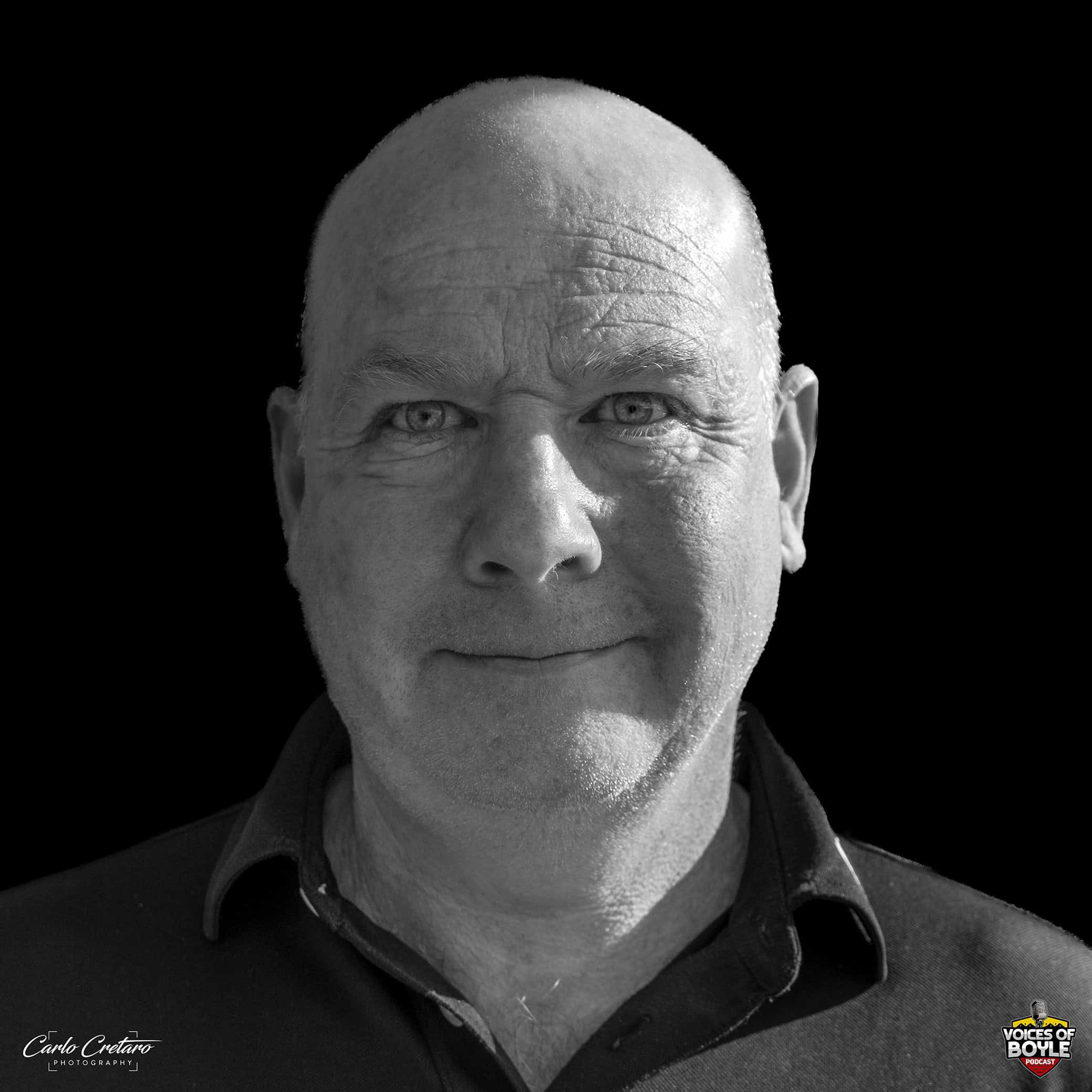
There was a ruined house across the road from the national school in Mount Talbot, County Roscommon, and Paul Connolly could see it from the playground.
Sheep in the yard. Crows going in and out of rooms that had once been opulent. And as far as he could tell, nobody else ever looked at it twice.
That house has a lot to answer for.
The teacher who lit the spark
Before the houses, there was a man called Timothy Cronin, known to everyone as Sonny. He was principal of the national school in Mount Talbot and, by Paul’s account, decades ahead of where he found himself.
Every spring the children brought in flowers. The flower went into a book, the name went up on the blackboard in Latin and in Irish, and whoever brought in the most before the summer holidays got a prize. This was the late seventies and early eighties, long before anyone was using words like biodiversity.
Cronin wrote for Field and Stream and, Paul believes, had pieces in National Geographic.
He was finishing a PhD at University College Galway when he died of a heart attack in the early eighties. Paul is in no doubt about the debt.
The interest went underground for a while. Paul studied civil engineering, which was the safe bet in an era when a mother’s ambitions ran to the civil service, the bank or the priesthood.
He gave sixteen years to senior hurling with Four Roads and played for Roscommon. Two or three evenings a week training, matches at the weekend, whole days on the road to Down or Derry or Kerry, a trip to London to play London.
Then it stops. And something has to fill it.
The day in King House
The first book, Mount Talbot: A Journey Through the Ages, came out in 2014 and sold out. In the course of writing it Paul made contact with a descendant of the Talbot Crosby family, who sent him photographs, documents and portraits that had never been seen.
Because these families married within a small pool, the material spilled over into other houses. Moat Park. Houses across Roscommon and into east Galway. Paul kept it all and did nothing with it.
When the first book was done, the void opened again. He went back to the material, but it would not cohere. Ideas floating around with nothing linking them.
So he rang Mary Mullins, then arts officer with Roscommon County Council, who told him to go and meet a man called Tommy Egan in Boyle.
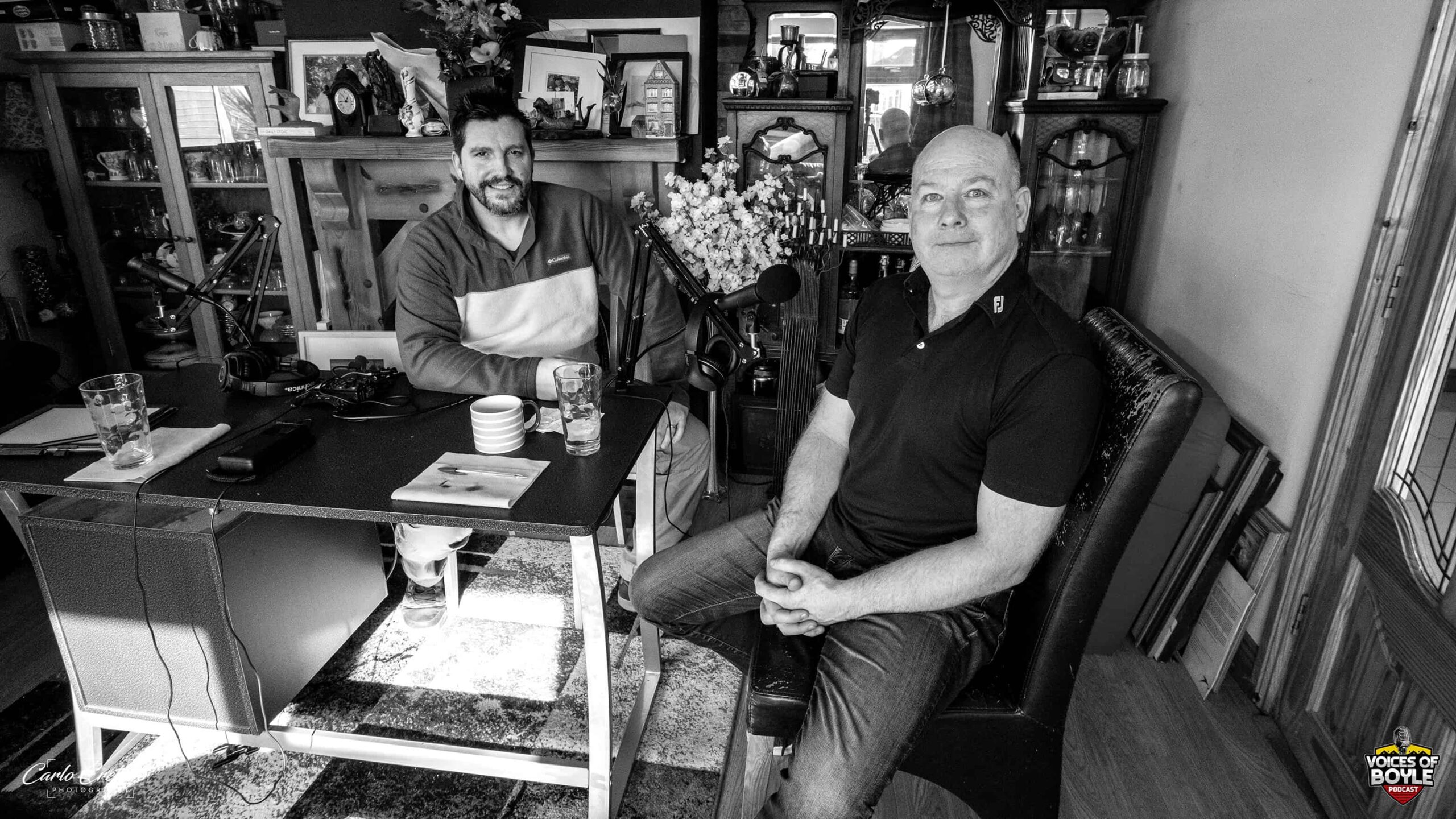
Paul had never heard of him. He took a day off work, drove down, walked into King House and introduced himself.
Tommy handed him Trina’s book on Rockingham, another on King House, and put him in a small room off the hallway with a computer and a store of photographs.
Paul sat there scanning on his own for three or four hours. Mary Lavin and the rest of the staff looked after him. And somewhere in that room the ideas that had been floating began to settle.
By the time he reached Galway that evening, the book existed. Twelve chapters on the major houses, where the information was richest. Then, on somebody’s suggestion in King House, a thirteenth chapter for the smaller and mid-sized estates, seventy or eighty of them, each with a photograph, a rough build date, a note on who lived there and what condition it is in now.
That thirteenth chapter is the one that brought letters from the UK, America and Australia. For a lot of families, it was the only place their ancestors’ house had ever been written down.
What was a landed estate?
For anyone hazy on the term, and Carlo cheerfully included himself, Paul gives a clear account. These estates were largely set up at the beginning of the eighteenth century, in the settlement that followed the Cromwellian and Williamite wars.
One family might hold fifteen, twenty or twenty five thousand acres and rent it out, mostly to the native Irish. The rent built the mansions, which is why the good land of Roscommon carries the biggest houses.
The early nineteenth century, after the Napoleonic wars, was the high point. The famine changed everything for the tenantry. The Land League and the land wars of the 1880s changed it again.
The decisive blow was the Wyndham Land Act, which offered landlords good money for their land and gave them every reason to sell up and go.
Paul makes a point worth hearing. He used to believe the War of Independence changed everything, but the land question was largely settled before it. What was left by then were the houses themselves, the demesne land around them, and a class with no income to maintain either. The 1923 Land Act finished the job.
Rockingham, 1957
The owners were in England at the racing when the fire started in the night, somewhere in the basement or the kitchens, and went through the house. There was still a substantial staff.
The locals rallied, went in and carried out as much of the furniture as they could. Some of that furniture Paul saw with his own eyes years later in the northwest, in the home of a granddaughter of the last owner.
The family looked at refurbishing. Structurally the house seemed sound, but the costs were beyond them, and they were living in Kildare and England. It stood as a ruin until 1971.
Paul has recently been given rare colour photographs of the building in the years before demolition, from Sean Browne in Castlerea.
They are clear, and to his eye they settle the question. It was structurally sound. He points at Kilronan Castle, which was in worse condition and is a hotel today, and at Castlecoote House, burnt in 1989 and beautifully brought back.
In fairness to the 1950s, he does not pretend the money was there. Half a million people emigrated between 1950 and 1960. He remembers an uncle describing men walking home from a fair having left their calves behind, because calves were worth nothing. Nobody in that Ireland could have imagined the Celtic Tiger.
But there was politics in it too. These houses stood for something a new state wanted erased.
Moat Park was demolished with explosives, and Jack McQuillan, the Roscommon footballer turned TD, raised it in the Dáil. Leave it, he argued. Something will be found for it. Nothing was.
Frybrook and the soup pots
The Frys were not a landed family. They were weavers who came from Bristol to Edenderry, then Athlone, and were invited to Boyle by the King Harmans to set up a weaving business.
Frybrook was built in the 1740s. It has no basement, which is unusual for a house of its type, and Paul suspects the river had something to do with that. He got a full tour last summer from the owners and reckons it may be the oldest inhabited house of its size in Roscommon.
The Frys were Quakers, and during the famine they cooked for the starving with no government help whatsoever. There is still a soup pot in the kitchen at Frybrook. There is another one in Boyle itself, past Roddy’s. A bell was rung in the evening when dinner was ready and anyone who came was fed. Tents went up on the lawns. And no attempt was made to convert anybody.
Paul thinks the house is underappreciated, and he has a theory as to why. Quaker charity did not fit the story Ireland chose to tell about itself.
Castle Island and the castle Yeats never built
Castle Island on Lough Key is Paul’s favourite. Archaeologists working there in recent years have managed something that almost never happens: they have matched the archaeology to the written record. The Annals of the Four Masters describe a fire on the island, a wall around it, one door, people incinerated. The evidence of fire is there. So is the wall.
The McDermotts had a tower house there. When their power waned the Kings took the land, left it derelict a while, then built what is called a folly, though it is a real building with the older structure enclosed inside it.
In wartime the women of the family were rowed across for safety. In the calmer nineteenth century they went across for tea.
It burned in 1938. Rosemary, the granddaughter of the last owner, has an album with photographs taken the morning after, smoke still rising off the island.
And Yeats loved it. He wanted to build his Castle of the Heroes there, to bring mythic Ireland back into the modern country. Near the end he said to Maud Gonne that they should have built it.
Why the gate lodges survived
Carlo asked a question that has an obvious answer once you hear it. Why is the road from Boyle to Carrick lined with lovely old gate lodges when the houses they served are gone?
Size. A family can live in a gate lodge. After the estates broke up, a teacher or a guard in the new Free State could take one on. They were beautifully built and easily maintained.
There were seven gate lodges in Boyle for Rockingham alone, and every one of them different. The mansion, with no land and no income behind it, could not be kept. The lodge could.
Good and bad, and letting the audience decide
Paul is not in the business of tidying up the past. Some of the families were decent and were genuinely missed. When Mount Talbot closed, forty five people were out of work overnight, including his own grandfather, in a place with no other work going.
Others were not decent at all. Strokestown, he says plainly, holds the worst of it, and Strokestown is the one still standing, with the Famine Museum and busloads of visitors. That is exactly the point. If the house is standing, you can tell the story.
He sends chapters to the descendants, the difficult parts included, and they take it. He describes an American woman standing in a Roscommon field in tears, apologising for an ancestor she had never met.
The principle behind all of it came from Emma Cronin, Sonny’s wife, who lived to a hundred and two. Reading a draft of his first book she told him he was giving his opinion, and that he needed to be impartial.
Write it, and let the audience decide. Paul calls it the best advice he ever got, and you can hear him applying it throughout.
The most photographed generation
The line that stays with you comes near the end. Paul has real hope for the next generation and their sense of history. What he has no hope for is the photographs.
We are the most photographed generation who ever lived, and we are leaving the least evidence behind. Everything is on a memory stick, or behind a password, or in a cloud. He mentions a professor who cheerfully admits that if he dropped dead in the morning, nobody would be able to get into a single thing he has.
Paul still receives envelopes in the post every week with old photographs inside, and says there is nothing in the world like opening one. So he prints a hundred at a time in the chemist, throws them in a box, and writes on them what they are.
There are worse ways to spend a Saturday.
What comes next
There is a third edition in him. He reckons twenty per cent of new material has arrived since the last one, and more is coming, including three thousand photographs from a Castlerea collection that has never been seen. What he needs is a publisher, because the printing costs of a full colour coffee table book are not something a man with two teenagers takes on twice.
He is finishing a masters in history and hopes to go on to a PhD, possibly on the post-independence years and the dealings around the breakup of the estates, a subject he says might get him shot. The Land Commission records are sealed, and he suspects that when they do open, the tracks will have been well covered.
Timestamps
00:00 Welcome, and coming back to Boyle
00:31 Growing up in Mount Talbot
01:08 Sonny Cronin, the teacher who lit the spark
04:32 From hurling to history
05:33 Mount Talbot: A Journey Through the Ages
09:41 The day in King House that shaped a book
13:45 Úna Bhán, Boyle, and breaking even
16:08 A Facebook page followed by 22,000 people
20:52 What exactly was a landed estate?
24:13 How much influence did these families have in Boyle?
27:23 Meeting the descendants
30:37 French Park and the houses we lost
32:53 The night Rockingham burned, 1957
35:45 Politics, explosives and erasing the past
39:52 Castle Island, the McDermotts and Yeats
42:02 Old photographs, AI and being honest about it
46:31 Why the gate lodges survived
48:15 Frybrook House and the Quaker soup pots
53:10 Saving King House
55:05 Woodbrook, Abbey House and a photograph that exists nowhere else
58:07 Dúchas, maps and how to research a house
59:22 Do we romanticise the big house era?
1:03:04 Castle Kelly and the book written behind five foot walls
1:05:22 If these houses could speak
1:08:22 Hope for the next generation
1:09:38 The most photographed generation, leaving the least behind
1:13:02 A third edition, a masters, and what comes next
Guest bio
Paul Connolly is a historian and author whose work documents the landed estates of County Roscommon and the communities that grew up around them. He self-published Mount Talbot: A Journey Through the Ages in 2014, a history of his home place from the Bronze Age onwards, which sold out.
His major work, Landed Estates of County Roscommon, followed in 2018 and has since gone through two sold-out editions. It covers twelve of the county’s principal houses in depth, along with a further chapter documenting seventy or eighty smaller and mid-sized estates that had never been recorded anywhere.
He curates a research archive on Facebook followed by more than 22,000 people worldwide, where previously unseen photographs arrive almost daily from Ireland, Britain, America and Australia. He works as a civil engineer, is currently completing a masters in history, and hopes to go on to a PhD. He played sixteen years of senior hurling with Four Roads and lined out for Roscommon.