Episode 47
Pete Higgins – Music, Documentaries & Memories
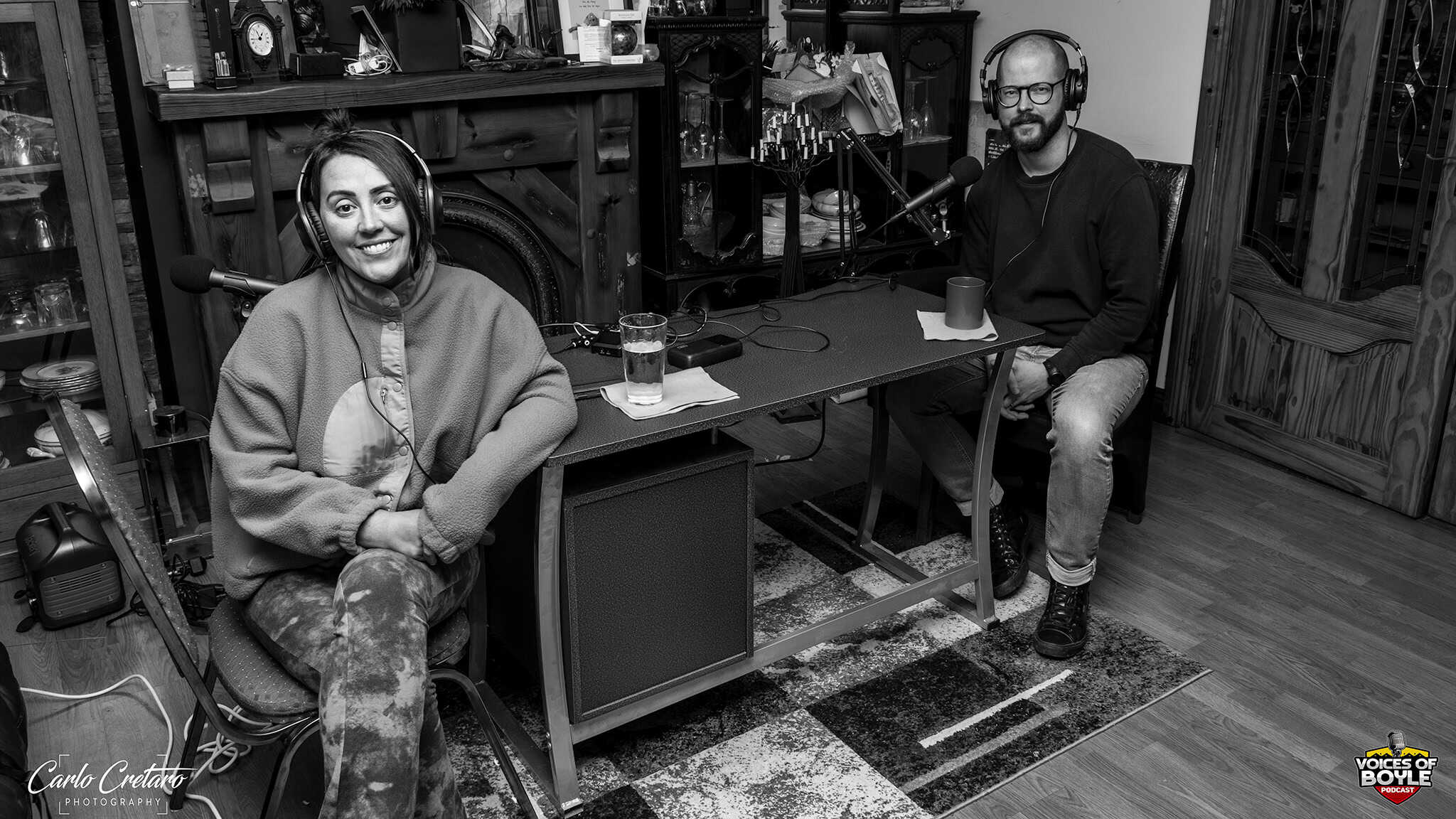
HOST & GUEST
Florence Cretaro
Pete Higgins
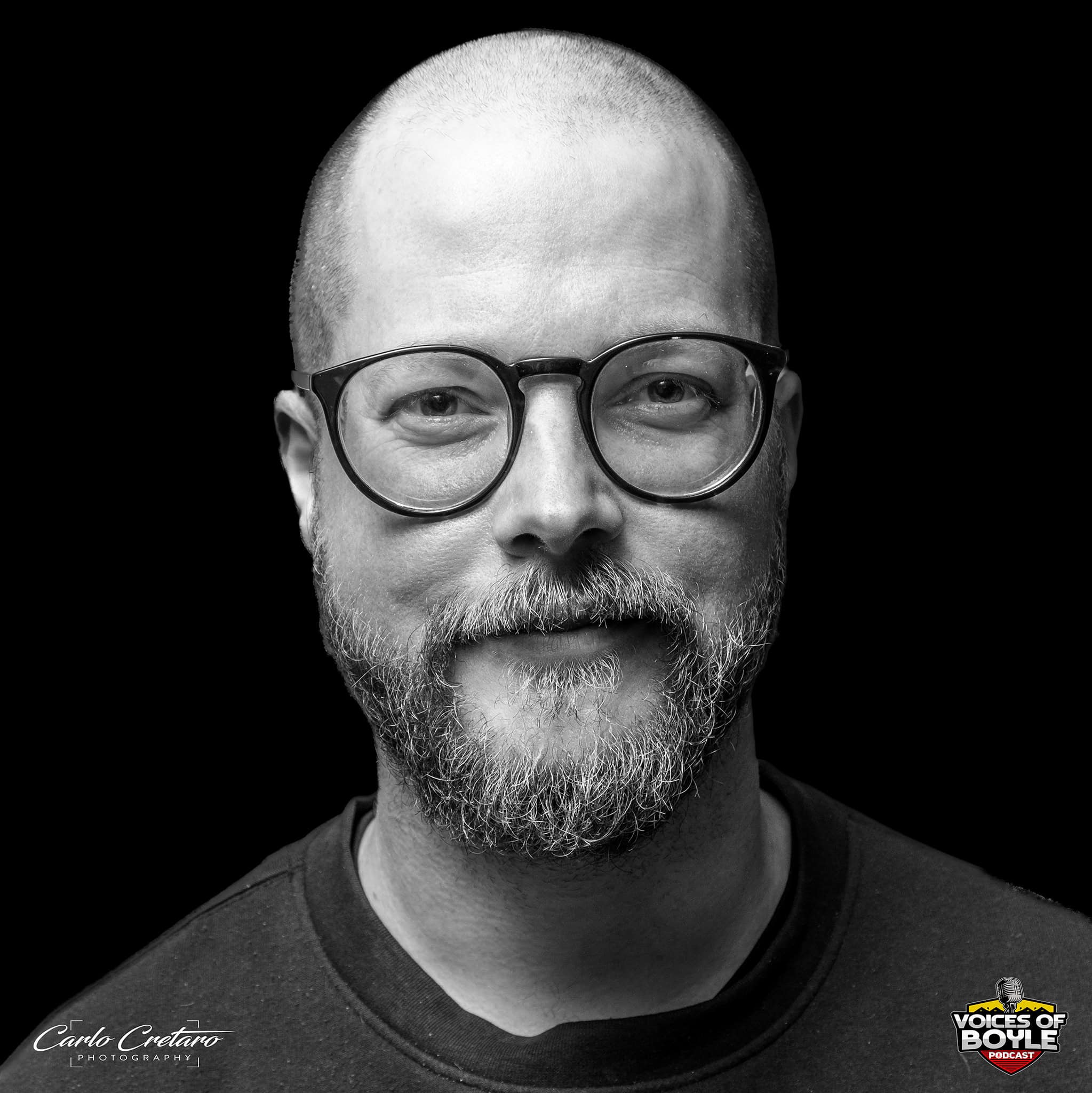
The band were three weeks old. Four lads out of Boyle, none of them older than fifteen, and somebody had got them a Christmas party in Castlerea Prison. The van was checked underneath on the way in. There were jellies laid out for the staff party and the band ate them while they set up, because they were fifteen. Then Pete Higgins went looking for the toilet, picked one, and a prison officer took him by the shoulder.
Not that toilet.
He was wearing a sheepskin jacket, because Bottle dressed like it was 1965, and the prisoners could see him from across the room and spent the evening calling him Timmy from the Famous Five. Before the gig the lads had joked about playing Jailhouse Rock, certain there was not a chance. Then the requests came in, and Jailhouse Rock was what they wanted.
A guitar that was meant for somebody else
It came second hand from an uncle, bought for Pete’s sister, and she never played it. It sat around until Pete picked it up at twelve or thirteen. His father could play one riff, sang in pubs and played the spoons at sessions. The rest of the education came off a VHS tape. There was one television, his sister recorded Top of the Pops every Thursday, and it went on whether Pete wanted it or not. He still knows every word of the 1980s charts.
Chords from people who do not remember giving them
His parents made a deal: a cheap guitar first, a better one if he stuck at it. Matt Burke gave him a few chords, a fact Pete has raised with him since and which Matt has no recollection of at all. Aidan Scanlon, from Plunkett Avenue, told him a few weeks ago that he had shown him a few as well. A library book covered the rest, and House of the Rising Sun was the first song he learned the whole way through.
There was also the school choir, which he tried to get out of by singing badly on purpose at the audition. They picked him anyway. That fed into the youth mass that started up in Boyle around 1996, Saturday nights, dark and packed. He was fourteen or fifteen, singing The Drugs Don’t Work to a full St Joseph’s, in front of a priest who would take whatever song they sang and work its story into the sermon.
“I remember purposely singing badly because I didn’t want to be in the choir.”
Opening a dictionary and taking whatever was there
Donald Farrell needed a singer, three weeks out from a No Name Club competition in the Abbey Park. They practised at Seamus Gallagher’s house every day of the summer, Dave Malooley filled in on drums and then played too well to be let go, and Pete still has the tape. They needed a name, so they flicked through a dictionary and took Bottle. The logic went back to the Beatles: is it a good name, or is the band just good.
“I don’t know why anyone settled on that out of all the words in the English language.”
They went on first, off the back of a lorry, the youngest band there by a distance and dressed closer to fancy dress than anything. A band called Fridge won. Bottle got a gig out of it anyway, because Batty O’Brien, who had a pub in Knockcroghery and had come to support Fridge, offered them fifty quid and a pizza.
The van that was cut in half
Five years of gigs followed, and Pete puts most of it down to Donnie Farrell’s father, who managed them, drove them, and sourced an old van that he had chopped in half so the gear would fit. Without that, Pete says, they would hardly have got their equipment across Boyle. The ones that stand out are three nights in a row on the Aran Islands, his voice gone after the first, and Rock the Lock in the Forest Park in September 2002, on a festival stage in their own town.
Castlebar, McDonald’s, and a gospel choir
In 2002 he moved to Castlebar when Aine, then his girlfriend and now his wife, started college. He did a year and a half in McDonald’s, made a friend there by way of both of them hating the job, and produces music for that same man now. Then a one year music course, where he learned to sight read, an ability he says he has since lost. The woman who ran it also ran the Castlebar gospel choir, so he ended up singing lead on I Saw the Light in a church bigger than the one at home.
The Cannon Dogs, and harmonies that needed no working out
In 2004 he formed the Cannon Dogs with Dave Byrne, his first cousin. They had been miming along to records in Dave’s house since Pete was about eight, and Paul Purcell’s 21st finally got them started. In everything except the Beatles their taste runs in opposite directions. Both sang, both played guitar, and the harmonies arranged themselves. They lasted close to ten years and split more than once, each time followed by a comeback. What he misses is harmonising with another person in the room.
Everybody says Boyle and UFOs
In 2006 he went to Galway to study film and television at GMIT, a mature student at twenty six, with a portfolio containing no film in it, only photographs taken on the camera Aine had given him for his 21st. In third year he specialised in editing and documentary with no intention of pitching anything. But every time he told someone in Galway he was from Boyle they said the same thing back: that is the UFO place.
Betty Myler, and the portal on the lake
The film was built around Betty Myler, and Pete is careful about how he describes her. He and his father went looking for the house and ended up in Ballymore, with no idea where they were going. When he found her he told her straight out what film he wanted to make: a man coming back to his own town to work out why he had never seen any of this himself. She was open to it.
He calls her an encyclopedia of knowledge and says plainly that without her there would have been no documentary. She had just had her knees done and he did not think he could ask her out on the water, so she suggested it herself. There is a scene of her on the boat looking for the portal she believed was on the lake. People laugh at that scene. Pete’s point is that she was entirely aware of how it sounded, and she held the belief anyway.
“She believed it and very strongly believed it. And I thought that was fascinating.”
It premiered at the Galway Film Fleadh in the Town Hall Theatre with his family in the room. The picture came up and there was no sound. They stopped, the house lights went up, they started again, and this time there was sound and no picture. The third attempt worked.
His lecturer, Donal Haughey, put the film to RTE for a strand called New Directors. It ran eighteen minutes and a broadcast half hour is twenty five, so the pitch was simple: give us the money and we will shoot the other seven. They did, and the timing was near perfect, because Betty was running the Irish UFO convention in King House. Then came Newstalk, RTE Radio, the newspapers, and a spot on Republic of Telly having a bit of fun at its expense, which he thought was great.
Forty tapes to a show
Telegael in Spiddal is where he still works. He got in by digitising the MiniDV tapes for the documentary, because that was cheaper than paying somebody, and did it well enough that the boss noticed. Around 2010 he started properly, on duplication. One episode might go to forty different broadcasters, which meant forty tapes, copied and watched while they copied. Two in the afternoon until two in the morning, seven days on and seven days off.
When an editing position opened he took it. The day job is animation coming in from Sky, Netflix, Nickelodeon and Cartoon Network. The documentaries are the other end of it: Myrtle Allen first, then Neven Maguire’s Portuguese and Greenways series, then Great Lighthouses of Ireland, which came with seventy two hours of interview footage for series two alone. He got a shot of the fishing temple at Lough Key into that one, fully expecting the director to pull it. The director left it in.
An album finished before a baby arrived
From 2013 he played solo and specialised in the 1950s and 1960s rather than doing a bit of everything. He played every Saturday in the Western Bar on Prospect Hill in Galway for about ten years, up until COVID. People used to ask how he knew music from that far back. In Bottle they had listened to Led Zeppelin, the Doors and the Beatles as if the records had just come out.
He had been writing for years without recording. For a long time all he had was a tape four track Aine bought him, the same kind of machine the Beatles worked on. Four tracks, and if you wanted more you bounced them down and could never touch them again. By 2018 the software had caught up and he could record, mix and master at home, so he set himself a deadline. Arlo was born in December. The album came out in March.
“I’d rather have it out there and have it ripped apart than not do it.”
The Coleman Centre in Gurteen offered to host the launch. Pete had played every instrument on the record and never played any of it live, so he called in Dave Byrne, Dave Malooley on drums and Brendan Maloney from Boyle on bass. He says that if nobody had come it would still have been one of the best nights of his life, because he was hearing music that had only existed inside a computer come out into a room. Adrift in a Sea of Apathy followed in 2019.
Home, and a year’s notice
COVID put him working from home with a four month old, and gave him the time with his children that he and a friend used to talk about wanting on the drive to Spiddal. When Aine raised moving back, his first answer was no. They were in Knocknacarra, where you could be anywhere and you did not know anybody. Boyle meant parents nearby and a community already built. They moved home in August 2020, and Arlo goes to the school Pete and Aine both went to.
Donnie set up the Boyle Folk Club, and in December 2022 he texted Pete to ask him to play. Pete said yes. Then Donnie clarified that he meant December 2023.
“If I’m still alive, I’ll do it.”
He has been at nearly every Folk Club night since. Nobody in the room is more than ten foot away and nobody talks while the music is on. For him it is the most respectful room he plays in and the most nerve wracking, because you can hear every mistake. Last year he also played the Night and Day Festival on keyboard, in a band run by Keith Delaney, a friend from the music course in Castlebar. Pete does not play keyboard live. He uses the note stickers children use.
Make as much as you can, and let it be terrible
His advice for anyone starting out is the same thing twice.
“Whatever you make doesn’t have to be a masterpiece. It can be terrible. It should be terrible.”
He can still remember the songs he wrote as a teenager. They were catchy and they were not good, and he had to write them to get past them. His nephew Dara is at the age Pete was when he started, wanting nothing except to play, and the two of them have got up and played together in Creighton’s. A third album is being written, with no deadline and nobody waiting for it.
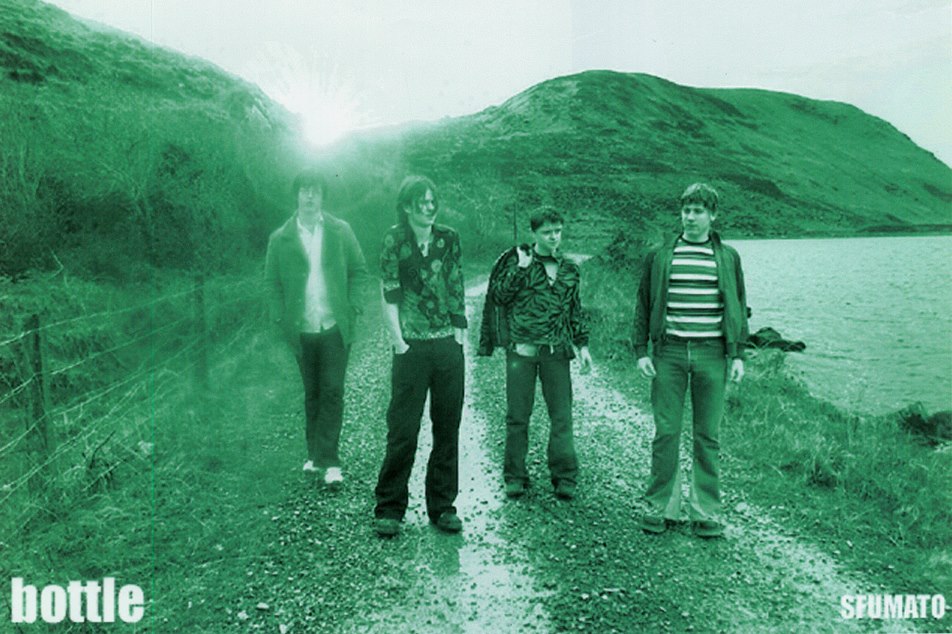
The band “Bottle”
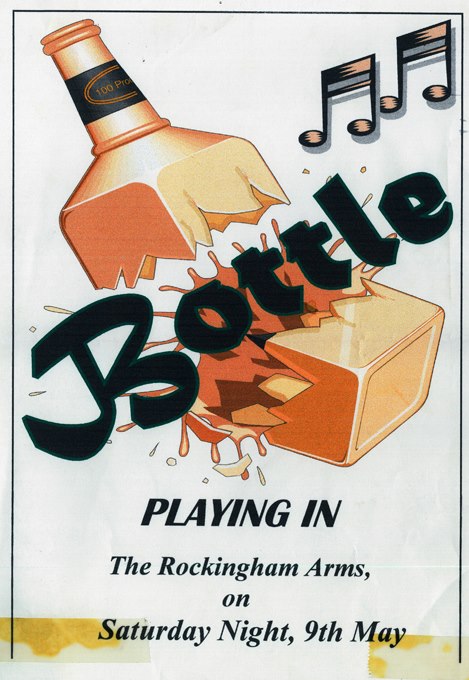
Poster for a Bottle Gig in The Rockingham Arms
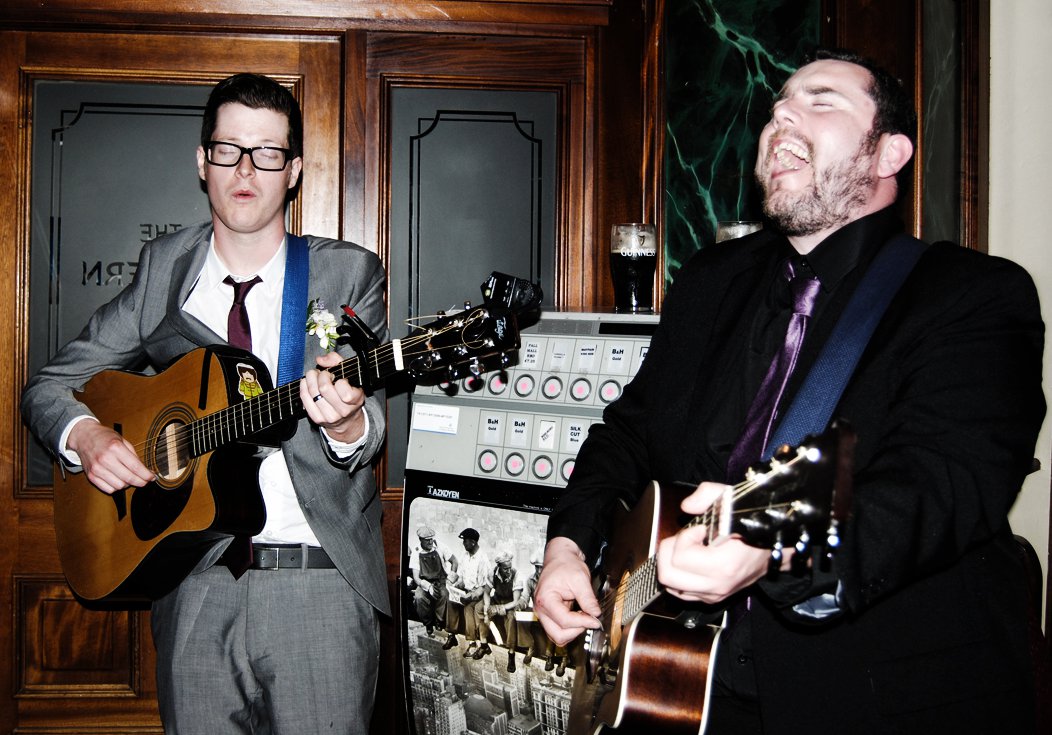
The Canon Dogs in Action
Thanks to Brendan O’ Dowd for creating and recording the musical piece for the podcast.
BE A GUEST ON THE SHOW!
If you’ve a story about Boyle, we’d love to hear it. You don’t need to have done anything remarkable, and you don’t need to prepare a thing. We sit down, have a chat, and you talk about whatever you want to. It usually takes about an hour.
Thinking of someone else? A parent, a grandparent, a neighbour who remembers how it used to be? Tell us about them. Some of our best episodes started because a son or daughter got in touch. You can find us at [email protected].